

THE BIOLOQY OF WOOD-BORING TEREDINID MOLLUSCS
439
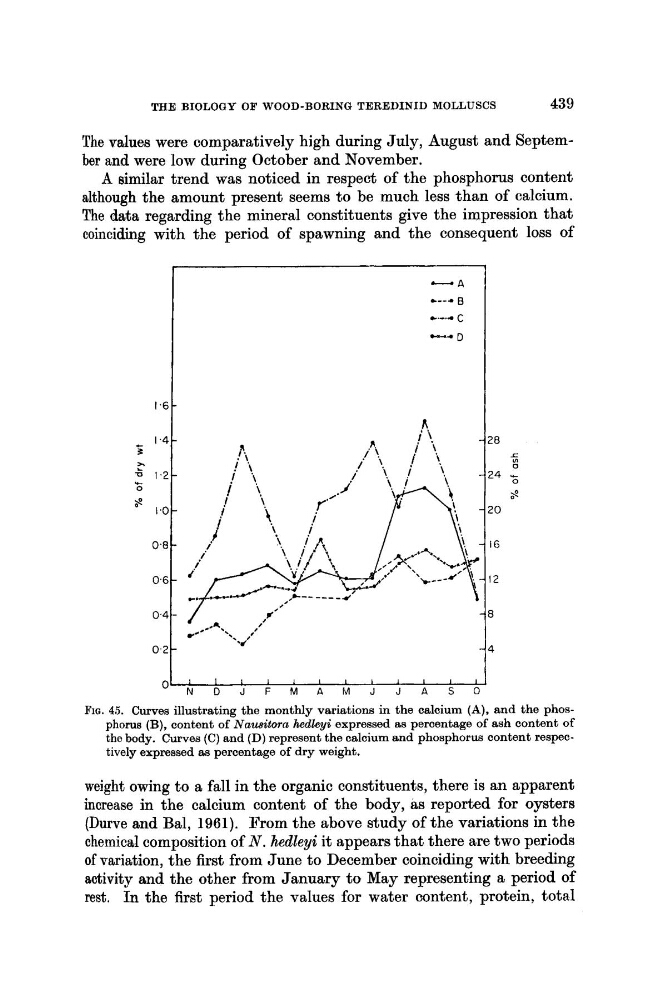
The values were comparatively high during July, August and September and were low during October and November.
A similar trend was noticed in respect of the phosphorus content
although the amount present seems to be much less than of calcium.
The data regarding the mineral constituents give the impression that
coinciding with the period of spawning and the consequent loss of
F ~ Q .
45. Curves illustrating the monthly variations in the calcium (A), and the phosphorus (B), content of Nausitora hedleyi expressed as percentage of ash content of
the body. Curves (C) and (D) represent the calcium and phosphorus content respectively expressed as percentage of dry weight.
weight owing to a fall in the organic constituents, there is an apparent
increase in the calcium content of the body, as reported for oysters
(Durve and Bal, 1961). From the above study of the variations in the
chemical composition of N . hedleyi it appears that there are two periods
of variation, the first from June to December coinciding with breeding
activity and the other from January t o May representing a period of
rest. In the first period the values for water content, protein, total
439
The values were comparatively high during July, August and September and were low during October and November.
A similar trend was noticed in respect of the phosphorus content
although the amount present seems to be much less than of calcium.
The data regarding the mineral constituents give the impression that
coinciding with the period of spawning and the consequent loss of
F ~ Q .
45. Curves illustrating the monthly variations in the calcium (A), and the phosphorus (B), content of Nausitora hedleyi expressed as percentage of ash content of
the body. Curves (C) and (D) represent the calcium and phosphorus content respectively expressed as percentage of dry weight.
weight owing to a fall in the organic constituents, there is an apparent
increase in the calcium content of the body, as reported for oysters
(Durve and Bal, 1961). From the above study of the variations in the
chemical composition of N . hedleyi it appears that there are two periods
of variation, the first from June to December coinciding with breeding
activity and the other from January t o May representing a period of
rest. In the first period the values for water content, protein, total