

368
N . BALAKRISHNAN NAIR AND M. SARASWATHY
considerable anatomical detail in Teredo navalis and B a n k indica
respectively. The structure and function of the digestive diverticula of
Teredo were described by Potts (1923) and in greater detail by Yonge
(1926). Purchon (1941) studied the labial palps and ciliary mechanisms
in Teredo norvegica and Teredo megotara. The same author (Purchon,
1960) has also given excellent accounts of the stomach in two species
of shipworms, Psiloteredo amboinensis and Teredo manni. Bade et al.
R
CTI I t v! G
I
DD
I
GO
I
MG
MG
APP
VG
I
I
I
CTI I ?,
I
DD
I
GO
I
MG
BP
G
ES
IS
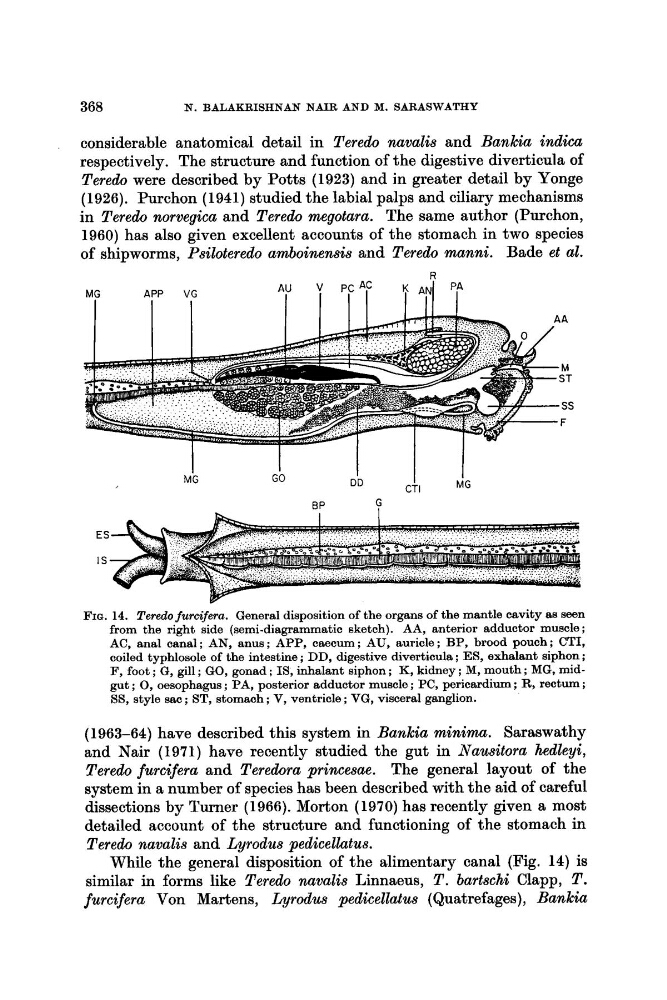
FIG. 14. Teredofurcijeru. General disposition of the organs of the mantle cavity as seen
from the right side (semi-diagrammatic sketch). AA, anterior adductor muscle ;
AC, anal canal ; AN, anus ; APP, caecum ; AU, auricle ; BP, brood pouch ; CTI,
coiled typhlosole of the intestine ; DD, digestive diverticula ; ES, exhalant siphon ;
F, foot ; G, gill ; GO, gonad ; IS, inhalant siphon ; K, kidney ; M, mouth ; MG, midgut ; 0, oesophagus ; PA, posterior adductor muscle ; PC, pericardium; R, rectum ;
SS, style sac ; ST, stomach ; V, ventricle ; VG, visceral ganglion.
(1963-64) have described this system in Bankia minima. Saraswathy
and Nair (1971) have recently studied the gut in Nausitora hedleyi,
Teredo furcifera and Teredora princesae. The general layout of the
system in a number of species has been described with the aid of careful
dissections by Turner (1966). Morton (1970) has recently given a most
detailed account of the structure and functioning of the stomach in
Teredo navalis and Lyrodus pedicellatus.
While the general disposition of the alimentary canal (Fig. 14) is
similar in forms like Teredo navalis Linnaeus, T . bartschi Clapp, T .
furcifera Von Martens, Lyrodus pedicellatus (Quatrefages), Bankia
N . BALAKRISHNAN NAIR AND M. SARASWATHY
considerable anatomical detail in Teredo navalis and B a n k indica
respectively. The structure and function of the digestive diverticula of
Teredo were described by Potts (1923) and in greater detail by Yonge
(1926). Purchon (1941) studied the labial palps and ciliary mechanisms
in Teredo norvegica and Teredo megotara. The same author (Purchon,
1960) has also given excellent accounts of the stomach in two species
of shipworms, Psiloteredo amboinensis and Teredo manni. Bade et al.
R
CTI I t v! G
I
DD
I
GO
I
MG
MG
APP
VG
I
I
I
CTI I ?,
I
DD
I
GO
I
MG
BP
G
ES
IS
FIG. 14. Teredofurcijeru. General disposition of the organs of the mantle cavity as seen
from the right side (semi-diagrammatic sketch). AA, anterior adductor muscle ;
AC, anal canal ; AN, anus ; APP, caecum ; AU, auricle ; BP, brood pouch ; CTI,
coiled typhlosole of the intestine ; DD, digestive diverticula ; ES, exhalant siphon ;
F, foot ; G, gill ; GO, gonad ; IS, inhalant siphon ; K, kidney ; M, mouth ; MG, midgut ; 0, oesophagus ; PA, posterior adductor muscle ; PC, pericardium; R, rectum ;
SS, style sac ; ST, stomach ; V, ventricle ; VG, visceral ganglion.
(1963-64) have described this system in Bankia minima. Saraswathy
and Nair (1971) have recently studied the gut in Nausitora hedleyi,
Teredo furcifera and Teredora princesae. The general layout of the
system in a number of species has been described with the aid of careful
dissections by Turner (1966). Morton (1970) has recently given a most
detailed account of the structure and functioning of the stomach in
Teredo navalis and Lyrodus pedicellatus.
While the general disposition of the alimentary canal (Fig. 14) is
similar in forms like Teredo navalis Linnaeus, T . bartschi Clapp, T .
furcifera Von Martens, Lyrodus pedicellatus (Quatrefages), Bankia