

THE BIOLOGY O F WOOD-BORTNG TEREDINID MOLLUSCS
367
further elaboration of the basic cycle. In Martesia similar movements
are employed in wood boring to those used by Zirphaea in boring into
clay or soft rocks. In this genus no further specializations are involved.
The boring cycle of Xylophaga dorsalis, on the other hand, represents a
further elaboration by the replications of the contractions of the adductor muscles, thus showing greater development of that part of the
cycle which represents the application of effective abrasive action. The
climax of specialization is reached in the Teredinidae where the adductor muscles antagonize each other directly across the fulcrum formed
by the dorsal and ventral articulations. The antagonism between the
adductor muscles and siphonal retractor muscles noticed in forms like
A
B
C
I
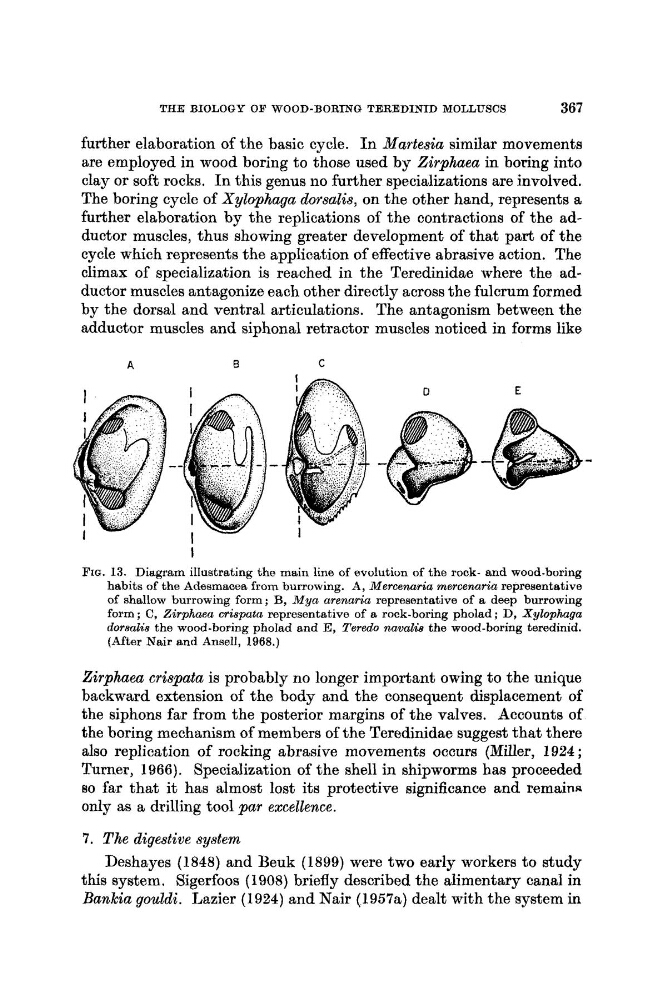
FIG. 13. Diagram illustrating the main line of evolution of the rock- and wood-boring
habits of the Adesmacea from burrowing. A, Mercemria mwcenaria representative
of shallow burrowing form ; B, M y a arenaria representative of a deep burrowing
form ; C, Zirphaea crispata representative of a rock-boring pholad ; D, Xylophaga
dorsalis the wood-boring pholad and E, Teredo navalis the wood-boring teredinid.
(After Nair and Ansell, 1968.)
Zirphaea crispata is probably no longer important owing to the unique
backward extension of the body and the consequent displacement of
the siphons far from the posterior margins of the valves. Accounts of
the boring mechanism of members of the Teredinidae suggest that there
also replication of rocking abrasive movements occurs (Miller, 1924 ;
Turner, 1966). Specialization of the shell in shipworms has proceeded
80 far that it has almost lost its protective significance and remainn
only as a drilling tool par excellence.
7. The digestive system
Deshayes (1848) and Beuk (1899) were two early workers to study
this system. Sigerfoos (1908) briefly described the alimentary canal in
Bankia gouldi. Lazier (1924) and Nair (1957a) dealt with the system in
367
further elaboration of the basic cycle. In Martesia similar movements
are employed in wood boring to those used by Zirphaea in boring into
clay or soft rocks. In this genus no further specializations are involved.
The boring cycle of Xylophaga dorsalis, on the other hand, represents a
further elaboration by the replications of the contractions of the adductor muscles, thus showing greater development of that part of the
cycle which represents the application of effective abrasive action. The
climax of specialization is reached in the Teredinidae where the adductor muscles antagonize each other directly across the fulcrum formed
by the dorsal and ventral articulations. The antagonism between the
adductor muscles and siphonal retractor muscles noticed in forms like
A
B
C
I
FIG. 13. Diagram illustrating the main line of evolution of the rock- and wood-boring
habits of the Adesmacea from burrowing. A, Mercemria mwcenaria representative
of shallow burrowing form ; B, M y a arenaria representative of a deep burrowing
form ; C, Zirphaea crispata representative of a rock-boring pholad ; D, Xylophaga
dorsalis the wood-boring pholad and E, Teredo navalis the wood-boring teredinid.
(After Nair and Ansell, 1968.)
Zirphaea crispata is probably no longer important owing to the unique
backward extension of the body and the consequent displacement of
the siphons far from the posterior margins of the valves. Accounts of
the boring mechanism of members of the Teredinidae suggest that there
also replication of rocking abrasive movements occurs (Miller, 1924 ;
Turner, 1966). Specialization of the shell in shipworms has proceeded
80 far that it has almost lost its protective significance and remainn
only as a drilling tool par excellence.
7. The digestive system
Deshayes (1848) and Beuk (1899) were two early workers to study
this system. Sigerfoos (1908) briefly described the alimentary canal in
Bankia gouldi. Lazier (1924) and Nair (1957a) dealt with the system in