

228
J. A. ALLEN AND M. R. GARRETT
salt, possibly taurodeorycholic acid, to be present in the gastric juice of
Eriocheir and Astacus. Work by Oord (1966) and Oord et a2. (1965) did
not confirm this, but they did show that emulsifiers were present, and
also taurine, in the gastric juice of Cancer. While they tentatively
suggested that the emulsifiers are fatty acylsarcosyltaurines, this is by
no means certain.
Although taurine was found in marine invertebrates soon after it
was discovered in vertebrates, e.g. oyster and cuttlefish (Valenciennes
and Frbmy, 1855) for many years it was considered to be nothing more
than an excretory end product of sulphur amino acid metabolism.
Bear and Schmitt (1939) investigating the ionic balance of giant squid
nerve axoplasm found that their determinations indicated a large anion
deficit of 490 m eq and an osmotic deficit of 280-415 mM. They
suggested that this deficit was balanced by a large quantity of organic
ions of moderate atomic weight. Webb and Young (1940) confirmed
the large anion and osmotic deficits and gave figures of 368 m eq and
735 mM respectively from their determinations of electrolytes of the
giant nerve fibres of Loligo. They point out, as did Bear and Schmitt
( 1939) that bicarbonates, sulphates, phosphates, lactates and proteins
acting as acids could hardly amount to more than 1-20 m eq and thus
some unknown anion(s) must be present in a concentration of at least
0.25 N. Webb and Young (1940) recalled that Kelly (1904) had found
considerable quantities of taurine in Mytilus muscle (400 mM/kg) while
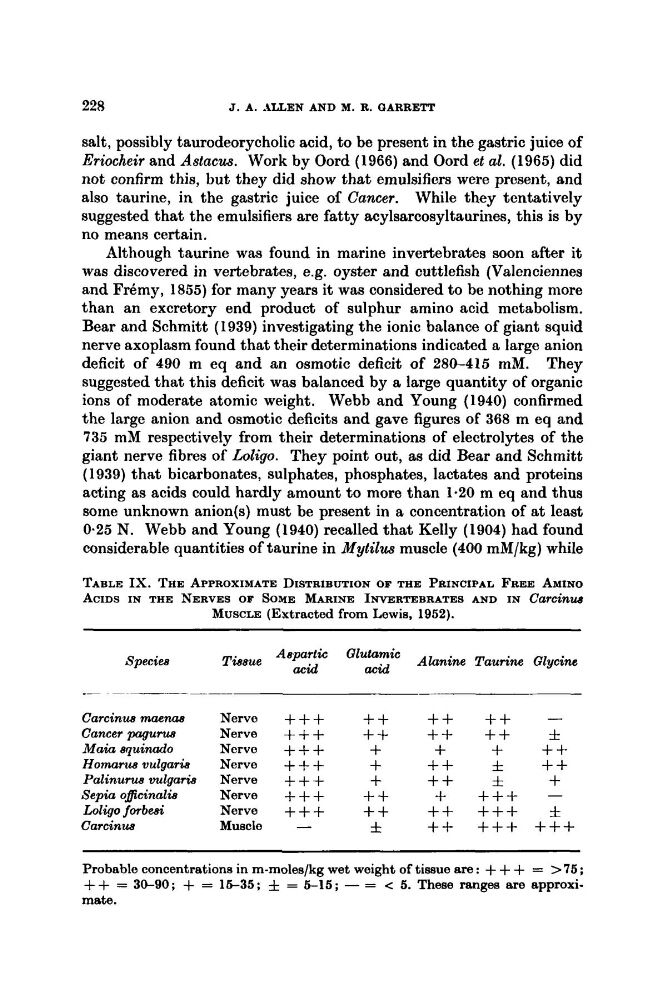
TABLE IX. THE APPROXIMATE DISTRIBUTION OF THE PRINCIPAL FREE AMINO
ACIDS IN THE NERVES OF SOME MARINE INVERTEBRATES AND IN Carcinus
MUSCLE (Extracted from Lewis, 1952).
Specim
Carcinua m a e w
Cancer p a g u m
Maia s q u i d 0
Homarua vulgaria
Palinurw, vulgaria
Sepia oficinalia
Loligo forb&
Carcinua
Tieeue
Aspartic
acid
Glutamic
acid
Ahnine Taurine Glycine
Nerve
Nerve
Nerve
Nerve
Nerve
Nerve
Nerve
MUSC~Q
+++
+++
+++
+++
+++
+++
+++
++
++
+
+
+
++
++
f
++
++
+
++
++
+
++
++
++
++
+
f
f
+++
+++
+++
-
f
++
++
+
f
+++
-
Probable concentrations in m-moles/kg wet weight of tissue are : + + + = > 75 ;
+ + = 30-90; + = 16-35; f = 6-16; - = < 5. These ranges are approximate.
J. A. ALLEN AND M. R. GARRETT
salt, possibly taurodeorycholic acid, to be present in the gastric juice of
Eriocheir and Astacus. Work by Oord (1966) and Oord et a2. (1965) did
not confirm this, but they did show that emulsifiers were present, and
also taurine, in the gastric juice of Cancer. While they tentatively
suggested that the emulsifiers are fatty acylsarcosyltaurines, this is by
no means certain.
Although taurine was found in marine invertebrates soon after it
was discovered in vertebrates, e.g. oyster and cuttlefish (Valenciennes
and Frbmy, 1855) for many years it was considered to be nothing more
than an excretory end product of sulphur amino acid metabolism.
Bear and Schmitt (1939) investigating the ionic balance of giant squid
nerve axoplasm found that their determinations indicated a large anion
deficit of 490 m eq and an osmotic deficit of 280-415 mM. They
suggested that this deficit was balanced by a large quantity of organic
ions of moderate atomic weight. Webb and Young (1940) confirmed
the large anion and osmotic deficits and gave figures of 368 m eq and
735 mM respectively from their determinations of electrolytes of the
giant nerve fibres of Loligo. They point out, as did Bear and Schmitt
( 1939) that bicarbonates, sulphates, phosphates, lactates and proteins
acting as acids could hardly amount to more than 1-20 m eq and thus
some unknown anion(s) must be present in a concentration of at least
0.25 N. Webb and Young (1940) recalled that Kelly (1904) had found
considerable quantities of taurine in Mytilus muscle (400 mM/kg) while
TABLE IX. THE APPROXIMATE DISTRIBUTION OF THE PRINCIPAL FREE AMINO
ACIDS IN THE NERVES OF SOME MARINE INVERTEBRATES AND IN Carcinus
MUSCLE (Extracted from Lewis, 1952).
Specim
Carcinua m a e w
Cancer p a g u m
Maia s q u i d 0
Homarua vulgaria
Palinurw, vulgaria
Sepia oficinalia
Loligo forb&
Carcinua
Tieeue
Aspartic
acid
Glutamic
acid
Ahnine Taurine Glycine
Nerve
Nerve
Nerve
Nerve
Nerve
Nerve
Nerve
MUSC~Q
+++
+++
+++
+++
+++
+++
+++
++
++
+
+
+
++
++
f
++
++
+
++
++
+
++
++
++
++
+
f
f
+++
+++
+++
-
f
++
++
+
f
+++
-
Probable concentrations in m-moles/kg wet weight of tissue are : + + + = > 75 ;
+ + = 30-90; + = 16-35; f = 6-16; - = < 5. These ranges are approximate.