

403
KOHMAN Y . ARAKAW’A
phology of the rectum. In discussing the role of the rectum in faecal
formation, they suggest that : “ Sculpturing and particle distribution
are largely dependent upon the mechanism by which feces are propelled through the rectum. If propulsion is by means of ciliary tracts,
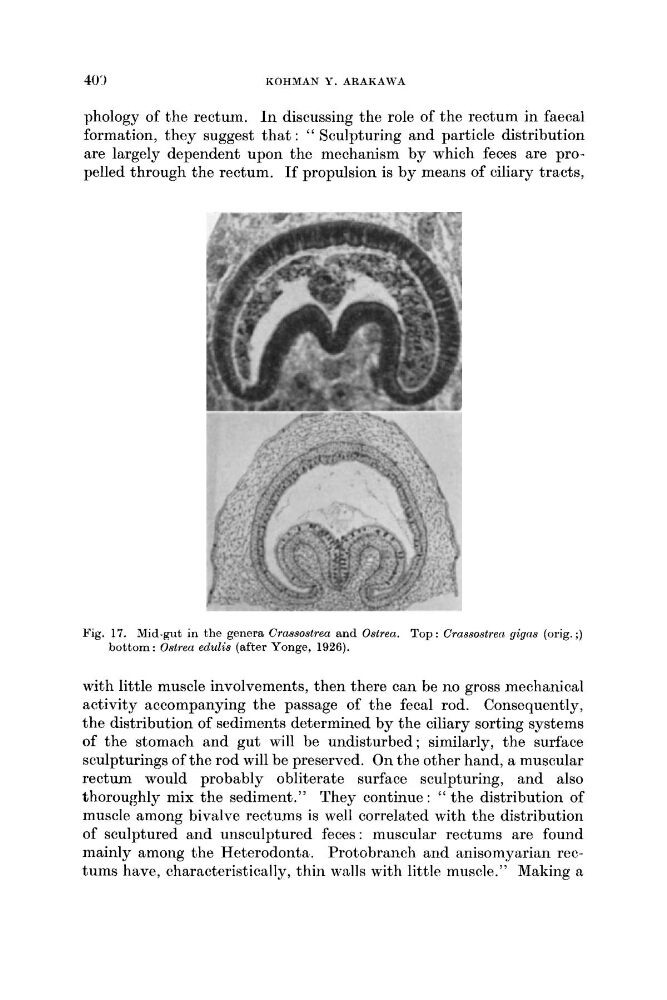
Fig. 17. Mid-gut in the genera Crassostrea and Ostrea. Top : Crassostrecc gigas (orig. ;)
bottom: Ostrea edulis (after Yonge, 1926).
with little muscle involvements, then there can be no gross mechanical
activity accompanying the passage of the fecal rod. Consequently,
the distribution of sediments determined by the ciliary sorting systems
of the stomach and gut will be undisturbed; similarly, the surface
sculpturings of the rod will be preserved. On the other hand, a muscular
rectum would probably obliterate surface sculpturing, and also
thoroughly mix the sediment.” They continue : “ the distribution of
muscle among bivalve rectums is well correlated with the distribution
of sculptured and unsculptured feces : muscular rectums are found
mainly among the Heterodonta. Protobranch and anisomyarian rectums have, characteristically, thin walls with little muscle.” Making r2
KOHMAN Y . ARAKAW’A
phology of the rectum. In discussing the role of the rectum in faecal
formation, they suggest that : “ Sculpturing and particle distribution
are largely dependent upon the mechanism by which feces are propelled through the rectum. If propulsion is by means of ciliary tracts,
Fig. 17. Mid-gut in the genera Crassostrea and Ostrea. Top : Crassostrecc gigas (orig. ;)
bottom: Ostrea edulis (after Yonge, 1926).
with little muscle involvements, then there can be no gross mechanical
activity accompanying the passage of the fecal rod. Consequently,
the distribution of sediments determined by the ciliary sorting systems
of the stomach and gut will be undisturbed; similarly, the surface
sculpturings of the rod will be preserved. On the other hand, a muscular
rectum would probably obliterate surface sculpturing, and also
thoroughly mix the sediment.” They continue : “ the distribution of
muscle among bivalve rectums is well correlated with the distribution
of sculptured and unsculptured feces : muscular rectums are found
mainly among the Heterodonta. Protobranch and anisomyarian rectums have, characteristically, thin walls with little muscle.” Making r2