

SCATOLOGICAL STUDIES O F THE HIVALVIA (MOLLUSCA)
399
rowed by one or two parallel-running intestinal typhlosoles which are
applied to the surface of the ribbons (Figs. 17, 18 and 19). On the formation of faecal ribbons in Mytilus edulis, Dodgson (1928) suggests ‘ < the
characteristic folds are determined by the shape of the anus through
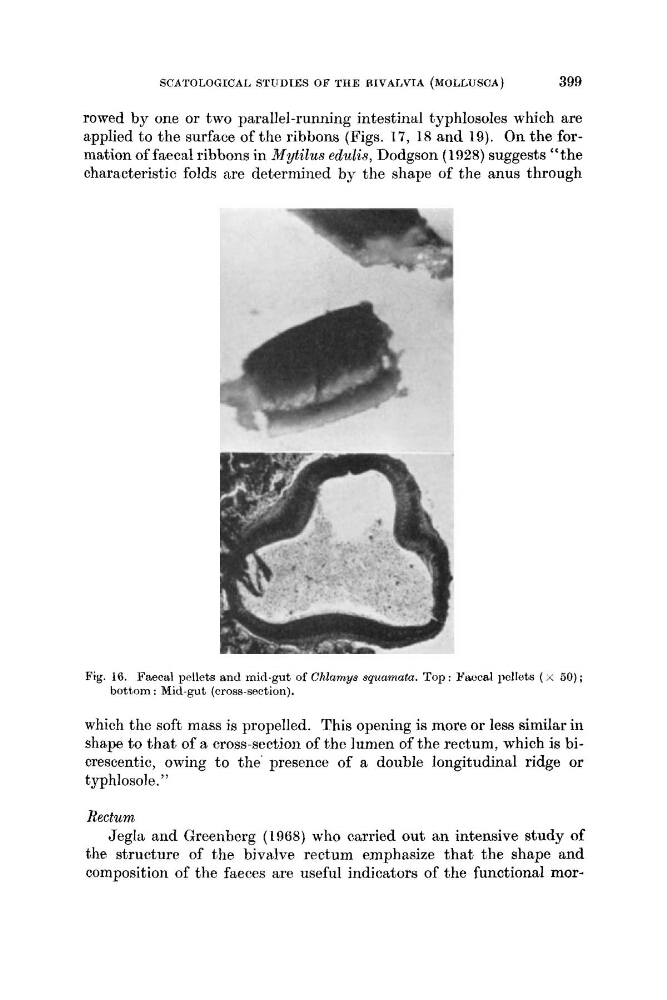
Fig. 16. Faecal pdlets and mid-gut of Chlarnys spuamata. Top : Vaocal pcllets ( x 50) ;
bottom : Mid-gut (cross-section).
which the soft mass is propelled. This opening is more or less similar in
shape to that of a cross-section of the lumen of the rectum, which is bicrescentic, owing t o the’ presence of a double longitudinal ridge or
typhlosole.”
Rectum
Jegla and Greenberg (1968) who carried out a n intensive study of
the structure of the bivalve rectum emphasize that the shape and
composition of the faeces are useful indicators of the functional mor-
399
rowed by one or two parallel-running intestinal typhlosoles which are
applied to the surface of the ribbons (Figs. 17, 18 and 19). On the formation of faecal ribbons in Mytilus edulis, Dodgson (1928) suggests ‘ < the
characteristic folds are determined by the shape of the anus through
Fig. 16. Faecal pdlets and mid-gut of Chlarnys spuamata. Top : Vaocal pcllets ( x 50) ;
bottom : Mid-gut (cross-section).
which the soft mass is propelled. This opening is more or less similar in
shape to that of a cross-section of the lumen of the rectum, which is bicrescentic, owing t o the’ presence of a double longitudinal ridge or
typhlosole.”
Rectum
Jegla and Greenberg (1968) who carried out a n intensive study of
the structure of the bivalve rectum emphasize that the shape and
composition of the faeces are useful indicators of the functional mor-