

THE PROBLEM O F OIL POLLUTION O F THE SEA
253
Calanus finmarchicus (Gunnerus) was undamaged by engine oil leaking
from a wreck and, in aquarium tests by Nelson-Smith (1968a), brown
shrimps Crangon crangon L. and prawns Leander serratus Pennant
survived 0.1% fresh crude oil (the highest concentration used). For
comparison Portmann (1968) determined 48 h median toxic limits of
23.5 p.p.m. phenol for Crangon crangon and 17.5 p.p.m. phenol for
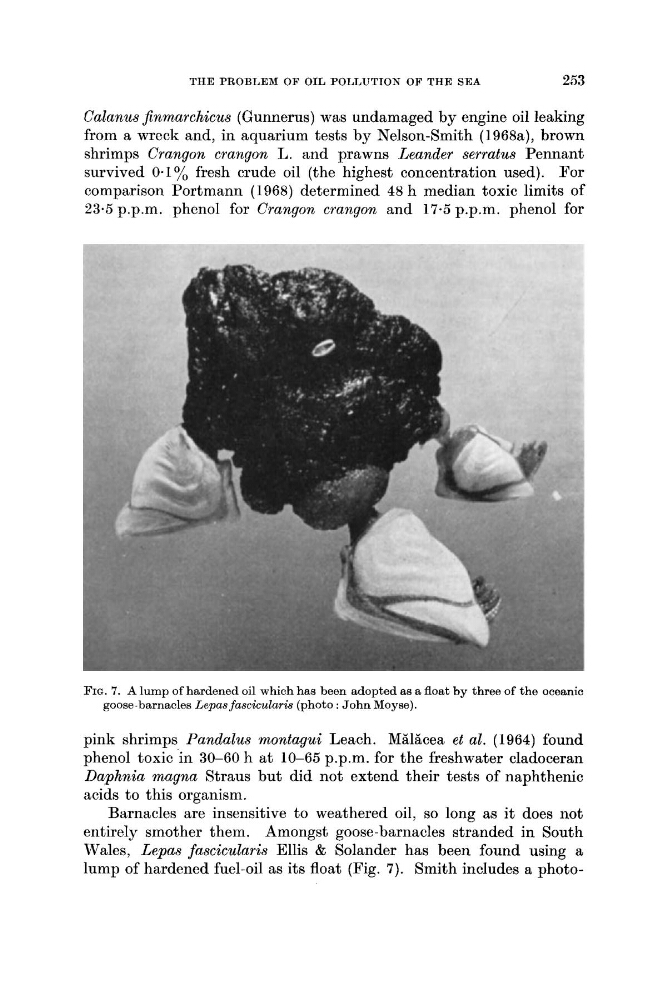
FIG. 7. A lump of hardened oil which has been adopted as a float by three of the oceanic
goose-barnacles Lepas fascicularis (photo : John Moyse).
pink shrimps Pandalus montaqui Leach. MBlBcea et al. (1964) found
phenol toxic in 30-60 h at 10-65 p.p.m. for the freshwater cladoceran
Daphnia magna Straus but did not extend their tests of naphthenic
acids to this organism.
Barnacles are insensitive to weathered oil, so long as it does not
entirely smother them. Amongst goose-barnacles stranded in South
Wales, Lepas fascicularis Ellis & Solander has been found using a
lump of hardened fuel-oil as its float (Fig. 7). Smith includes a photo-
253
Calanus finmarchicus (Gunnerus) was undamaged by engine oil leaking
from a wreck and, in aquarium tests by Nelson-Smith (1968a), brown
shrimps Crangon crangon L. and prawns Leander serratus Pennant
survived 0.1% fresh crude oil (the highest concentration used). For
comparison Portmann (1968) determined 48 h median toxic limits of
23.5 p.p.m. phenol for Crangon crangon and 17.5 p.p.m. phenol for
FIG. 7. A lump of hardened oil which has been adopted as a float by three of the oceanic
goose-barnacles Lepas fascicularis (photo : John Moyse).
pink shrimps Pandalus montaqui Leach. MBlBcea et al. (1964) found
phenol toxic in 30-60 h at 10-65 p.p.m. for the freshwater cladoceran
Daphnia magna Straus but did not extend their tests of naphthenic
acids to this organism.
Barnacles are insensitive to weathered oil, so long as it does not
entirely smother them. Amongst goose-barnacles stranded in South
Wales, Lepas fascicularis Ellis & Solander has been found using a
lump of hardened fuel-oil as its float (Fig. 7). Smith includes a photo-