

ESTUARINE FISH FARMING
161
if too much organic matter is present, sulphates may be reduced to
sulphides which would generate the very poisonous H2S. The tilling of
the soil of the fry pond, following drying, which may be repeated
several times (Mane et al., 1952), is intended to reduce, by some mineralization, the organic matter. Wet places which cannot be dried are
treated with lime.
I n Taiwan, the Chanos fry are at first placed in a nursery pond which
has a small section only 10-20 m2 in area and filled to a depth of 20 cm
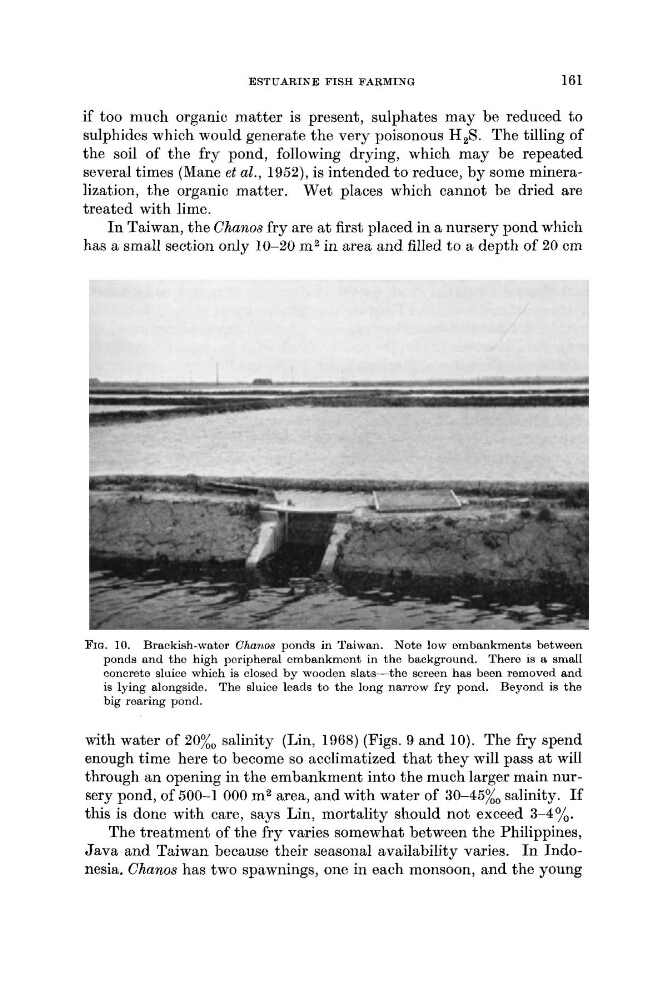
FIG. 10. Brackish-water Ckanos ponds in Taiwan. Note low embankments between
ponds and the high pcripheral embankment in the background. There is a small
concrete sluice which is closed by wooden slats-the screen has been removed and
is lying alongside.
Beyond is the
big rearing pond.
The sluice leads to the long narrow fry pond.
with water of 20%, salinity (Lin, 1968) (Figs. 9 and 10). The fry spend
enough time here to become so acclimatized that they will pass at will
through an opening in the embankment into the much larger main nursery pond, of 500-1 000 m2 area, and with water of 30-45%, salinity. If
this is done with care, says Lin, mortality should not exceed 3-4%.
The treatment of the fry varies somewhat between the Philippines,
Java and Taiwan because their seasonal availability varies. I n Indonesia. Chanos has two spawnings, one in each monsoon, and the young
161
if too much organic matter is present, sulphates may be reduced to
sulphides which would generate the very poisonous H2S. The tilling of
the soil of the fry pond, following drying, which may be repeated
several times (Mane et al., 1952), is intended to reduce, by some mineralization, the organic matter. Wet places which cannot be dried are
treated with lime.
I n Taiwan, the Chanos fry are at first placed in a nursery pond which
has a small section only 10-20 m2 in area and filled to a depth of 20 cm
FIG. 10. Brackish-water Ckanos ponds in Taiwan. Note low embankments between
ponds and the high pcripheral embankment in the background. There is a small
concrete sluice which is closed by wooden slats-the screen has been removed and
is lying alongside.
Beyond is the
big rearing pond.
The sluice leads to the long narrow fry pond.
with water of 20%, salinity (Lin, 1968) (Figs. 9 and 10). The fry spend
enough time here to become so acclimatized that they will pass at will
through an opening in the embankment into the much larger main nursery pond, of 500-1 000 m2 area, and with water of 30-45%, salinity. If
this is done with care, says Lin, mortality should not exceed 3-4%.
The treatment of the fry varies somewhat between the Philippines,
Java and Taiwan because their seasonal availability varies. I n Indonesia. Chanos has two spawnings, one in each monsoon, and the young