

160
C . F. HICKLING
which may be as small as 6 ft by 6 ft in area (Figs. 9 and 16). These
ponds are drained dry to kill predators and the bottom may be raked
and puddled. Cover from the sun is provided by palm leaves stuck into
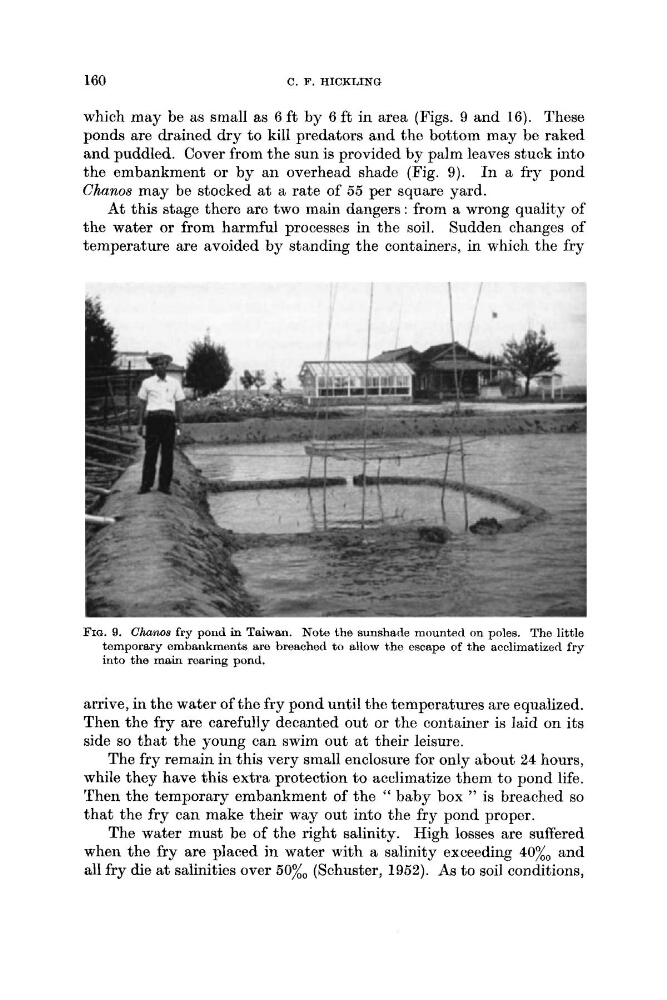
the embankment or by an overhead shade (Fig. 9). In a fry pond
Chanos may be stocked at a rate of 55 per square yard.
At this stage there are two main dangers : from a wrong quality of
the water or from harmful processes in the soil. Sudden changes of
temperature are avoided by standing the containers, in which the fry
FIG. 9. Chanos fry pond in Taiwan. Note the sunshade mounted on poles. The little
temporary embankments are breached to allow the escape of the acclimatized fry
into the main rearing pond.
arrive, in the water of the fry pond until the temperatures are equalized.
Then the fry are carefully decanted out or the container is laid on its
side so that the young can swim out at their leisure.
The fry remain in this very small enclosure for only about 24 hours,
while they have this extra protection to acclimatize them t o pond life.
Then the temporary embankment of the " baby box " is breached so
that the fry can make their way out into the fry pond proper.
The water must be of the right salinity. High losses are suffered
when the fry are placed in water with a salinity exceeding 40X0 and
all fry die at salinities over SO%, (Schuster, 1952). As to soil conditions,
C . F. HICKLING
which may be as small as 6 ft by 6 ft in area (Figs. 9 and 16). These
ponds are drained dry to kill predators and the bottom may be raked
and puddled. Cover from the sun is provided by palm leaves stuck into
the embankment or by an overhead shade (Fig. 9). In a fry pond
Chanos may be stocked at a rate of 55 per square yard.
At this stage there are two main dangers : from a wrong quality of
the water or from harmful processes in the soil. Sudden changes of
temperature are avoided by standing the containers, in which the fry
FIG. 9. Chanos fry pond in Taiwan. Note the sunshade mounted on poles. The little
temporary embankments are breached to allow the escape of the acclimatized fry
into the main rearing pond.
arrive, in the water of the fry pond until the temperatures are equalized.
Then the fry are carefully decanted out or the container is laid on its
side so that the young can swim out at their leisure.
The fry remain in this very small enclosure for only about 24 hours,
while they have this extra protection to acclimatize them t o pond life.
Then the temporary embankment of the " baby box " is breached so
that the fry can make their way out into the fry pond proper.
The water must be of the right salinity. High losses are suffered
when the fry are placed in water with a salinity exceeding 40X0 and
all fry die at salinities over SO%, (Schuster, 1952). As to soil conditions,