

132
C . F. HICKLING
only some 145 000 acres of productive pond. By completing the construction of the existing ponds and deepening them, where necessary,
to ensure a depth of water of at least 1-5ft, the ponds would give a
far greater crop. Schuster thinks that this should, as a matter of
common sense, take priority over the construction of new ponds.
Schuurman (1964) gives a cross-section of a pond, showing that the
height of the embankment must be at least one metre above the highest
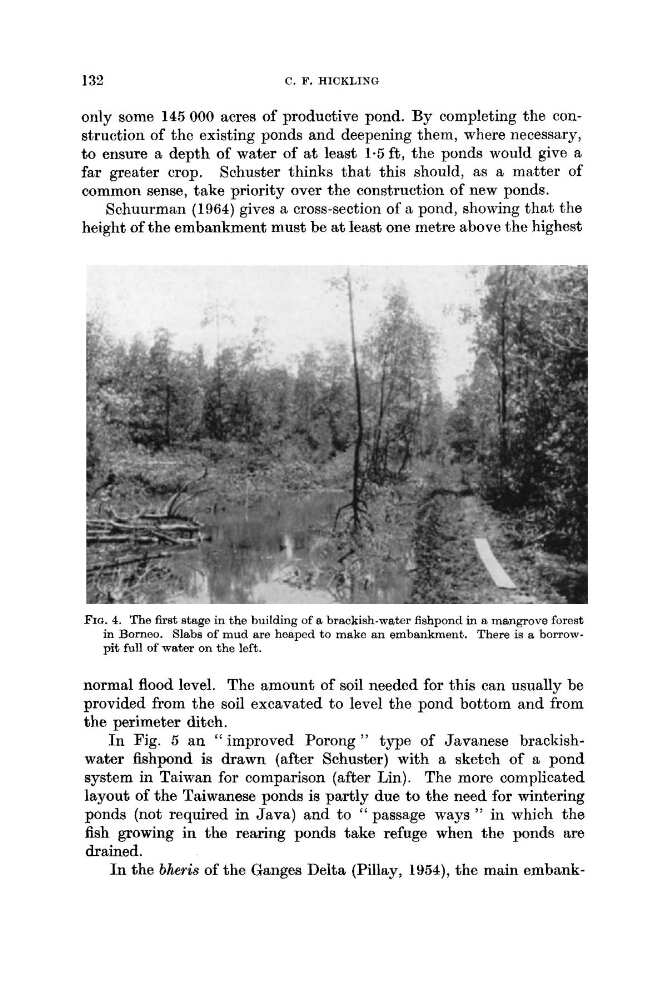
FIG. 4. The first stage in the building of a brackish-water fishpond in a mangrove forest
in Borneo. Slabs of mud are heaped to make an embankment. There is a borrowpit full of water on the left.
normal flood level. The amount of soil needed for this can usually be
provided from the soil excavated to level the pond bottom and from
the perimeter ditch.
In Fig. 5 an “ improved Porong ” type of Javanese brackishwater fishpond is drawn (after Schuster) with a sketch of a pond
system in Taiwan for comparison (after Lin). The more complicated
layout of the Taiwanese ponds is partly due to the need for wintering
ponds (not required in Java) and to ‘‘ passage ways ” in which the
fish growing in the rearing ponds take refuge when the ponds are
drained.
I n the bheris of the Ganges Delta (Pillay, 1954), the main embank-
C . F. HICKLING
only some 145 000 acres of productive pond. By completing the construction of the existing ponds and deepening them, where necessary,
to ensure a depth of water of at least 1-5ft, the ponds would give a
far greater crop. Schuster thinks that this should, as a matter of
common sense, take priority over the construction of new ponds.
Schuurman (1964) gives a cross-section of a pond, showing that the
height of the embankment must be at least one metre above the highest
FIG. 4. The first stage in the building of a brackish-water fishpond in a mangrove forest
in Borneo. Slabs of mud are heaped to make an embankment. There is a borrowpit full of water on the left.
normal flood level. The amount of soil needed for this can usually be
provided from the soil excavated to level the pond bottom and from
the perimeter ditch.
In Fig. 5 an “ improved Porong ” type of Javanese brackishwater fishpond is drawn (after Schuster) with a sketch of a pond
system in Taiwan for comparison (after Lin). The more complicated
layout of the Taiwanese ponds is partly due to the need for wintering
ponds (not required in Java) and to ‘‘ passage ways ” in which the
fish growing in the rearing ponds take refuge when the ponds are
drained.
I n the bheris of the Ganges Delta (Pillay, 1954), the main embank-