

12. PREDATORS AND PARASITES
371
for a period of about 2 months, usually April and May. The gonomeres
dehisce but whether motile or non-motile products are discharged is
unknown because examinations of the contents of the gonomeres have
failed to show recognizable structures within except, on occasion, when
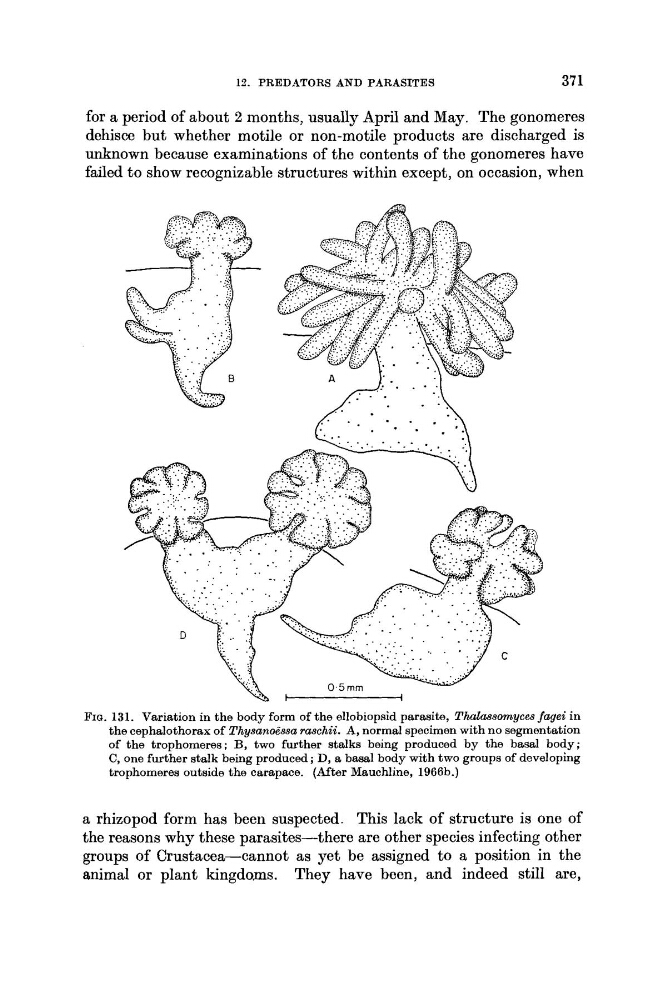
FIG. 131. Variation in the body form of the ellobiopsid parasite, Thalaasomyces fagei in
the cephalothorax of Thysanoessa raschii. A, normal specimen with no segmentation
of the trophomeres; B, two further stalks being produced by the basal body;
C, one further stalk being produced ; D, a basal body with two groups of developing
trophomeres outside the carapace. (After Mauchline, 1966b.)
a rhizopod form has been suspected. This lack of structure is one of
the reasons why these parasites-there are other species infecting other
groups of Crustacea-cannot as yet be assigned to a position in the
animal or plant kingdoms. They have been, and indeed still are,
371
for a period of about 2 months, usually April and May. The gonomeres
dehisce but whether motile or non-motile products are discharged is
unknown because examinations of the contents of the gonomeres have
failed to show recognizable structures within except, on occasion, when
FIG. 131. Variation in the body form of the ellobiopsid parasite, Thalaasomyces fagei in
the cephalothorax of Thysanoessa raschii. A, normal specimen with no segmentation
of the trophomeres; B, two further stalks being produced by the basal body;
C, one further stalk being produced ; D, a basal body with two groups of developing
trophomeres outside the carapace. (After Mauchline, 1966b.)
a rhizopod form has been suspected. This lack of structure is one of
the reasons why these parasites-there are other species infecting other
groups of Crustacea-cannot as yet be assigned to a position in the
animal or plant kingdoms. They have been, and indeed still are,