

10. GROWTH, MATURITY AND MORTALITY
307
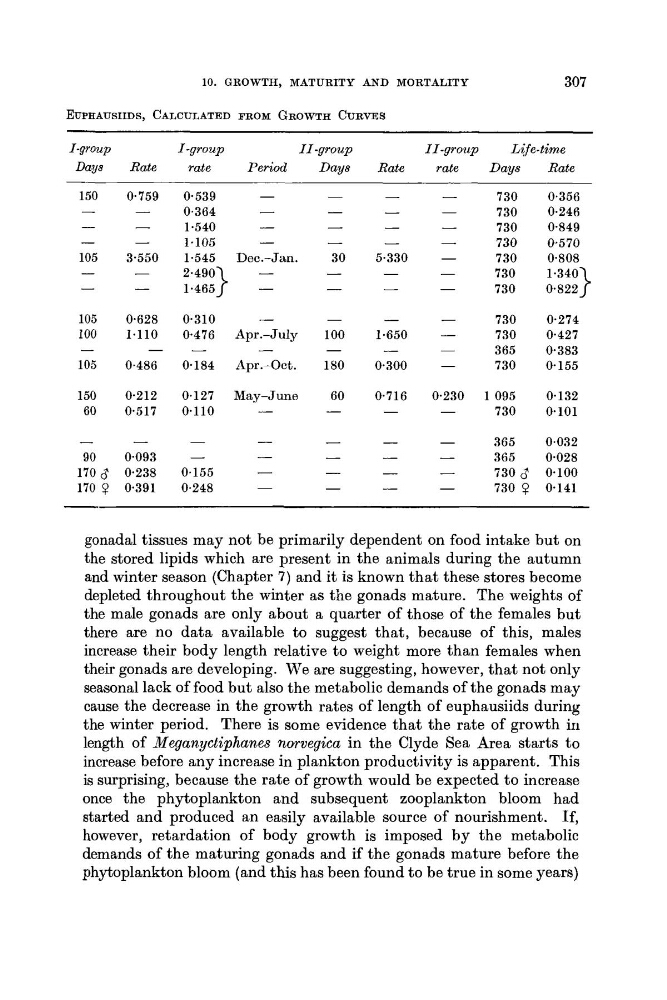
EUPHAUSIIDS, CALCULATED FROM GROWTH CURVES
I-group
I-group
II-group
II-group
L i j e - t h e
Days
Rate
rate
Period
Days
Rate
rate
Days
Rate
-
730
0.356
150
0.759
0.539
-
-
-
-
-
0.364
-
-
-
-
730
0.246
-
-
730
0-849
-
-
1.540
-
-
730
0,570
105
3.560
1.545
Dec.-Jan.
30
5.330
-
730
0.808
-
-
-
-
-
1.105
-
2.490
-
-
-
-
-
;;: ::E}
-
-
1.465}
-
-
-
-
-
105
0.628
0.310
-
-
-
-
730
0.274
I00
1.110
0.476 Apr.-July
100
1.650
-
730
0.427
-
- _
-
-
-
-
365
0.383
105
0.486
0.184
Apr.-Oct.
180
0.300
-
730
0.155
150
0.212
0.127 May-June
60
0.716
0.230 1 0 9 5
0.132
-
-
-
730
0.101
60
0.517
0.110
-
-
-
-
365
0,032
-
-
-
365
0.028
-
-
-
730 3 0.100
-
-
-
-
-
90
0.093
-
170
0.238
0.155
-
170 $? 0.391
0.248
-
-
-
-
730 $2 0.141
gonadal tissues may not be primarily dependent on food intake but on
the stored lipids which are present in the animals during the autumn
and winter season (Chapter 7) and it is known that these stores become
depleted throughout the winter as the gonads mature. The weights of
the male gonads are only about a quarter of those of the females but
there are no data available to suggest that, because of this, males
increase their body length relative to weight more than females when
their gonads are developing. We are suggesting, however, that not only
seasonal lack of food but also the metabolic demands of the gonads may
cause the decrease in the growth rates of length of euphausiids during
the winter period. There is some evidence that the rate of growth in
length of Meganyctiphanes norvegica in the Clyde Sea Area starts to
increase before any increase in plankton productivity is apparent. This
is surprising, because the rate of growth would be expected to increase
once the phytoplankton and subsequent zooplankton bloom had
started and produced an easily available source of nourishment. If,
however, retardation of body growth is imposed by the metabolic
demands of the maturing gonads and if the gonads mature before the
phytoplankton bloom (and this has been found to be true in some years)
307
EUPHAUSIIDS, CALCULATED FROM GROWTH CURVES
I-group
I-group
II-group
II-group
L i j e - t h e
Days
Rate
rate
Period
Days
Rate
rate
Days
Rate
-
730
0.356
150
0.759
0.539
-
-
-
-
-
0.364
-
-
-
-
730
0.246
-
-
730
0-849
-
-
1.540
-
-
730
0,570
105
3.560
1.545
Dec.-Jan.
30
5.330
-
730
0.808
-
-
-
-
-
1.105
-
2.490
-
-
-
-
-
;;: ::E}
-
-
1.465}
-
-
-
-
-
105
0.628
0.310
-
-
-
-
730
0.274
I00
1.110
0.476 Apr.-July
100
1.650
-
730
0.427
-
- _
-
-
-
-
365
0.383
105
0.486
0.184
Apr.-Oct.
180
0.300
-
730
0.155
150
0.212
0.127 May-June
60
0.716
0.230 1 0 9 5
0.132
-
-
-
730
0.101
60
0.517
0.110
-
-
-
-
365
0,032
-
-
-
365
0.028
-
-
-
730 3 0.100
-
-
-
-
-
90
0.093
-
170
0.238
0.155
-
170 $? 0.391
0.248
-
-
-
-
730 $2 0.141
gonadal tissues may not be primarily dependent on food intake but on
the stored lipids which are present in the animals during the autumn
and winter season (Chapter 7) and it is known that these stores become
depleted throughout the winter as the gonads mature. The weights of
the male gonads are only about a quarter of those of the females but
there are no data available to suggest that, because of this, males
increase their body length relative to weight more than females when
their gonads are developing. We are suggesting, however, that not only
seasonal lack of food but also the metabolic demands of the gonads may
cause the decrease in the growth rates of length of euphausiids during
the winter period. There is some evidence that the rate of growth in
length of Meganyctiphanes norvegica in the Clyde Sea Area starts to
increase before any increase in plankton productivity is apparent. This
is surprising, because the rate of growth would be expected to increase
once the phytoplankton and subsequent zooplankton bloom had
started and produced an easily available source of nourishment. If,
however, retardation of body growth is imposed by the metabolic
demands of the maturing gonads and if the gonads mature before the
phytoplankton bloom (and this has been found to be true in some years)