

9. INTERNAL ANATOMY AND PHYSIOLOGY
275
average rates to be 0.53 pl oxygen per mg dry wt/hr a t 5"C, 0-79 a t
lO"C, and 1.26 at 15°C. Respiratory rates of Euphausia pacijica from
the Oregon coast of the United States are adapted to a seasonal range
in environmental temperatures between 5" and lO"C, both inshore and
offshore (Small et al., 1966; Small and Hebard, 1967). During the
diurnal vertical migration, those individuals which descend during
daylight hours to colder layers (about 5°C) a t 600 m depth may respire
at a rate of 0-6 to 0.8 p1 oxygen per mg dry body wt per hour but during
the night may respire in the warmer surface layers (up to 10°C) a t a
rate of perhaps 0.9 to 1.2 pl oxygen per mg dry wtlhr; higher
environmental temperatures, up to 15"C, in the surface layers may not
cause a greater increase in respiratory rate because of possible respiratory compensation. The oxygen consumption of Thysanoessa spinqera
and of Euphausia pacijica was examined by Pearcy and Small (1968)
under varying conditions of pressure; they found no significant
differences between the rates of oxygen consumption a t 1 atmosphere
and those at pressures between 16 and 50 atmospheres and concluded
that temperature rather than pressure influences rates of oxygen
consumption of these species during their vertical migrations. Small
and Hebard calculated the following regression equation in E. paci$ca
at 10°C for the relationship between mg dry body weight (W) and
respiration rate (R) expressed as p1 oxygen per hour :
log R = 0.103 + (1.002) log W.
Teal and Carey (1967a) found that E . mucronata could respire and
swim in water with oxygen pressures between 6 and 2% of an atmosphere (air-saturated surface waters have a pressure of 21% of an
atmosphere) whereas Thysanopoda monacantha and the other crustaceans examined failed to respire at these low pressures. The ability of
Euphausia mucronata to do so allows it to migrate vertically into
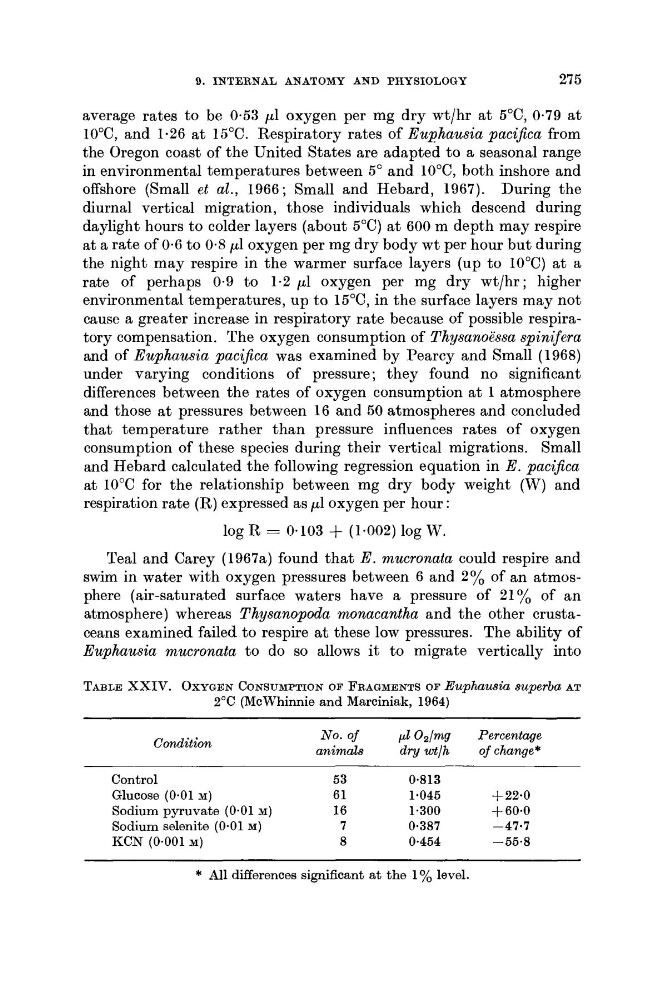
TABLE XXIV. OXYGEN CONSUMPTION OF FRAGMENTS OF Euphausia superba AT
2°C (McWhinnie and Marciniak, 1964)
Condition
No. of
pl 02/mg
Percentage
animals
dry wtlh
of change*
Control
53
0.813
Sodium pyruvate (0.01 M)
16
1.300
+ 60.0
Glucose (0.01 M)
61
1.045
+ 22.0
Sodium selenite (0.01 M )
7
0.387
-47.7
KCN (0.001 M)
8
0.454
-55.8
* All differences significant at the 1% level.
275
average rates to be 0.53 pl oxygen per mg dry wt/hr a t 5"C, 0-79 a t
lO"C, and 1.26 at 15°C. Respiratory rates of Euphausia pacijica from
the Oregon coast of the United States are adapted to a seasonal range
in environmental temperatures between 5" and lO"C, both inshore and
offshore (Small et al., 1966; Small and Hebard, 1967). During the
diurnal vertical migration, those individuals which descend during
daylight hours to colder layers (about 5°C) a t 600 m depth may respire
at a rate of 0-6 to 0.8 p1 oxygen per mg dry body wt per hour but during
the night may respire in the warmer surface layers (up to 10°C) a t a
rate of perhaps 0.9 to 1.2 pl oxygen per mg dry wtlhr; higher
environmental temperatures, up to 15"C, in the surface layers may not
cause a greater increase in respiratory rate because of possible respiratory compensation. The oxygen consumption of Thysanoessa spinqera
and of Euphausia pacijica was examined by Pearcy and Small (1968)
under varying conditions of pressure; they found no significant
differences between the rates of oxygen consumption a t 1 atmosphere
and those at pressures between 16 and 50 atmospheres and concluded
that temperature rather than pressure influences rates of oxygen
consumption of these species during their vertical migrations. Small
and Hebard calculated the following regression equation in E. paci$ca
at 10°C for the relationship between mg dry body weight (W) and
respiration rate (R) expressed as p1 oxygen per hour :
log R = 0.103 + (1.002) log W.
Teal and Carey (1967a) found that E . mucronata could respire and
swim in water with oxygen pressures between 6 and 2% of an atmosphere (air-saturated surface waters have a pressure of 21% of an
atmosphere) whereas Thysanopoda monacantha and the other crustaceans examined failed to respire at these low pressures. The ability of
Euphausia mucronata to do so allows it to migrate vertically into
TABLE XXIV. OXYGEN CONSUMPTION OF FRAGMENTS OF Euphausia superba AT
2°C (McWhinnie and Marciniak, 1964)
Condition
No. of
pl 02/mg
Percentage
animals
dry wtlh
of change*
Control
53
0.813
Sodium pyruvate (0.01 M)
16
1.300
+ 60.0
Glucose (0.01 M)
61
1.045
+ 22.0
Sodium selenite (0.01 M )
7
0.387
-47.7
KCN (0.001 M)
8
0.454
-55.8
* All differences significant at the 1% level.