

260
THE BIOLOGY OF EUPHAUSIIDS
osr
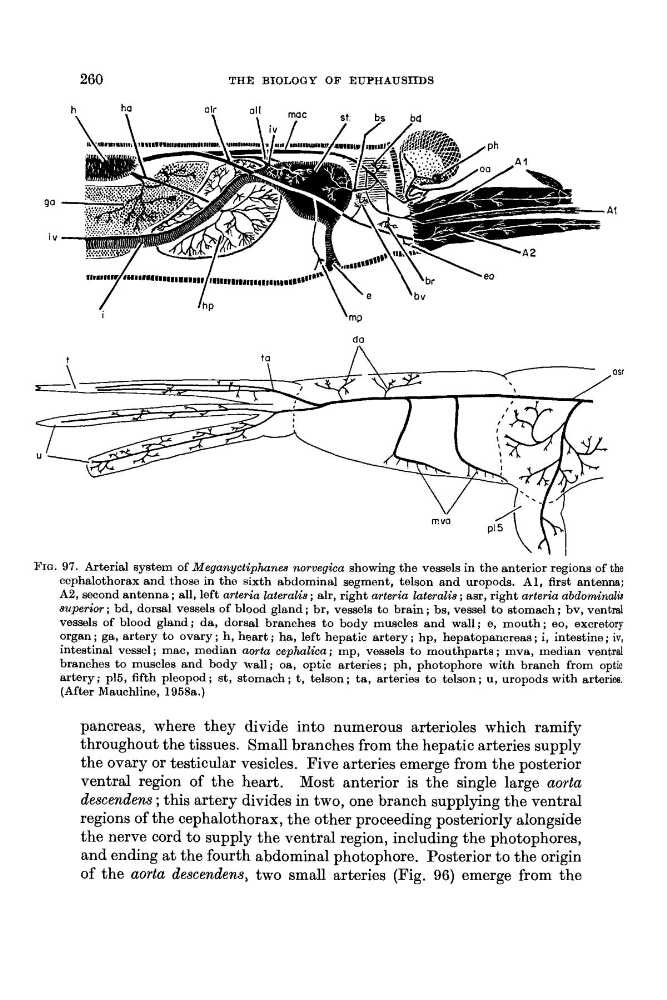
FIG. 97. Arterial system of Meganyctiphanes norvegica showing the vessels in the anterior regions of the
cephalothorax and those in the sixth abdominal segment, telson and uropods. Al, first antenna;
A2, second antenna ; all, left arteria lateralis ; alr, right arteria lateralis ; asr, right arteria abdominalis
superior ; bd, dorsal vessels of blood gland ; br, vessels to brain ; bs, vessel to stomach ; bv, ventral
vessels of blood gland ; da, dorsal branches to body muscles and wall ; e, mouth ; eo, excretory
organ; ga, artery to ovary; h, heart; ha, left hepatic artery; hp, hepatopancreas; i, intestine; iv,
intestinal vessel ; mac, median aorta cephalica ; mp, vessels to mouthparts ; mva, median ventral
branches to muscles and body wall; oa, optic arteries; ph, photophore with branch from optic
artery ; p15, fifth pleopod ; st, stomach ; t, telson ; ta, arteries to telson ; u, uropods with arteries.
(After Mauchline, 1958a.)
pancreas, where they divide into numerous arterioles which ramify
throughout the tissues. Small branches from the hepatic arteries supply
the ovary or testicular vesicles. Five arteries emerge from the posterior
ventral region of the heart. Most anterior is the single large aorta
descendens ; this artery divides in two, one branch supplying the ventral
regions of the cephalothorax, the other proceeding posteriorly alongside
the nerve cord to supply the ventral region, including the photophores,
and ending a t the fourth abdominal photophore. Posterior to the origin
of the aorta descendens, two small arteries (Fig. 96) emerge from the
THE BIOLOGY OF EUPHAUSIIDS
osr
FIG. 97. Arterial system of Meganyctiphanes norvegica showing the vessels in the anterior regions of the
cephalothorax and those in the sixth abdominal segment, telson and uropods. Al, first antenna;
A2, second antenna ; all, left arteria lateralis ; alr, right arteria lateralis ; asr, right arteria abdominalis
superior ; bd, dorsal vessels of blood gland ; br, vessels to brain ; bs, vessel to stomach ; bv, ventral
vessels of blood gland ; da, dorsal branches to body muscles and wall ; e, mouth ; eo, excretory
organ; ga, artery to ovary; h, heart; ha, left hepatic artery; hp, hepatopancreas; i, intestine; iv,
intestinal vessel ; mac, median aorta cephalica ; mp, vessels to mouthparts ; mva, median ventral
branches to muscles and body wall; oa, optic arteries; ph, photophore with branch from optic
artery ; p15, fifth pleopod ; st, stomach ; t, telson ; ta, arteries to telson ; u, uropods with arteries.
(After Mauchline, 1958a.)
pancreas, where they divide into numerous arterioles which ramify
throughout the tissues. Small branches from the hepatic arteries supply
the ovary or testicular vesicles. Five arteries emerge from the posterior
ventral region of the heart. Most anterior is the single large aorta
descendens ; this artery divides in two, one branch supplying the ventral
regions of the cephalothorax, the other proceeding posteriorly alongside
the nerve cord to supply the ventral region, including the photophores,
and ending a t the fourth abdominal photophore. Posterior to the origin
of the aorta descendens, two small arteries (Fig. 96) emerge from the