

SOME ASPECTS O F THE BIOLOGY O F THE CIIAETOGNATHS
299
have been able to take, I feel some doubt as to the existence of this
canal as a persistent structure, and especially on its being spiral shaped
as some authors would have it, particularly Stevens and BordAs
according to whom the small canal always remains of the same calibre.
One rather has the impression that instead of a small canal there are a
series of vacuoli, or at least of particular states of the cytoplasm of the
suspension cells that may show a lesser density. This does not exclude
the possibility that a t certain moments and in limited areas of the
cytoplasm of the support cells some cavities might form more or less in
line, producing a canal-like structure. Cytoplasmic lacunae and vacuoli
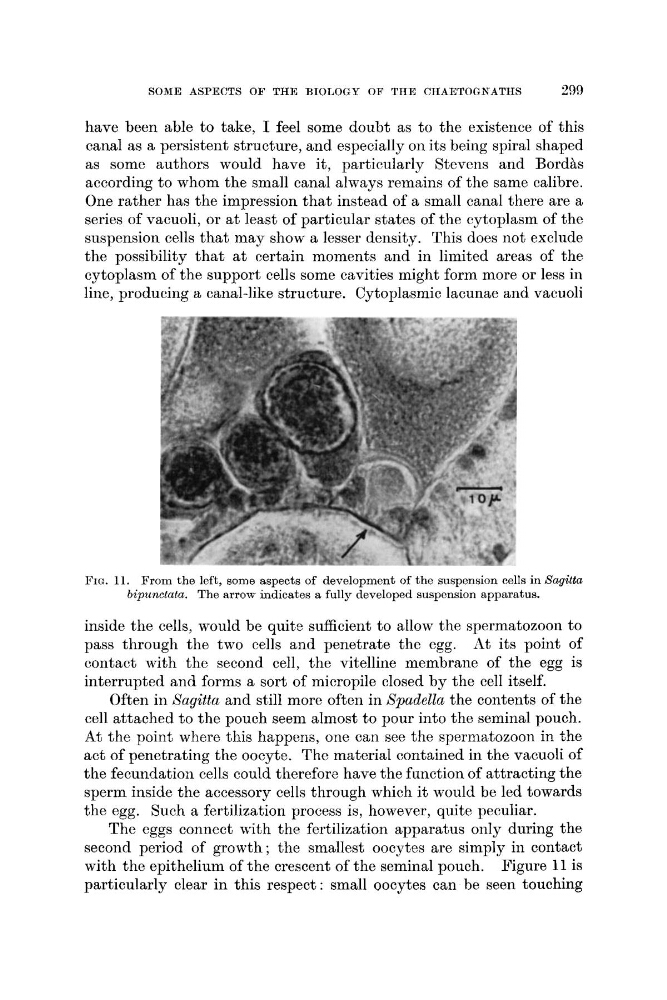
FIG. 11. From the left, some aspects of development of the suspension cells in Sagitta
bipunctata. The arrow indicates a fully developed suspcnsion apparatus.
inside the cells, would be quite sufficient to allow the spermatozoon to
pass through the two cells and penetrate the egg. At its point of
contact with the second cell, the vitelline membrane of the egg is
interrupted and forms a sort of micropile closed by the cell itself.
Often in Sagitta and still more often in Spdellu the contents of the
cell attached to the pouch seem almost to pour into the seminal pouch.
At the point where this happens, one can see the spermatozoon in the
act of penetrating the oocyte. The material contained in the vacuoli of
the fecundation cells could therefore have the function of attracting the
sperm inside the accessory cells through which it would be led towards
the egg. Such a fertilization process is, however, quite peculiar.
The eggs connect with the fertilization apparatus only during the
second period of growth ; the smallest oocytes are simply in contact
with the epithelium of the crescent of the seminal pouch. Figure 11 is
particularly clear in this respect : small aocytes can be seen touching
299
have been able to take, I feel some doubt as to the existence of this
canal as a persistent structure, and especially on its being spiral shaped
as some authors would have it, particularly Stevens and BordAs
according to whom the small canal always remains of the same calibre.
One rather has the impression that instead of a small canal there are a
series of vacuoli, or at least of particular states of the cytoplasm of the
suspension cells that may show a lesser density. This does not exclude
the possibility that a t certain moments and in limited areas of the
cytoplasm of the support cells some cavities might form more or less in
line, producing a canal-like structure. Cytoplasmic lacunae and vacuoli
FIG. 11. From the left, some aspects of development of the suspension cells in Sagitta
bipunctata. The arrow indicates a fully developed suspcnsion apparatus.
inside the cells, would be quite sufficient to allow the spermatozoon to
pass through the two cells and penetrate the egg. At its point of
contact with the second cell, the vitelline membrane of the egg is
interrupted and forms a sort of micropile closed by the cell itself.
Often in Sagitta and still more often in Spdellu the contents of the
cell attached to the pouch seem almost to pour into the seminal pouch.
At the point where this happens, one can see the spermatozoon in the
act of penetrating the oocyte. The material contained in the vacuoli of
the fecundation cells could therefore have the function of attracting the
sperm inside the accessory cells through which it would be led towards
the egg. Such a fertilization process is, however, quite peculiar.
The eggs connect with the fertilization apparatus only during the
second period of growth ; the smallest oocytes are simply in contact
with the epithelium of the crescent of the seminal pouch. Figure 11 is
particularly clear in this respect : small aocytes can be seen touching