

FAUNA AND FLORA O F MANGROVE SWAMPS
163
suggest that a quite large number are necessary to give the initial
stimulus which leads to the establishment of synchrony.
There are many unanswered questions about this synchrony. It is
certain that a residual population of fireflies remains in the trees during
the day. They are usually stationary, often clinging to the edges of
leaves, or flattened against twigs, or petioles, and in fact quite difficult
to spot. The trees which are occupied by fireflies seemed to be clear of
scale insects and tailor ants-these ants also show a liking for X.
caseolaris, presumably because of the scale insects which live on the
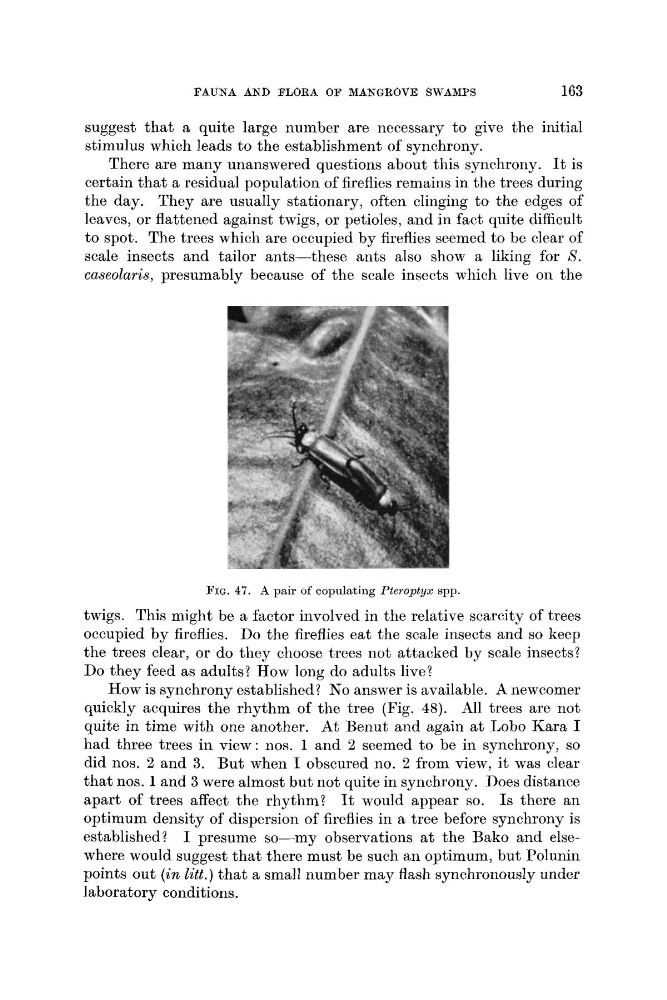
FIG. 47. A pair of copulating Pteroptyx spp.
twigs. This might be a factor involved in the relative scarcity of trees
occupied by fireflies. Do the fireflies eat the scale insects and so keep
the trees clear, or do they choose trees not attacked by scale insects?
Do they feed as adults? How long do adults live?
How is synchrony established? No answer is available. A newcomer
quickly acquires the rhythm of the tree (Fig. 48). All trees are not
quite in time with one another. At Benut and again a t Lobo Kara I
had three trees in view: nos. 1 and 2 seemed to be in synchrony, so
did nos. 2 and 3. But when I obscured no. 2 from view, it was clear
that nos. 1 and 3 were almost but not quite in synchrony. Does distance
apart of trees affect the rhythm?
Is there an
optimum density of dispersion of fireflies in a tree before synchrony is
established? I presume so-my observations at the Bako and elsewhere would suggest that there must be such an optimum, but Poluniii
points out (in Eitt.) that a small number may flash synchronously under
laboratory conditions.
It would appear so.
163
suggest that a quite large number are necessary to give the initial
stimulus which leads to the establishment of synchrony.
There are many unanswered questions about this synchrony. It is
certain that a residual population of fireflies remains in the trees during
the day. They are usually stationary, often clinging to the edges of
leaves, or flattened against twigs, or petioles, and in fact quite difficult
to spot. The trees which are occupied by fireflies seemed to be clear of
scale insects and tailor ants-these ants also show a liking for X.
caseolaris, presumably because of the scale insects which live on the
FIG. 47. A pair of copulating Pteroptyx spp.
twigs. This might be a factor involved in the relative scarcity of trees
occupied by fireflies. Do the fireflies eat the scale insects and so keep
the trees clear, or do they choose trees not attacked by scale insects?
Do they feed as adults? How long do adults live?
How is synchrony established? No answer is available. A newcomer
quickly acquires the rhythm of the tree (Fig. 48). All trees are not
quite in time with one another. At Benut and again a t Lobo Kara I
had three trees in view: nos. 1 and 2 seemed to be in synchrony, so
did nos. 2 and 3. But when I obscured no. 2 from view, it was clear
that nos. 1 and 3 were almost but not quite in synchrony. Does distance
apart of trees affect the rhythm?
Is there an
optimum density of dispersion of fireflies in a tree before synchrony is
established? I presume so-my observations at the Bako and elsewhere would suggest that there must be such an optimum, but Poluniii
points out (in Eitt.) that a small number may flash synchronously under
laboratory conditions.
It would appear so.