

MANAGEMENT O F BTSHERY RESOllRCES
3
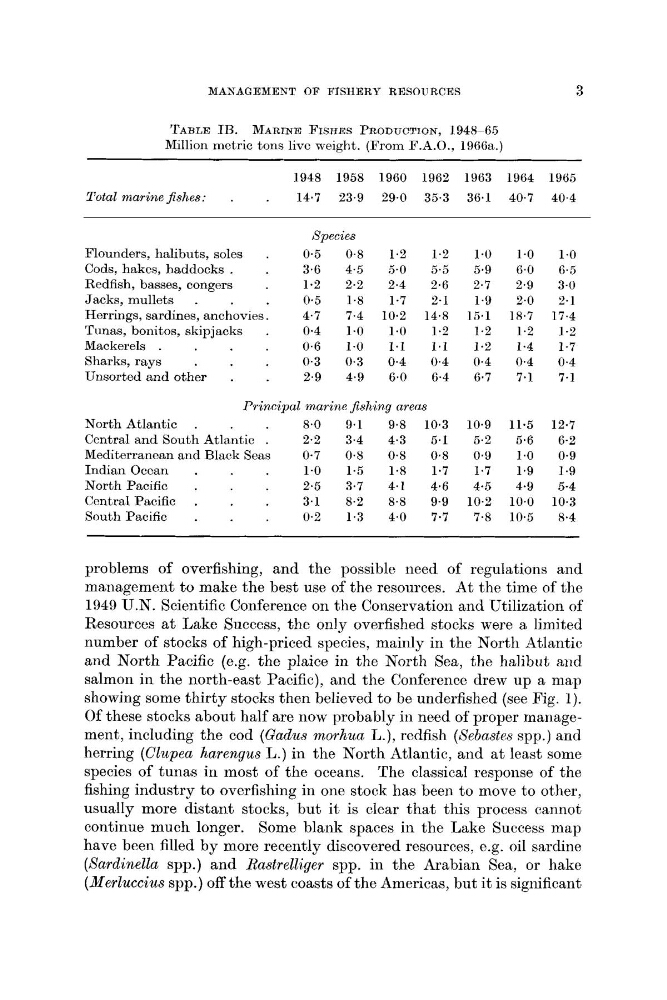
TABLE IB. MARINE FISHES PRODUCTION, 1948-65
Million metric tons livc weight. (From F.A.O., 1966a.)
1948 1958 1960 1962 1963 1964 1965
Total marine fishes:
.
.
14.7 23.9 29.0 35.3 36.1 40.7 40.4
Species
Flounders, halibuts, soles
.
0.5
0.8
1.2
1.2
1.0
1.0
1.0
Cods, hakcs, haddocks .
.
3.6
4.5
5.0
5.5
5.9
6.0
6.5
Redfish, basses, congers
.
1.2
2.2
2.4
2.6
2.7
2.9
3-0
Jacks, mullcts
.
.
0.5
1.8
1.7
2.1
1.9
2.0
2.1
Herrings, sardines, anchovies.
4.7
7.4 10.2 14.8 15.1 18.7 17.4
Tunas, bonitos, skipjacks
.
0.4
1.0
1.0
1.2
1.2
1.2
1.2
Mackerels .
.
.
0.6
1.0
1 . 1
1.1
1.2
1.4
1-7
Sharks, rays
.
.
0.3
0.3
0.4
0.4
0.4
0.4
0.4
Unsorted and other
.
.
2.9
4.9
6.0
6.4
6.7
7.1
7.1
Principal marine fishing areas
North Atlantic .
.
8.0
9.1
9.8 10.3 10.9 11.5 12.7
Central and South Atlantic .
2.2
3.4
4.3
5.1
5.2
5.6
6.2
MeditcrraneanandBlack Seas
0.7
0.8
0.8
0.8
0.9
1.0
0.9
Indian Occan
.
.
1.0
1.5
1.8
1.7
1.7
1.9
1.9
North Pacific
.
.
2.5
3.7
4.1
4.6
4-5
4.9
5-4
Contra1 Pacific .
.
3.1
8.2
8.8
9.9 10.2 10.0 10.3
South Pacific
.
.
0.2
1.3
4.0
7.7
7.8 10.5
8.4
problems of overfishing, and the possible need of regulations and
management to make the best use of the resources. At the time of the
1949 U.N. Scientific Conference on the Conservation and Utilization of
Resources a t Lake Success, the only overfished stocks were a limited
number of stocks of high-priced species, mainly in the North Atlantic
and North Pacific (e.g. the plaice in the North Sea, the halibut and
salmon in the north-east Pacific), and the Conference drew up a map
showing some thirty stocks then believed to be underfished (see Fig. 1).
Of these stocks about half are now probably in need of proper management, including the cod (Gadus morhua L.), redfish (Sebastes spp.) and
herring (Clupea harengus L.) in the North Atlantic, and at least some
species of tunas in most of the oceans. The classical response of the
fishing industry to overfishing in one stock has been to move to other,
usually more distant stocks, but it is clear that this process cannot
continue much longer. Some blank spaces in the Lake Success map
have been filled by more recently discovered resources, e.g. oil sardine
(Xardinella spp.) and Rastrelliger spp. in the Arabian Sea, or hake
(Merluccius spp.) off the west coasts of the Americas, but it is significant
3
TABLE IB. MARINE FISHES PRODUCTION, 1948-65
Million metric tons livc weight. (From F.A.O., 1966a.)
1948 1958 1960 1962 1963 1964 1965
Total marine fishes:
.
.
14.7 23.9 29.0 35.3 36.1 40.7 40.4
Species
Flounders, halibuts, soles
.
0.5
0.8
1.2
1.2
1.0
1.0
1.0
Cods, hakcs, haddocks .
.
3.6
4.5
5.0
5.5
5.9
6.0
6.5
Redfish, basses, congers
.
1.2
2.2
2.4
2.6
2.7
2.9
3-0
Jacks, mullcts
.
.
0.5
1.8
1.7
2.1
1.9
2.0
2.1
Herrings, sardines, anchovies.
4.7
7.4 10.2 14.8 15.1 18.7 17.4
Tunas, bonitos, skipjacks
.
0.4
1.0
1.0
1.2
1.2
1.2
1.2
Mackerels .
.
.
0.6
1.0
1 . 1
1.1
1.2
1.4
1-7
Sharks, rays
.
.
0.3
0.3
0.4
0.4
0.4
0.4
0.4
Unsorted and other
.
.
2.9
4.9
6.0
6.4
6.7
7.1
7.1
Principal marine fishing areas
North Atlantic .
.
8.0
9.1
9.8 10.3 10.9 11.5 12.7
Central and South Atlantic .
2.2
3.4
4.3
5.1
5.2
5.6
6.2
MeditcrraneanandBlack Seas
0.7
0.8
0.8
0.8
0.9
1.0
0.9
Indian Occan
.
.
1.0
1.5
1.8
1.7
1.7
1.9
1.9
North Pacific
.
.
2.5
3.7
4.1
4.6
4-5
4.9
5-4
Contra1 Pacific .
.
3.1
8.2
8.8
9.9 10.2 10.0 10.3
South Pacific
.
.
0.2
1.3
4.0
7.7
7.8 10.5
8.4
problems of overfishing, and the possible need of regulations and
management to make the best use of the resources. At the time of the
1949 U.N. Scientific Conference on the Conservation and Utilization of
Resources a t Lake Success, the only overfished stocks were a limited
number of stocks of high-priced species, mainly in the North Atlantic
and North Pacific (e.g. the plaice in the North Sea, the halibut and
salmon in the north-east Pacific), and the Conference drew up a map
showing some thirty stocks then believed to be underfished (see Fig. 1).
Of these stocks about half are now probably in need of proper management, including the cod (Gadus morhua L.), redfish (Sebastes spp.) and
herring (Clupea harengus L.) in the North Atlantic, and at least some
species of tunas in most of the oceans. The classical response of the
fishing industry to overfishing in one stock has been to move to other,
usually more distant stocks, but it is clear that this process cannot
continue much longer. Some blank spaces in the Lake Success map
have been filled by more recently discovered resources, e.g. oil sardine
(Xardinella spp.) and Rastrelliger spp. in the Arabian Sea, or hake
(Merluccius spp.) off the west coasts of the Americas, but it is significant