

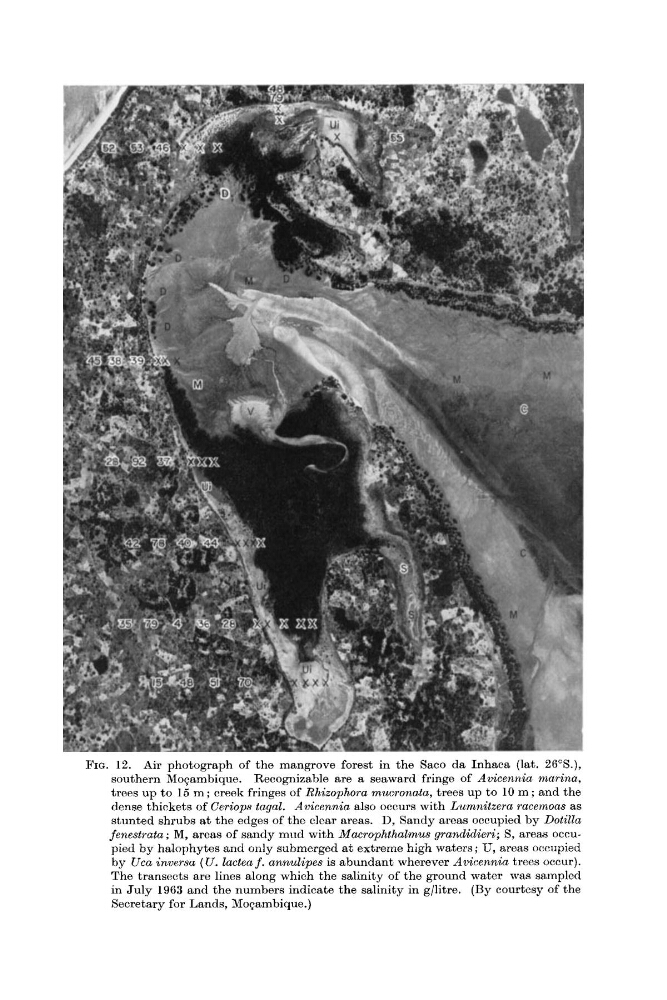
FIG. 12. Air photograph of the mangrove forest in the Sac0 da Inhaca (lat. 26"S.),
southern Moqambique. Recognizable are a seaward fringe of Avicennia marina,
trees up to 15 m ; creek fringes of Rhizophora mucronata, trees up to 10 m ; and the
dense thickets of Ceriops tagal. Avicennia also occurs with Lumnitzera racernoas as
stunted shrubs a t the edges of the clear areas. D, Sandy areas occupied by Dotilla
fenestrata ; M, areas of sandy m i d with Macrophthalmus grandidieri; S, areas occupied by halophytes and oiily submerged at extreme high waters ; U, areas occupied
hy Uca inversa ( U . lactea f. annulipes is abundant wherever Avicennia trees occur).
The transects are lines along which the salinity of the ground water was sampled
in July 1963 and the numbers indicate the salinity in g/litre. (By courtesy of the
Secretary for Lands, Mopmbique.)
southern Moqambique. Recognizable are a seaward fringe of Avicennia marina,
trees up to 15 m ; creek fringes of Rhizophora mucronata, trees up to 10 m ; and the
dense thickets of Ceriops tagal. Avicennia also occurs with Lumnitzera racernoas as
stunted shrubs a t the edges of the clear areas. D, Sandy areas occupied by Dotilla
fenestrata ; M, areas of sandy m i d with Macrophthalmus grandidieri; S, areas occupied by halophytes and oiily submerged at extreme high waters ; U, areas occupied
hy Uca inversa ( U . lactea f. annulipes is abundant wherever Avicennia trees occur).
The transects are lines along which the salinity of the ground water was sampled
in July 1963 and the numbers indicate the salinity in g/litre. (By courtesy of the
Secretary for Lands, Mopmbique.)