

272
MARINE MOLLUSCS AS HOSTS FOR SYMBIOSES
in Rhode Island, great care was taken to ensure that the natural
sea-water system in which the oysters were maintained was condusive
to normal pumping and actual pumping was observed.
It is not known whether the failure by Knapp and Alicata to infect
Tapes semidecussata reflects true incompatibility or another example
of failure to appreciate the biology of marine molluscs. T . semidecussata
is normally buried in sand in its natural environment, generally oriented
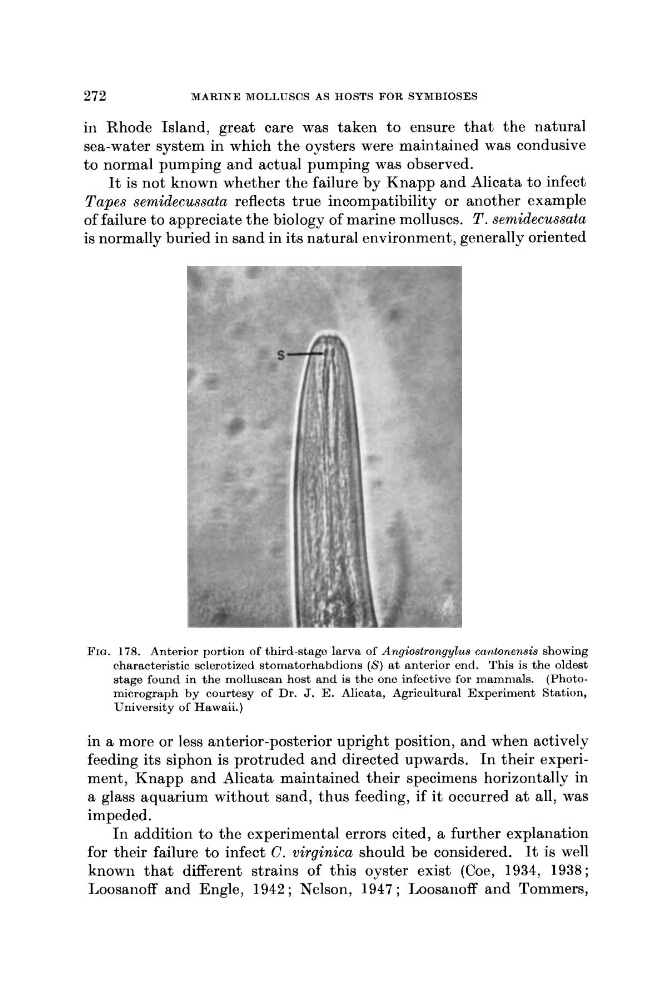
FIG. 178. Anterior portion of third-stage larva of Angiostrongylus cantonensis showing
characteristic sclerotized stomatorhabdions (8) a t anterior end. This is the oldest
stage found in the molluscan host and is the one infective for mammals. (Photomicrograph by courtesy of Dr. J. E. Alicata, Agricultural Experiment Station,
University of Hawaii.)
in a more or less anterior-posterior upright position, and when actively
feeding its siphon is protruded and directed upwards. I n their experiment, Knapp and Alicata maintained their specimens horizontally in
a glass aquarium without sand, thus feeding, if it occurred at all, was
impeded.
I n addition to the experimental errors cited, a further explanation
for their failure to infect C. virginica should be considered. It is well
known that different strains of this oyster exist (Coe, 1934, 1938;
Loosanoff and Engle, 1942 ; Nelson, 1947 ; Loosanoff and Tommers,
MARINE MOLLUSCS AS HOSTS FOR SYMBIOSES
in Rhode Island, great care was taken to ensure that the natural
sea-water system in which the oysters were maintained was condusive
to normal pumping and actual pumping was observed.
It is not known whether the failure by Knapp and Alicata to infect
Tapes semidecussata reflects true incompatibility or another example
of failure to appreciate the biology of marine molluscs. T . semidecussata
is normally buried in sand in its natural environment, generally oriented
FIG. 178. Anterior portion of third-stage larva of Angiostrongylus cantonensis showing
characteristic sclerotized stomatorhabdions (8) a t anterior end. This is the oldest
stage found in the molluscan host and is the one infective for mammals. (Photomicrograph by courtesy of Dr. J. E. Alicata, Agricultural Experiment Station,
University of Hawaii.)
in a more or less anterior-posterior upright position, and when actively
feeding its siphon is protruded and directed upwards. I n their experiment, Knapp and Alicata maintained their specimens horizontally in
a glass aquarium without sand, thus feeding, if it occurred at all, was
impeded.
I n addition to the experimental errors cited, a further explanation
for their failure to infect C. virginica should be considered. It is well
known that different strains of this oyster exist (Coe, 1934, 1938;
Loosanoff and Engle, 1942 ; Nelson, 1947 ; Loosanoff and Tommers,