

7. THE PIIYLA NEMERTINEA, ASCHELMINTHES AND ANNELIDA
271
with Angiostrongylus cantonensis larvae. Considering their experimental
procedure, their negative results are not surprising. Relative to their
attempt to infect C. virginica, their failure to appreciate the ecology
and functional biology of oysters as related to their feeding habits
most probably was responsible for their negative results. It has been
shown that infection of C. virginica from New England only occurs if
first-stage A . cantonensis larvae are ingested, followed by successful
penetration of the host’s alimentary wall (Cheng, 196613). I n the trials
by Knapp and Alicata, they failed to appreciate this and did not
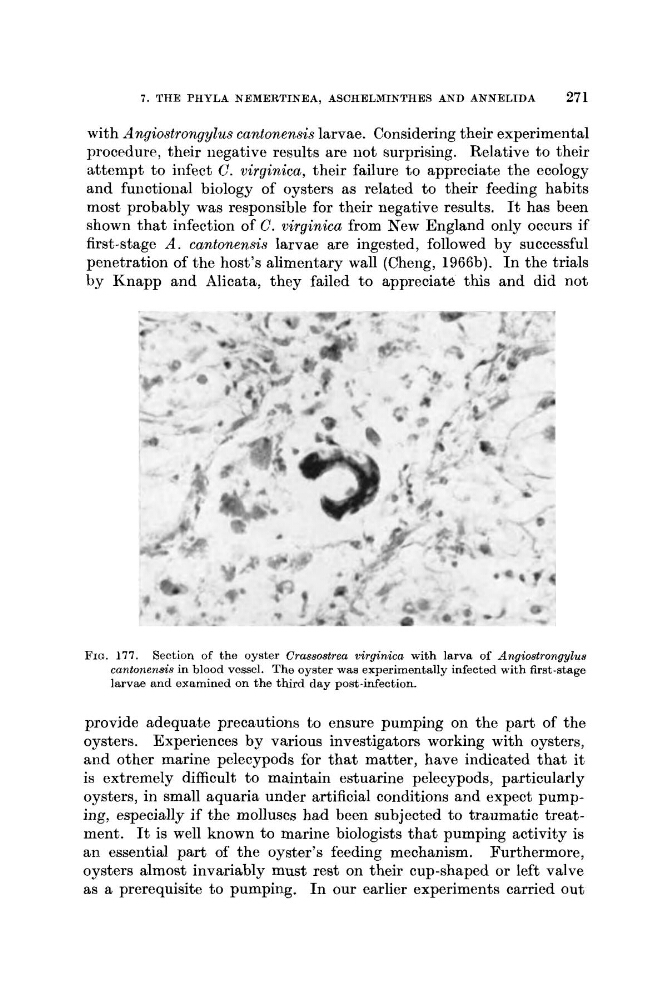
FIG. 177. Section of the oyster Crassostrea virginka with larva of Angiostrongy~ue
cnntoiaensis in blood vessel. The oyster was experimentally infected with first-stage
larvae and examined on the third day post-infection.
provide adequate precautions to ensure pumping on the part of the
oysters. Experiences by various investigators working with oysters,
and other marine pelecypods for that matter, have indicated that it
is extremely difficult to maintain estuarine pelecypods, particularly
oysters, in small aquaria under artificial conditions and expect pumping, especially if the molluscs had been subjected to traumatic treatment. It is well known to marine biologists that pumping activity is
an essential part of the oyster’s feeding mechanism. Furthermore,
oysters almost invariably must rest on their cup-shaped or left valve
as a prerequisite to pumping. I n our earlier experiments carried out
271
with Angiostrongylus cantonensis larvae. Considering their experimental
procedure, their negative results are not surprising. Relative to their
attempt to infect C. virginica, their failure to appreciate the ecology
and functional biology of oysters as related to their feeding habits
most probably was responsible for their negative results. It has been
shown that infection of C. virginica from New England only occurs if
first-stage A . cantonensis larvae are ingested, followed by successful
penetration of the host’s alimentary wall (Cheng, 196613). I n the trials
by Knapp and Alicata, they failed to appreciate this and did not
FIG. 177. Section of the oyster Crassostrea virginka with larva of Angiostrongy~ue
cnntoiaensis in blood vessel. The oyster was experimentally infected with first-stage
larvae and examined on the third day post-infection.
provide adequate precautions to ensure pumping on the part of the
oysters. Experiences by various investigators working with oysters,
and other marine pelecypods for that matter, have indicated that it
is extremely difficult to maintain estuarine pelecypods, particularly
oysters, in small aquaria under artificial conditions and expect pumping, especially if the molluscs had been subjected to traumatic treatment. It is well known to marine biologists that pumping activity is
an essential part of the oyster’s feeding mechanism. Furthermore,
oysters almost invariably must rest on their cup-shaped or left valve
as a prerequisite to pumping. I n our earlier experiments carried out