

260
MARINE MOLLUSCS AS HOSTS FOR SYMBIOSES
the elasmobranch definitive host when the latter feeds on clams (Wardle
and McLeod, 1952 ; Sparks and Chew, 1966). Sparks and Chew have
suggested that the bat stingray, Holoyhinus californicus, may be the
definitive host.
Pathology. According to Sparks and Chew, in histological section,
each plerocercoid larva is surrounded by " a compact network of fine
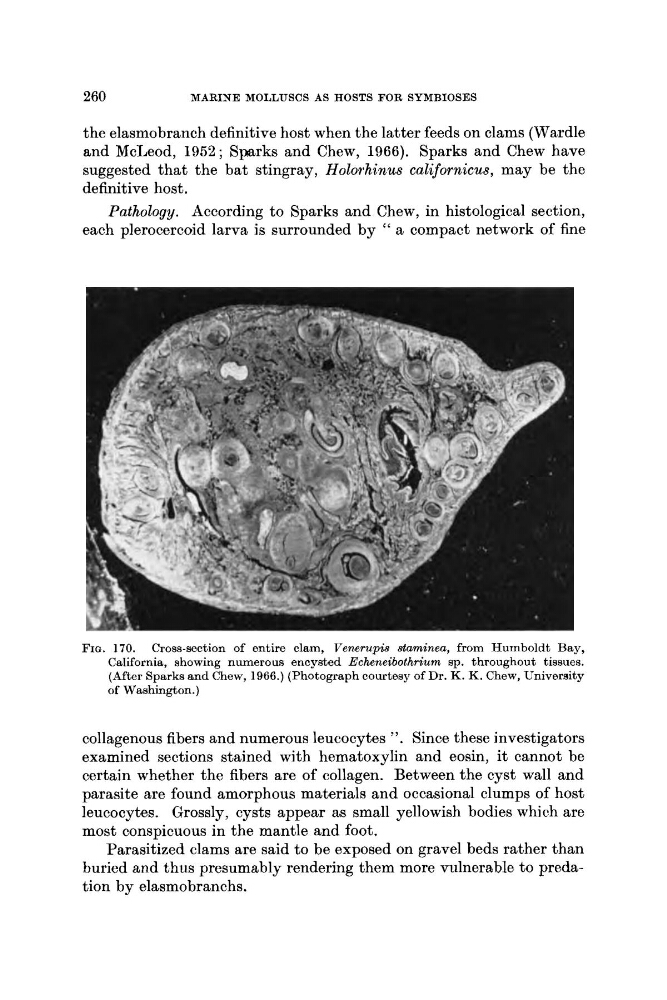
FIG. 170. Cross-section of entire clam, Venerupia staminea, from Humboldt Bay,
California., showing numerous encysted Echeneibothriuln sp. throughout tissues.
(After Sparks and Chew, 1966.) (Photograph courtesy of Dr. K. K. Chew, University
of Washington.)
collagenous fibers and numerous leucocytes ". Since these investigators
examined sections stained with hematoxylin and eosin, it cannot be
certain whether the fibers are of collagen. Between the cyst wall and
parasite are found amorphous materials and occasional clumps of host
leucocytes. Grossly, cysts appear as small yellowish bodies which are
most conspicuous in the mantle and foot.
Parasitized clams are said to be exposed on gravel beds rather than
buried and thus presumably rendering them more vulnerable to predation by elasmobranchs.
MARINE MOLLUSCS AS HOSTS FOR SYMBIOSES
the elasmobranch definitive host when the latter feeds on clams (Wardle
and McLeod, 1952 ; Sparks and Chew, 1966). Sparks and Chew have
suggested that the bat stingray, Holoyhinus californicus, may be the
definitive host.
Pathology. According to Sparks and Chew, in histological section,
each plerocercoid larva is surrounded by " a compact network of fine
FIG. 170. Cross-section of entire clam, Venerupia staminea, from Humboldt Bay,
California., showing numerous encysted Echeneibothriuln sp. throughout tissues.
(After Sparks and Chew, 1966.) (Photograph courtesy of Dr. K. K. Chew, University
of Washington.)
collagenous fibers and numerous leucocytes ". Since these investigators
examined sections stained with hematoxylin and eosin, it cannot be
certain whether the fibers are of collagen. Between the cyst wall and
parasite are found amorphous materials and occasional clumps of host
leucocytes. Grossly, cysts appear as small yellowish bodies which are
most conspicuous in the mantle and foot.
Parasitized clams are said to be exposed on gravel beds rather than
buried and thus presumably rendering them more vulnerable to predation by elasmobranchs.