

YBTIIOUS O F S A M P L I N G T H E BENTHOS
187
of the ~ ~ i i ~ l i o r - c l r r ’ d g ~
to ol)t,ititi wlitit arc’ claimed to be quantitative
samples, but excavated to a dcpth of only 7-6 cm, while an adjustable
anchor-drcdgv is described by Thomas (1960). The latter has a net
of wire gauze which sifts the sediment as it is towed along. Its action
is therefore more like that of a conventional, but deep digging, dredge.
None of these modified anchor dredges can compare with the original
for depth of digging.
a t oiie time tangles, consisting of lengths of teased-out rope, were
fastened to the back of the dredge net, sometimes on an iron cross-bar,
to the surfarc of which certain animals such as echinoderms and
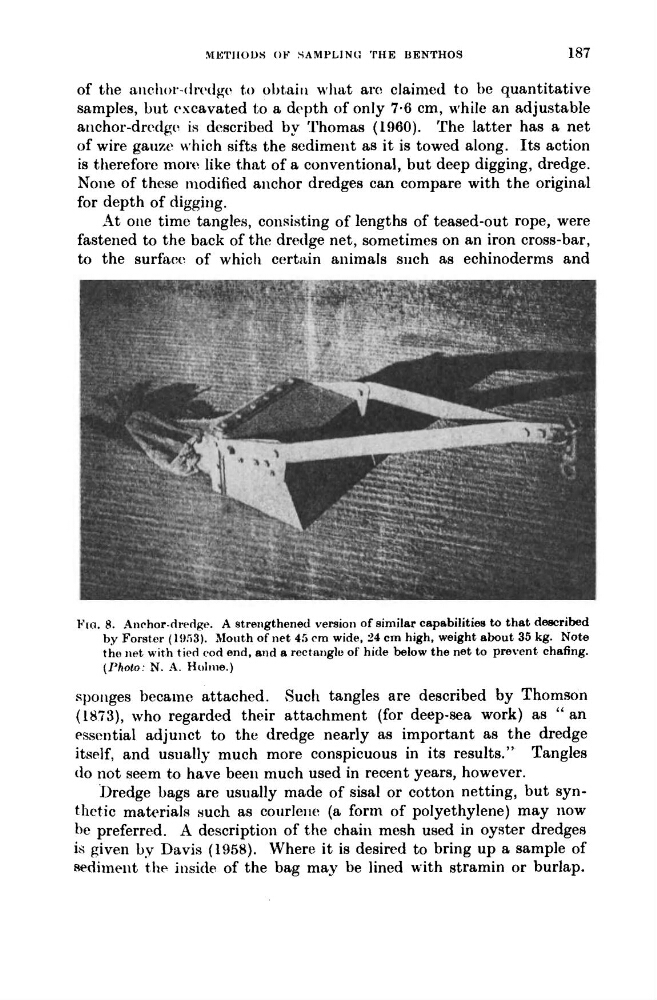
Pra. 8. .4nchor-drrdge. A strengthened version of similar capabilities to that deacribed
by Forstor (1953). Mouth of net 45 rrn wide, 24 cm high, weight about 35 kg. Note
tho net with tird cod end, and a rectangle of hide below the net to prevent chafing.
(Photo N. A. Holtne.)
sponges became attached. Such tangles are described by Thomson
(lt3$3), who regarded their attachment (for deep-sea work) as “ a n
essential adjunct to the dredge nearly as important as the dredge
itself, and usually much more conspicuous in its results.” Tangles
do not seem to have been much used in recent years, however.
Dredge bags are usually made of sisal or cotton netting, but syntlietic materials such as courlerie (a form of polyethylene) may now
be preferred. A description of the chain mesh used in oyster dredges
is given by Davis (1958). Where i t is desired to bring up a sample of
credimeiit the inside of the bag may be lined with stramin or burlap.
187
of the ~ ~ i i ~ l i o r - c l r r ’ d g ~
to ol)t,ititi wlitit arc’ claimed to be quantitative
samples, but excavated to a dcpth of only 7-6 cm, while an adjustable
anchor-drcdgv is described by Thomas (1960). The latter has a net
of wire gauze which sifts the sediment as it is towed along. Its action
is therefore more like that of a conventional, but deep digging, dredge.
None of these modified anchor dredges can compare with the original
for depth of digging.
a t oiie time tangles, consisting of lengths of teased-out rope, were
fastened to the back of the dredge net, sometimes on an iron cross-bar,
to the surfarc of which certain animals such as echinoderms and
Pra. 8. .4nchor-drrdge. A strengthened version of similar capabilities to that deacribed
by Forstor (1953). Mouth of net 45 rrn wide, 24 cm high, weight about 35 kg. Note
tho net with tird cod end, and a rectangle of hide below the net to prevent chafing.
(Photo N. A. Holtne.)
sponges became attached. Such tangles are described by Thomson
(lt3$3), who regarded their attachment (for deep-sea work) as “ a n
essential adjunct to the dredge nearly as important as the dredge
itself, and usually much more conspicuous in its results.” Tangles
do not seem to have been much used in recent years, however.
Dredge bags are usually made of sisal or cotton netting, but syntlietic materials such as courlerie (a form of polyethylene) may now
be preferred. A description of the chain mesh used in oyster dredges
is given by Davis (1958). Where i t is desired to bring up a sample of
credimeiit the inside of the bag may be lined with stramin or burlap.