

138
ROBINA B. SCHOLES AND J. M. SHEWAN
A typical medium found to be the most successful out of over seven
tested formulae for investigating waters on the North Sea off Aberdeen
contained 78% aged sea water, 0.2670 yeast extra&, 0.25y0 peptone,
with traces of iron and phosphate and had a pH of 7-6 (Anderson. 1962).
IV. DISTRIBUTION OF BACTERIA IN THE SEA
A. Qeographieal distribution
Work published during the past 60 years has been concerned mainly
with data at specific locations and depths confined almost exclusively
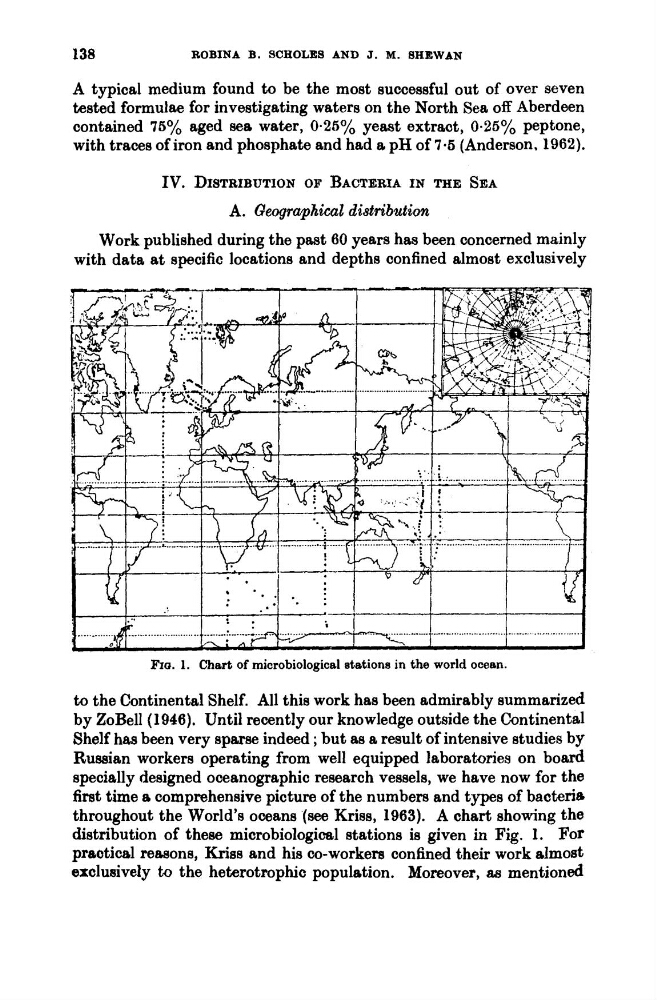
FIG. 1. Chart of microbiological stations in the world ocean.
to the Continental Shelf. All this work has been admirably summarized
by ZoBell(1946). Until recently our knowledge outside the Continental
Shelf has been very sparse indeed ; but as a result of intensive studies by
Ruaaian workers operating from well equipped laboratories on board
specially designed oceanographic research vessels, we have now for the
first time a comprehensive picture of the numbers and types of bacteris
throughout the World’s oceans (see Kriss, 1963). A chart showing the
distribution of these microbiologiml stations is given in Fig. 1. For
practical reaeons, Kriss and his co-workers confined their work almost
exclusively to the heterotrophic population. Moreover, aa mentioned
ROBINA B. SCHOLES AND J. M. SHEWAN
A typical medium found to be the most successful out of over seven
tested formulae for investigating waters on the North Sea off Aberdeen
contained 78% aged sea water, 0.2670 yeast extra&, 0.25y0 peptone,
with traces of iron and phosphate and had a pH of 7-6 (Anderson. 1962).
IV. DISTRIBUTION OF BACTERIA IN THE SEA
A. Qeographieal distribution
Work published during the past 60 years has been concerned mainly
with data at specific locations and depths confined almost exclusively
FIG. 1. Chart of microbiological stations in the world ocean.
to the Continental Shelf. All this work has been admirably summarized
by ZoBell(1946). Until recently our knowledge outside the Continental
Shelf has been very sparse indeed ; but as a result of intensive studies by
Ruaaian workers operating from well equipped laboratories on board
specially designed oceanographic research vessels, we have now for the
first time a comprehensive picture of the numbers and types of bacteris
throughout the World’s oceans (see Kriss, 1963). A chart showing the
distribution of these microbiologiml stations is given in Fig. 1. For
practical reaeons, Kriss and his co-workers confined their work almost
exclusively to the heterotrophic population. Moreover, aa mentioned