

110
JOHN E. CUSHINU
bility that some mixture of two populations had occurred to give these
results could not be excluded, but is held to be unlikely by Sprague
on the basis of other data.) More recently, evidence has been obtained
from blood group data that two genetically separable subpopulations
entered the commercial skipjack fishery of Hawaii in 1962. Further,
recent data suggests, through the fact that each different subpopulation of skipjack occurs within well-defined differences in water types,
that the subpopulation unit is related to a specific portion of the
circulation system or to a mass of oceanographically definable water
(Sprague, personal communication).
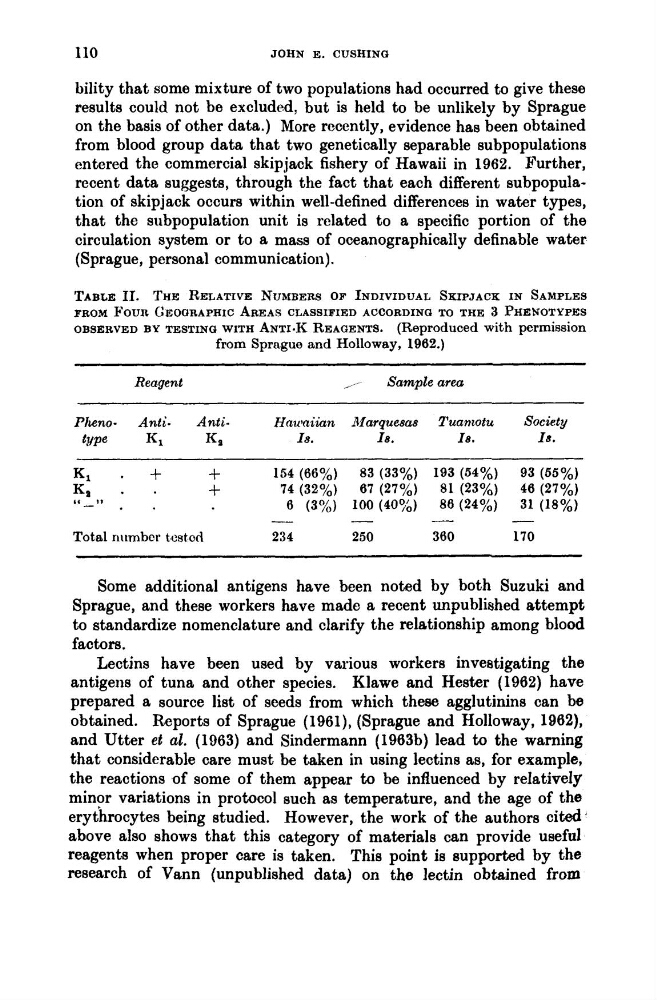
TABLE 11. THE RELATIVE NUMBERS OF INDIVIDUAL SKIPJACK IN SAMPLES
FROM Poun GEOURAPHIC AREAS CLASSIFIED ACCORDINU TO THE 3 PHENOTYPES
OBSEHVED BY TESTING WITH ANTI.K REAGENTS. (Reproduced with permission
from Sprngue and Hollowey, 1962.)
Reagent
, Sample area
AntiHawaiian Marquema Tuanrotu
Society
type
K,
Ka
I S .
Is.
Is.
Is.
K,
- + +
154 (66%)
83 (33%) 193 (54%)
93 (55%)
Ka
. .
+
74 (32%) 67 (27%)
81 (23%) 46 (27%)
. .
6 (3%) 100 (40%)
86 (24%)
31 (18%)
1' - 1 )
Total mimber testod
234
250
360
170
-
-
-
-
Some additional antigens have been noted by both Suzuki and
Sprague, and these workers have made a recent unpublkhed attempt
to standardize nomenclature and clarify the relationship among blood
factors.
Lectins have been used by various workers investigating the
antigens of tuna and other species. Klawe and Hester (1962) have
prepared a source list of seeds from which these agglutinins can be
obtained. Rcports of Sprague (1961), (Sprague and Holloway, 1962),
and Utter et al. (1963) and Sindermann (1963b) lead to the warning
that considerable care must be taken in using lectins as, for example,
the reactions of some of them appear to be influenced by relatively
minor variations in protocol such as temperature, and the age of the
erythrocytes being studied. However, the work of the authors cited'
above also shows that this category of materials can provide useful
reagents when proper care is taken. This point is supported by the
research of Vann (unpublished data) on the lectin obtained from
JOHN E. CUSHINU
bility that some mixture of two populations had occurred to give these
results could not be excluded, but is held to be unlikely by Sprague
on the basis of other data.) More recently, evidence has been obtained
from blood group data that two genetically separable subpopulations
entered the commercial skipjack fishery of Hawaii in 1962. Further,
recent data suggests, through the fact that each different subpopulation of skipjack occurs within well-defined differences in water types,
that the subpopulation unit is related to a specific portion of the
circulation system or to a mass of oceanographically definable water
(Sprague, personal communication).
TABLE 11. THE RELATIVE NUMBERS OF INDIVIDUAL SKIPJACK IN SAMPLES
FROM Poun GEOURAPHIC AREAS CLASSIFIED ACCORDINU TO THE 3 PHENOTYPES
OBSEHVED BY TESTING WITH ANTI.K REAGENTS. (Reproduced with permission
from Sprngue and Hollowey, 1962.)
Reagent
, Sample area
AntiHawaiian Marquema Tuanrotu
Society
type
K,
Ka
I S .
Is.
Is.
Is.
K,
- + +
154 (66%)
83 (33%) 193 (54%)
93 (55%)
Ka
. .
+
74 (32%) 67 (27%)
81 (23%) 46 (27%)
. .
6 (3%) 100 (40%)
86 (24%)
31 (18%)
1' - 1 )
Total mimber testod
234
250
360
170
-
-
-
-
Some additional antigens have been noted by both Suzuki and
Sprague, and these workers have made a recent unpublkhed attempt
to standardize nomenclature and clarify the relationship among blood
factors.
Lectins have been used by various workers investigating the
antigens of tuna and other species. Klawe and Hester (1962) have
prepared a source list of seeds from which these agglutinins can be
obtained. Rcports of Sprague (1961), (Sprague and Holloway, 1962),
and Utter et al. (1963) and Sindermann (1963b) lead to the warning
that considerable care must be taken in using lectins as, for example,
the reactions of some of them appear to be influenced by relatively
minor variations in protocol such as temperature, and the age of the
erythrocytes being studied. However, the work of the authors cited'
above also shows that this category of materials can provide useful
reagents when proper care is taken. This point is supported by the
research of Vann (unpublished data) on the lectin obtained from