

384
J . H. S. BLAXTER AND F. 0 . T. HOLLIDAY
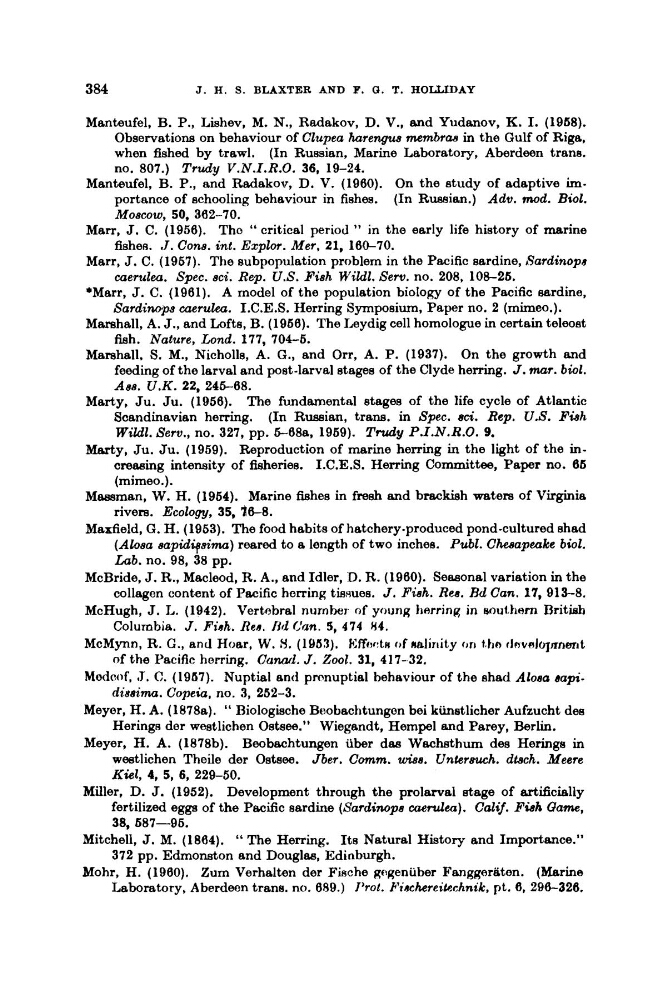
Manteufel, B. P., Lishev, M. N., Radakov, D. V., and Yudanov, K. I. (1968).
Observations on behaviour of Clupea hurengua membraa in the Gulf of Riga,
when fished by trawl. (In Russian, Marine Laboratory, Aberdeen trans.
no. 807.) Trudy V.N.I.R.O. 36, 19-24.
Manteufel, B. P., and Radakov, D. V. (1960). On the study of adaptive importance of schooling behaviour in fishes. (In Russian.) Adv. mod. Biol.
Moecow, 50, 362-70.
Marr, J. C. (1956). Tho “ critical period ” in tho early life history of marine
fbhea. J . Cone. int. Explor. Mer, 21, 160-70.
Marr, J. C. (1967). The subpopulation problem in the Pacific sardine, h’ardinopa
caeruleu. Spec. eci. Rep. US. Fiah Wildl. Serv. no. 208, 108-25.
+Marr, J. C. (1961). A model of the population biology of the Pacific mrdine,
Sardinops cuerulea. I.C.E.S. Herring Symposium, Paper no. 2 (mimeo.).
Marshall, A. J., and Lofts, B. (1966). The 1,eydig cell homologue in certain teleost
fish. Nature, Lond. 177, 704-5.
Marshall. S. M., Nicholls, A. G., and Orr, A. P. (1937). On the growth and
feeding of the larval and post-larval stages of the Clyde herring. J. tnur. bwl.
Ass. U.K. 22, 246-68.
The fundamental stages of the life cycle of Atlantic
Scandinavian herring. (In Russian, tram. in Spec. 8& Rep. US. Fiah
Wildl. Serv., no. 327, pp. 6-68a, 1969). Trudy P.I.N.R.O. 9.
M y , Ju. Ju. (1969). Reproduction of marine herring in the light of the increasing intensity of fisheries. I.C.E.S. Herring Committee, Paper no. 66
(mimeo.).
Messman, W. H. (1954). Marine fishes in fresh and brackish waters of Virginia
rivers. Ecology, 35, ?S-8.
Maxfield, G. H. (1963). The food habits of hatchery-produced pond-cultured shad
(Aloea aapid+Gm) reared to a length of two inches. Publ. Cheeupeake biol.
Lab. no. 98, 38 pp.
McBride, J. R., Macleod, R. A., and Idler, D. R. (1960). Seasonal variation in the
collagen content of Pacific herring tismes. J. Fieh. Re8. Bd Can. 17, 913-8.
McHugh, J. L. (1942). Vertobral number of young herring in southern British
Columbia. J. Fiah. Rea. fid C‘un. 5, 414 H4.
McMynn, R. C., and Hoar, W. 3. (1053). EffwtR of rmliriity on tho clovtrlynnent
of the I’aciflc herring. Cunacl. J . ZooE. 31, 417-32.
Modrof, J . C . (1967). Nuptial and prnnuptial beheviour of the shad Aloes sap.dieaim. Copeia, no. 3, 2611-3.
Meyor, H. A. (1878a). “ Biologische Buobachtungen bei kiinstlicher Aufzucht dee
Herings dor westlichen Ostsee.” Wiegandt, Hempel and Parey, Berlin.
Meyer, H. A. (187815). Beobachtungen uber daa Wachsthum des Herings in
weatlichen Theile der Ostsee. Jber. C m m . wiae. Untersuch. dtech. Meere
Kiel, 4, 5, 6, 229-60.
Miller, D. J. (1952). Development through the prolarval stage of artificially
fertilized eggs of the Pacific sardine (Surdinope cuerulea). CaZq. Fiah Qame,
Mitchell, J. M. (1864). “The Herring. Its Natural History and Importance.”
372 pp. Edmonston and Douglas, Edinburgh.
Mohr, H. (1960). Zum Verhalten der Fische gogenuber Fanggoraten. (Marine
Laboratory, Aberdeon trans. no. 889.) T’rvt. Piachereibchnik, pt. 6, 296-328.
Marty, Ju. Ju. (1956).
38, 687-96.
J . H. S. BLAXTER AND F. 0 . T. HOLLIDAY
Manteufel, B. P., Lishev, M. N., Radakov, D. V., and Yudanov, K. I. (1968).
Observations on behaviour of Clupea hurengua membraa in the Gulf of Riga,
when fished by trawl. (In Russian, Marine Laboratory, Aberdeen trans.
no. 807.) Trudy V.N.I.R.O. 36, 19-24.
Manteufel, B. P., and Radakov, D. V. (1960). On the study of adaptive importance of schooling behaviour in fishes. (In Russian.) Adv. mod. Biol.
Moecow, 50, 362-70.
Marr, J. C. (1956). Tho “ critical period ” in tho early life history of marine
fbhea. J . Cone. int. Explor. Mer, 21, 160-70.
Marr, J. C. (1967). The subpopulation problem in the Pacific sardine, h’ardinopa
caeruleu. Spec. eci. Rep. US. Fiah Wildl. Serv. no. 208, 108-25.
+Marr, J. C. (1961). A model of the population biology of the Pacific mrdine,
Sardinops cuerulea. I.C.E.S. Herring Symposium, Paper no. 2 (mimeo.).
Marshall, A. J., and Lofts, B. (1966). The 1,eydig cell homologue in certain teleost
fish. Nature, Lond. 177, 704-5.
Marshall. S. M., Nicholls, A. G., and Orr, A. P. (1937). On the growth and
feeding of the larval and post-larval stages of the Clyde herring. J. tnur. bwl.
Ass. U.K. 22, 246-68.
The fundamental stages of the life cycle of Atlantic
Scandinavian herring. (In Russian, tram. in Spec. 8& Rep. US. Fiah
Wildl. Serv., no. 327, pp. 6-68a, 1969). Trudy P.I.N.R.O. 9.
M y , Ju. Ju. (1969). Reproduction of marine herring in the light of the increasing intensity of fisheries. I.C.E.S. Herring Committee, Paper no. 66
(mimeo.).
Messman, W. H. (1954). Marine fishes in fresh and brackish waters of Virginia
rivers. Ecology, 35, ?S-8.
Maxfield, G. H. (1963). The food habits of hatchery-produced pond-cultured shad
(Aloea aapid+Gm) reared to a length of two inches. Publ. Cheeupeake biol.
Lab. no. 98, 38 pp.
McBride, J. R., Macleod, R. A., and Idler, D. R. (1960). Seasonal variation in the
collagen content of Pacific herring tismes. J. Fieh. Re8. Bd Can. 17, 913-8.
McHugh, J. L. (1942). Vertobral number of young herring in southern British
Columbia. J. Fiah. Rea. fid C‘un. 5, 414 H4.
McMynn, R. C., and Hoar, W. 3. (1053). EffwtR of rmliriity on tho clovtrlynnent
of the I’aciflc herring. Cunacl. J . ZooE. 31, 417-32.
Modrof, J . C . (1967). Nuptial and prnnuptial beheviour of the shad Aloes sap.dieaim. Copeia, no. 3, 2611-3.
Meyor, H. A. (1878a). “ Biologische Buobachtungen bei kiinstlicher Aufzucht dee
Herings dor westlichen Ostsee.” Wiegandt, Hempel and Parey, Berlin.
Meyer, H. A. (187815). Beobachtungen uber daa Wachsthum des Herings in
weatlichen Theile der Ostsee. Jber. C m m . wiae. Untersuch. dtech. Meere
Kiel, 4, 5, 6, 229-60.
Miller, D. J. (1952). Development through the prolarval stage of artificially
fertilized eggs of the Pacific sardine (Surdinope cuerulea). CaZq. Fiah Qame,
Mitchell, J. M. (1864). “The Herring. Its Natural History and Importance.”
372 pp. Edmonston and Douglas, Edinburgh.
Mohr, H. (1960). Zum Verhalten der Fische gogenuber Fanggoraten. (Marine
Laboratory, Aberdeon trans. no. 889.) T’rvt. Piachereibchnik, pt. 6, 296-328.
Marty, Ju. Ju. (1956).
38, 687-96.