

POPULATION CYCLES IN SMALL MAMMALS
301
I
-
PEAK PHASE - L
DECLINE PHASE
A
M
J
J
A
S
O
N
D
J
F
M
A
M
J
1937
1938
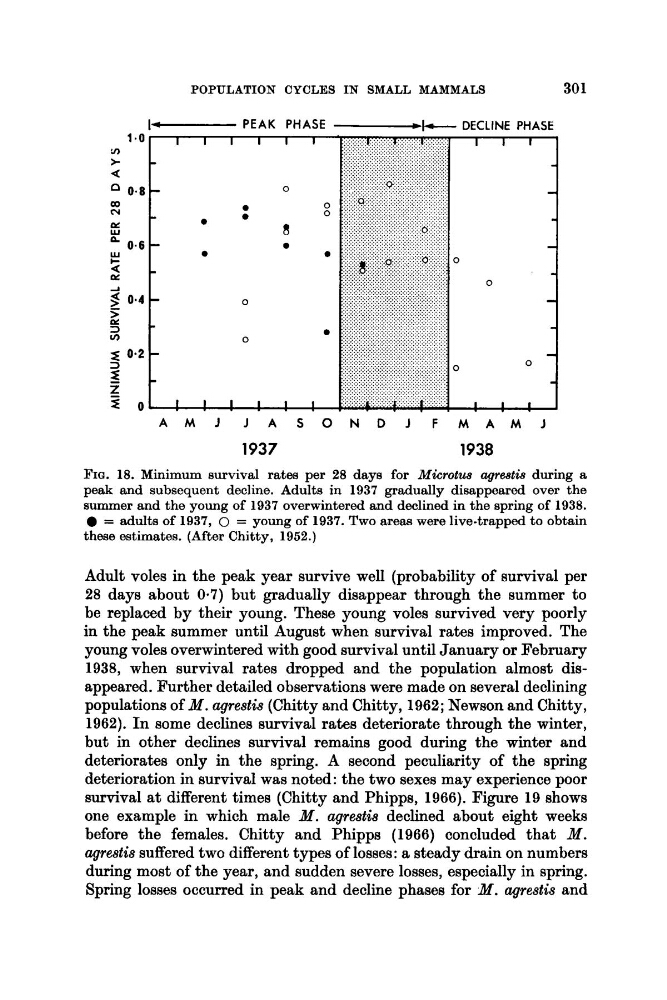
FIG. 18. Minimum survival rates per 28 days for Microtwr agrestia during a
peak and subsequent decline. Adults in 1937 gradually disappeared over the
summer and the young of 1937 overwintered and declined in the spring of 1938.
= adults of 1937, 0 = young of 1937. Two areas were live-trapped to obtain
these estimates. (After Chitty, 1952.)
Adult voles in the peak year survive well (probability of survival per
28 days about 0.7) but gradually disappear through the summer to
be replaced by their young. These young voles survived very poorly
in the peak summer until August when survival rates improved. The
young voles overwintered with good survival until January or February
1938, when survival rates dropped and the population almost disappeared. Further detailed observations were made on several declining
populations of M . agrestis (Chitty and Chitty, 1962; Newson and Chitty,
1962). I n some declines survival rates deteriorate through the winter,
but in other declines survival remains good during the winter and
deteriorates only in the spring. A second peculiarity of the spring
deterioration in survival was noted: the two sexes may experience poor
survival at different times (Chitty and Phipps, 1966). Figure 19 shows
one example in which male M. agrestis declined about eight weeks
before the females. Chitty and Phipps (1966) concluded that M.
agrestis suffered two different types of losses: a steady drain on numbers
during most of the year, and sudden severe losses, especially in spring.
Spring losses occurred in peak and decline phases for M. agrestis and
301
I
-
PEAK PHASE - L
DECLINE PHASE
A
M
J
J
A
S
O
N
D
J
F
M
A
M
J
1937
1938
FIG. 18. Minimum survival rates per 28 days for Microtwr agrestia during a
peak and subsequent decline. Adults in 1937 gradually disappeared over the
summer and the young of 1937 overwintered and declined in the spring of 1938.
= adults of 1937, 0 = young of 1937. Two areas were live-trapped to obtain
these estimates. (After Chitty, 1952.)
Adult voles in the peak year survive well (probability of survival per
28 days about 0.7) but gradually disappear through the summer to
be replaced by their young. These young voles survived very poorly
in the peak summer until August when survival rates improved. The
young voles overwintered with good survival until January or February
1938, when survival rates dropped and the population almost disappeared. Further detailed observations were made on several declining
populations of M . agrestis (Chitty and Chitty, 1962; Newson and Chitty,
1962). I n some declines survival rates deteriorate through the winter,
but in other declines survival remains good during the winter and
deteriorates only in the spring. A second peculiarity of the spring
deterioration in survival was noted: the two sexes may experience poor
survival at different times (Chitty and Phipps, 1966). Figure 19 shows
one example in which male M. agrestis declined about eight weeks
before the females. Chitty and Phipps (1966) concluded that M.
agrestis suffered two different types of losses: a steady drain on numbers
during most of the year, and sudden severe losses, especially in spring.
Spring losses occurred in peak and decline phases for M. agrestis and