

138
Q. R. POTTS AND 0 . P. VICKERMAN
suggests that there were no inherent differences between the sites
investigated and shows that the relationship between u and the
number of apterae is dynamic.
6 . The properties of diversity
There are several methods of quantifying diversity but in each the
index describes the relationship between the number of kinds and the
number of objects. The concept of a is well understood but its biological
implications are not clear, although it would seem that a per 8e can
have no function. It therefore seems pertinent to review those factors
which determine u a t a given site and those which are consequent upon
this.
4 t
35
-
2 3
5 30a
$ 2 5 -
-
c
._
g 20c
0
-v
151 0
5 -
a
-
.
2
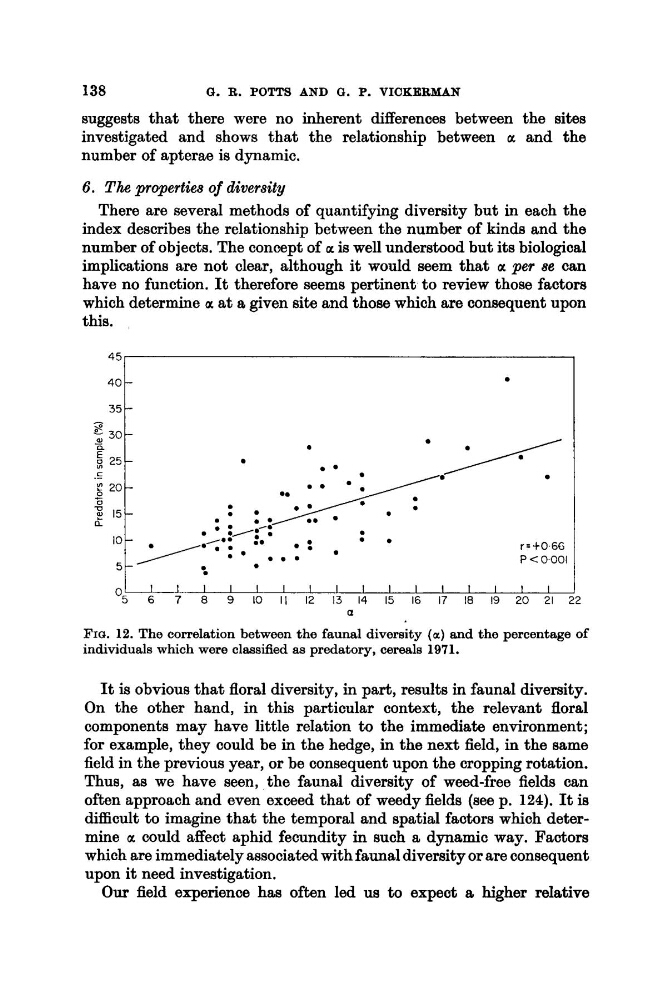
FIG. 12. The correlation between the faunal diversity (a) and the percentage of
individuals which were classified as predatory, cereals 1971.
It is obvious that floral diversity, in part, results in faunal diversity.
On the other hand, in this particular context, the relevant floral
components may have little relation to the immediate environment;
for example, they could be in the hedge, in the next field, in the same
field in the previous year, or be consequent upon the cropping rotation.
Thus, as we have seen, the faunal diversity of weed-free fields can
often approach and even exceed that of weedy fields (see p. 124). It is
difficult to imagine that the temporal and spatial factors which determine a could affect aphid fecundity in such a dynamic way. Factors
which are immediately associated with faunal diversity or are consequent
upon it need investigation.
Our field experience has often led us to expect a higher relative
Q. R. POTTS AND 0 . P. VICKERMAN
suggests that there were no inherent differences between the sites
investigated and shows that the relationship between u and the
number of apterae is dynamic.
6 . The properties of diversity
There are several methods of quantifying diversity but in each the
index describes the relationship between the number of kinds and the
number of objects. The concept of a is well understood but its biological
implications are not clear, although it would seem that a per 8e can
have no function. It therefore seems pertinent to review those factors
which determine u a t a given site and those which are consequent upon
this.
4 t
35
-
2 3
5 30a
$ 2 5 -
-
c
._
g 20c
0
-v
151 0
5 -
a
-
.
2
FIG. 12. The correlation between the faunal diversity (a) and the percentage of
individuals which were classified as predatory, cereals 1971.
It is obvious that floral diversity, in part, results in faunal diversity.
On the other hand, in this particular context, the relevant floral
components may have little relation to the immediate environment;
for example, they could be in the hedge, in the next field, in the same
field in the previous year, or be consequent upon the cropping rotation.
Thus, as we have seen, the faunal diversity of weed-free fields can
often approach and even exceed that of weedy fields (see p. 124). It is
difficult to imagine that the temporal and spatial factors which determine a could affect aphid fecundity in such a dynamic way. Factors
which are immediately associated with faunal diversity or are consequent
upon it need investigation.
Our field experience has often led us to expect a higher relative