

J. A. KITUHINO AND F. J. EBLINO
30mrn
--_
10Nurclla from tarrigalhorna
- _
-
I
- .
Nucclla frcm the Rapids
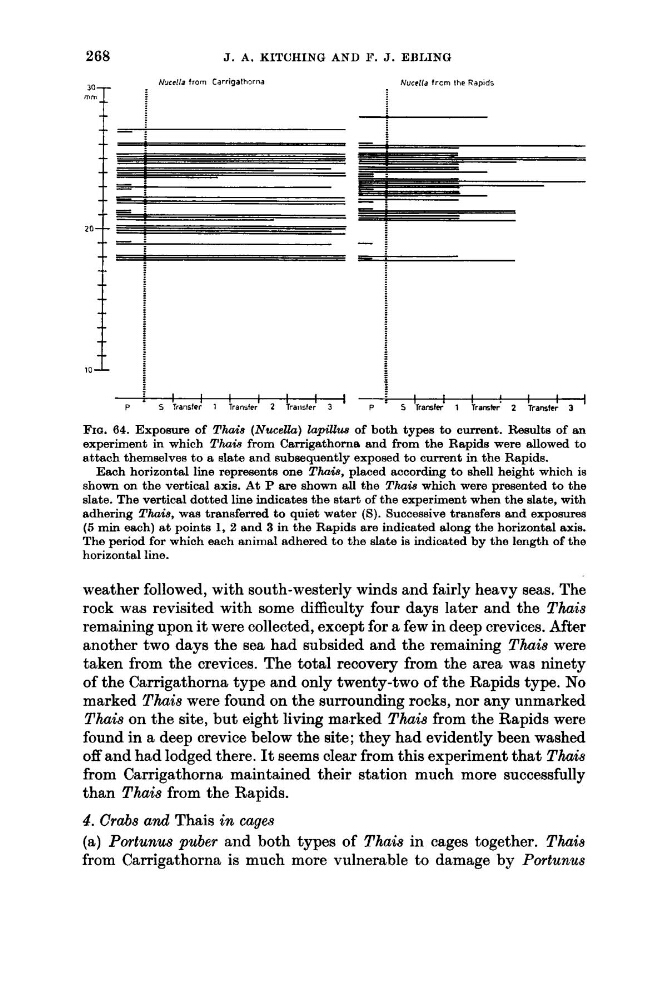
FIG 64. Exposure of Thai8 (Nucella) lapillus of both types to current. Results of an
experiment in which Thais from Carrigathorne and from the Rapids were allowed to
attach themselves to a slate and subsequently exposed to current in the Rapids.
Each horizontal line represents one Thais, placed according to shell height which is
shown on the vertical axis. At P are shown all the Thais which were presented to the
slate. The vertical dotted line indicates the start of the experiment when the slate, with
adhering Thais, was transferred to quiet water (S). Successive transfers and exposures
( 5 min each) a t points 1, 2 and 3 in the Rapids are indicated along the horizontal axis.
The period for which each animal adhered to the slate is indicated by the length of the
horizontal line.
weather followed, with south-westerly winds and fairly heavy seas. The
rock was revisited with some difficulty four days later and the Thais
remaining upon it were collected, except for a few in deep crevices. After
another two days the sea had subsided and the remaining Thais were
taken from the crevices. The total recovery from the area was ninety
of the Carrigathorna type and only twenty-two of the Rapids type. No
marked Thais were found on the surrounding rocks, nor any unmarked
Thais on the site, but eight living marked Thais from the Rapids were
found in a deep crevice below the site; they had evidently been washed
off and had lodged there. It seems clear from this experiment that Thais
from Carrigathorna maintained their station much more successfully
than Thais from the Rapids.
4. Crabs and Thais in cages
(a) Portunus puber and both types of Thais in cages together. Thais
from Carrigathorna is much more vulnerable to damage by Portunus
30mrn
--_
10Nurclla from tarrigalhorna
- _
-
I
- .
Nucclla frcm the Rapids
FIG 64. Exposure of Thai8 (Nucella) lapillus of both types to current. Results of an
experiment in which Thais from Carrigathorne and from the Rapids were allowed to
attach themselves to a slate and subsequently exposed to current in the Rapids.
Each horizontal line represents one Thais, placed according to shell height which is
shown on the vertical axis. At P are shown all the Thais which were presented to the
slate. The vertical dotted line indicates the start of the experiment when the slate, with
adhering Thais, was transferred to quiet water (S). Successive transfers and exposures
( 5 min each) a t points 1, 2 and 3 in the Rapids are indicated along the horizontal axis.
The period for which each animal adhered to the slate is indicated by the length of the
horizontal line.
weather followed, with south-westerly winds and fairly heavy seas. The
rock was revisited with some difficulty four days later and the Thais
remaining upon it were collected, except for a few in deep crevices. After
another two days the sea had subsided and the remaining Thais were
taken from the crevices. The total recovery from the area was ninety
of the Carrigathorna type and only twenty-two of the Rapids type. No
marked Thais were found on the surrounding rocks, nor any unmarked
Thais on the site, but eight living marked Thais from the Rapids were
found in a deep crevice below the site; they had evidently been washed
off and had lodged there. It seems clear from this experiment that Thais
from Carrigathorna maintained their station much more successfully
than Thais from the Rapids.
4. Crabs and Thais in cages
(a) Portunus puber and both types of Thais in cages together. Thais
from Carrigathorna is much more vulnerable to damage by Portunus