

266
J. A. KITCHING AND F. J. EBLINU
1 . 2 -
0.90
0
0 .
0
0
0
0
0
0
0 .
0
m
o
O
0 0
0
0
00
o o
C D O D
0
0 00
O
00
00
0
0
, " , " ' , , , I " " ' , ~ , , , , , " " " ' I " ' " " " , , ,
00 0
SJ
G
0
1
2
3
4
5
Shell weight (9)
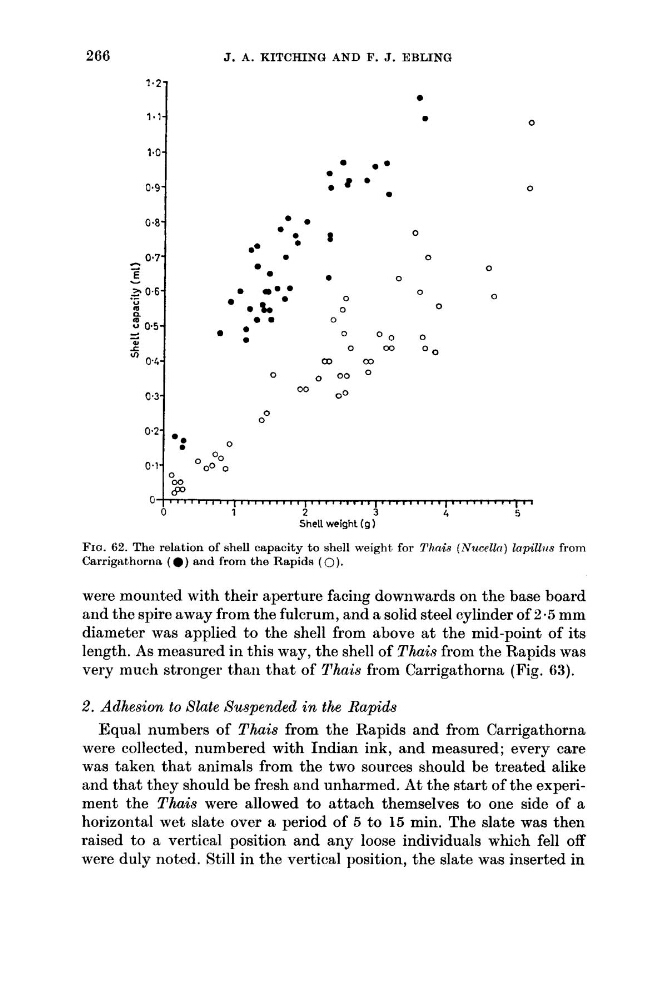
FIQ. 62. The relation of shell capacity to shell weight, for Tlrnis (Nucelln) lapillits from
Carrigathorna ( 0 ) and from the Rapids (0).
were mounted with their aperture facing downwards on the base board
and the spire away from the fulcrum, and a solid steel cylinder of 2 - 5 mm
diameter was applied to the shell from above at the mid-point of its
length. As measured in this way, the shell of Thais from the Rapids was
very much stronger than that of Thwis from Carrigathorns (Fig. 63).
2. Adhesion to Slate Suspended in the Rapids
Equal numbers of Thais from the Rapids and from Carrigathorna
were collected, numbered with Indian ink, and measured; every care
was taken that animals from the two sources should be treated alike
and that they should be fresh and unharmed. A t the start of the experiment the Thais were allowed to attach themselves to one side of a
horizontal wet slate over a period of 5 to 15 min. The slate was then
raised to a vertical position and any loose individuals which fell off
were duly noted. Still in the vertical position, the slate was inserted in
J. A. KITCHING AND F. J. EBLINU
1 . 2 -
0.90
0
0 .
0
0
0
0
0
0
0 .
0
m
o
O
0 0
0
0
00
o o
C D O D
0
0 00
O
00
00
0
0
, " , " ' , , , I " " ' , ~ , , , , , " " " ' I " ' " " " , , ,
00 0
SJ
G
0
1
2
3
4
5
Shell weight (9)
FIQ. 62. The relation of shell capacity to shell weight, for Tlrnis (Nucelln) lapillits from
Carrigathorna ( 0 ) and from the Rapids (0).
were mounted with their aperture facing downwards on the base board
and the spire away from the fulcrum, and a solid steel cylinder of 2 - 5 mm
diameter was applied to the shell from above at the mid-point of its
length. As measured in this way, the shell of Thais from the Rapids was
very much stronger than that of Thwis from Carrigathorns (Fig. 63).
2. Adhesion to Slate Suspended in the Rapids
Equal numbers of Thais from the Rapids and from Carrigathorna
were collected, numbered with Indian ink, and measured; every care
was taken that animals from the two sources should be treated alike
and that they should be fresh and unharmed. A t the start of the experiment the Thais were allowed to attach themselves to one side of a
horizontal wet slate over a period of 5 to 15 min. The slate was then
raised to a vertical position and any loose individuals which fell off
were duly noted. Still in the vertical position, the slate was inserted in