

ECOLOQICAL STUDIES AT LOUQH INE
226
and the mussel Mytilus edulis (Fig. 24) were almost confined to the Sill;
the hydroid Sertularia operculata (Fig. 25) and the Polyzoa Hippothoa
hyalina (Fig. 26) and Costazia costazii (Fig. 23) occurred on the Sill but
also extended somewhat more widely throughout the Rapids. None of
these species showed any preference for tops or bottoms of boulders, even
though the water movement must be much less below. Indeed, of common species preferring current, only the hydroid Tubularia bellis (Fig.
27) and the limpet Patella aspera can be cited as preferring tops of
boulders.
o 10 20 30 40 50
Q One or only few seen
-
0 Moderote in qumtity
Metres
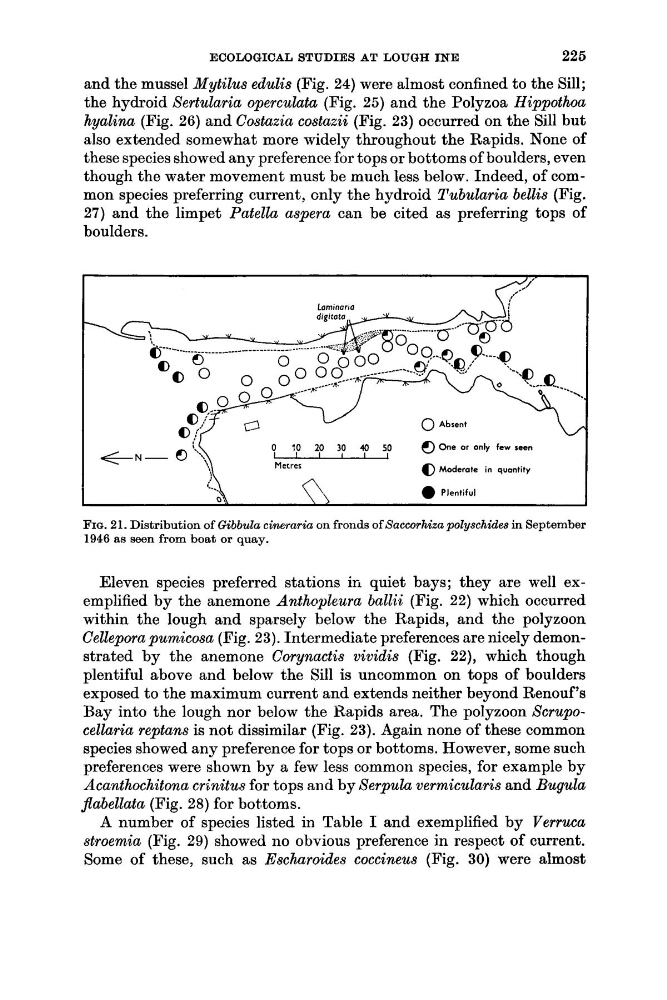
FIG. 21. Distribution of Gibbula cineraria on fronds of Sacwrhiza polyschides in September
1946 as seen from boat or quay.
Eleven species preferred stations in quiet bays; they are well exemplified by the anemone Anthopleura ballii (Fig. 22) which occurred
within the lough and sparsely below the Rapids, and the polyzoon
Cellepora pumicosa (Fig. 23). Intermediate preferences are nicely demonstrated by the anemone Corynactis vividis (Fig. 22), which though
plentiful above and below the Sill is uncommon on tops of boulders
exposed to the maximum current and extends neither beyond Renouf's
Bay into the lough nor below the Rapids area. The polyzoon Scrupocellaria reptans is not dissimilar (Fig. 23). Again none of these common
species showed any preference for tops or bottoms. However, some such
preferences were shown by a few less common species, for example by
Acanthochitona crinitus for tops and by Serpula vermicularis and Bugula
jiabellata (Fig. 28) for bottoms.
A number of species listed in Table I and exemplified by Verruca
stroemia (Fig. 29) showed no obvious preference in respect of current.
Some of these, such as Escharoides coccineus (Fig. 30) were almost
226
and the mussel Mytilus edulis (Fig. 24) were almost confined to the Sill;
the hydroid Sertularia operculata (Fig. 25) and the Polyzoa Hippothoa
hyalina (Fig. 26) and Costazia costazii (Fig. 23) occurred on the Sill but
also extended somewhat more widely throughout the Rapids. None of
these species showed any preference for tops or bottoms of boulders, even
though the water movement must be much less below. Indeed, of common species preferring current, only the hydroid Tubularia bellis (Fig.
27) and the limpet Patella aspera can be cited as preferring tops of
boulders.
o 10 20 30 40 50
Q One or only few seen
-
0 Moderote in qumtity
Metres
FIG. 21. Distribution of Gibbula cineraria on fronds of Sacwrhiza polyschides in September
1946 as seen from boat or quay.
Eleven species preferred stations in quiet bays; they are well exemplified by the anemone Anthopleura ballii (Fig. 22) which occurred
within the lough and sparsely below the Rapids, and the polyzoon
Cellepora pumicosa (Fig. 23). Intermediate preferences are nicely demonstrated by the anemone Corynactis vividis (Fig. 22), which though
plentiful above and below the Sill is uncommon on tops of boulders
exposed to the maximum current and extends neither beyond Renouf's
Bay into the lough nor below the Rapids area. The polyzoon Scrupocellaria reptans is not dissimilar (Fig. 23). Again none of these common
species showed any preference for tops or bottoms. However, some such
preferences were shown by a few less common species, for example by
Acanthochitona crinitus for tops and by Serpula vermicularis and Bugula
jiabellata (Fig. 28) for bottoms.
A number of species listed in Table I and exemplified by Verruca
stroemia (Fig. 29) showed no obvious preference in respect of current.
Some of these, such as Escharoides coccineus (Fig. 30) were almost