

L A K E DWELLING TRICLADS
13
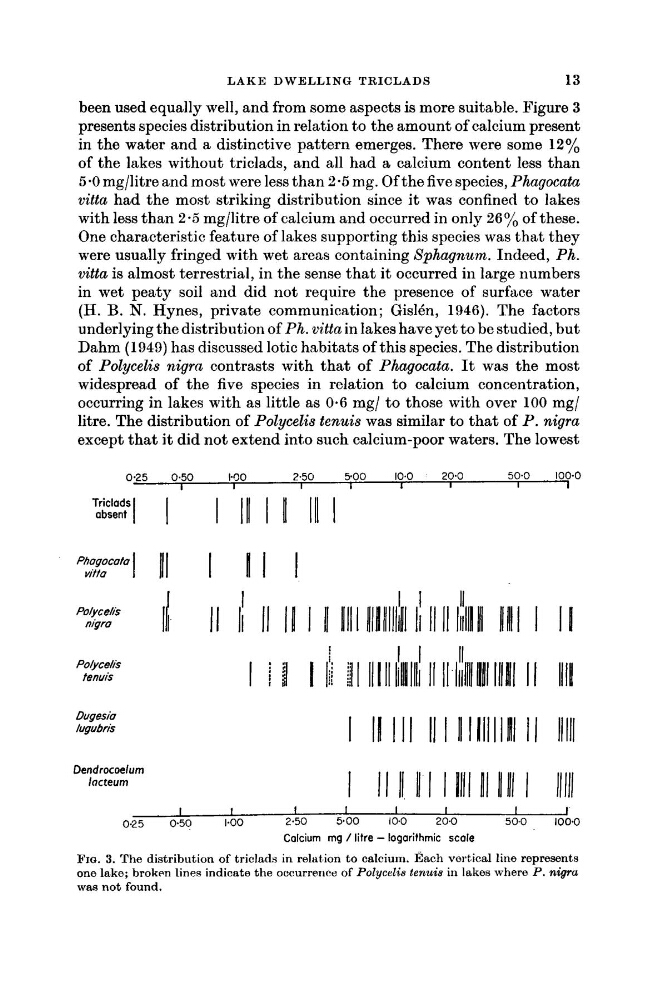
been used equally well, and from some aspects is more suitable. Figure 3
presents species distribution in relation t o the amount of calcium present
in the water and a distinctive pattern emerges. There were some 12%
of the lakes without triclads, and all had a calcium content less than
5.0 mg/litre and most were less than 2 - 5 mg. Of the five species, Phugocatu
vitta had the most striking distribution since it was confined to lakes
with less than 2.5 mg/litre of calcium and occurred in only 26% of these.
One characteristic feature of lakes supporting this species was that they
were usually fringed with wet areas containing Sphagnum. Indeed, Ph.
vitta is almost terrestrial, in the sense that it occurred in large numbers
in wet peaty soil and did not require the presence of surface water
(H. B. N. Hynes, private communication; GislBn, 1946). The factors
underlying the distribution of Ph. vitta in lakes have yet to be studied, but
Dahm (1949) has discussed lotic habitats of this species. The distribution
of Polycelis nigru contrasts with that of Phqocata. It was the most
widespread of the five species in relation to calcium concentration,
occurring in lakes with as little as 0.6 mg/ to those with over 100 mg/
litre. The distribution of Polycelis tenuis was similar to that of P. nigra
except that it did not extend into such calcium-poor waters. The lowest
Phogocata I
vitta
Po/uce/is
nigro
Po/uce/is
fenuis
Dugesia
/ugubris
Dendrocoelurn
lacteum
0.25
0.50
I.00
2.50
5.00
10.0
20.0
50.0
100.0
i
I
I
I
I
I
I
I I Il l I l l 1IlI
Il l I RI I
r h ' II I I I
1 II I I
1 rlllolrlllll~lllllIIlllln1A 11111 I I1
I I II
I i I I I i~ IIIIII Ii IIIl Ii II II I I I I I I I I I I I I IIIIII I I 1111
I II Ill II I I I 111111l l I II 11111
I II I 1 u I I I
1 1 1 UI 11111 I 11111
I
1
I
I
I
I
I
J
0.25
0.59
1-00
2.50
5.00
10.0
20.0
50.0
100.0
Fro. 3. The distribution of triclads in relat,ion to calcium. hach v e r t i c a l l i n e represents
one lake; broken lines indicate the occurrence of Polycelia tenuia in lakes where P . n@ra
was not found.
Calcium mg / litre - logarithmic scale
13
been used equally well, and from some aspects is more suitable. Figure 3
presents species distribution in relation t o the amount of calcium present
in the water and a distinctive pattern emerges. There were some 12%
of the lakes without triclads, and all had a calcium content less than
5.0 mg/litre and most were less than 2 - 5 mg. Of the five species, Phugocatu
vitta had the most striking distribution since it was confined to lakes
with less than 2.5 mg/litre of calcium and occurred in only 26% of these.
One characteristic feature of lakes supporting this species was that they
were usually fringed with wet areas containing Sphagnum. Indeed, Ph.
vitta is almost terrestrial, in the sense that it occurred in large numbers
in wet peaty soil and did not require the presence of surface water
(H. B. N. Hynes, private communication; GislBn, 1946). The factors
underlying the distribution of Ph. vitta in lakes have yet to be studied, but
Dahm (1949) has discussed lotic habitats of this species. The distribution
of Polycelis nigru contrasts with that of Phqocata. It was the most
widespread of the five species in relation to calcium concentration,
occurring in lakes with as little as 0.6 mg/ to those with over 100 mg/
litre. The distribution of Polycelis tenuis was similar to that of P. nigra
except that it did not extend into such calcium-poor waters. The lowest
Phogocata I
vitta
Po/uce/is
nigro
Po/uce/is
fenuis
Dugesia
/ugubris
Dendrocoelurn
lacteum
0.25
0.50
I.00
2.50
5.00
10.0
20.0
50.0
100.0
i
I
I
I
I
I
I
I I Il l I l l 1IlI
Il l I RI I
r h ' II I I I
1 II I I
1 rlllolrlllll~lllllIIlllln1A 11111 I I1
I I II
I i I I I i~ IIIIII Ii IIIl Ii II II I I I I I I I I I I I I IIIIII I I 1111
I II Ill II I I I 111111l l I II 11111
I II I 1 u I I I
1 1 1 UI 11111 I 11111
I
1
I
I
I
I
I
J
0.25
0.59
1-00
2.50
5.00
10.0
20.0
50.0
100.0
Fro. 3. The distribution of triclads in relat,ion to calcium. hach v e r t i c a l l i n e represents
one lake; broken lines indicate the occurrence of Polycelia tenuia in lakes where P . n@ra
was not found.
Calcium mg / litre - logarithmic scale