

FORTY YEARS OF GIENECOLOGIY
223
c. ADAPTATION TO SOIL MOISTURE STRESS
In spite of the wide interest in the water relations of plants there have
been few experimental studies of ecotypic adaptation to different levels
of soil moisture. McKell et al. (1960) have compared two races of Dactylis
glornerata, recognized taxonomically as the geographic subspecies lusitanica and judaica, for their performance under differing conditions of
soil moisture stress. Subsp. lusitanica is known from the coastal area of
central Portugal, where it occurs in a mild coastal climate, while judaica
Time (h)
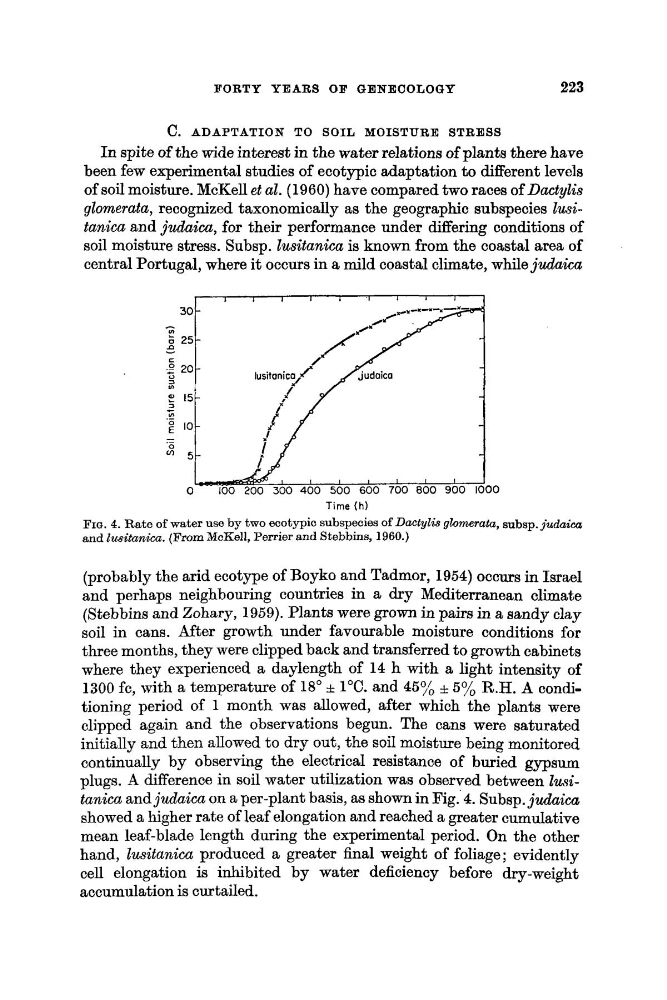
FIG. 4. Rate of water use by two ecotypic subspecies of Dactylis glomerata, SubSp. jud&m
and Zusita~iea. (From McKell, Perrier and Stebbins, 1960.)
(probably the arid ecotype of Boyko and Tadmor, 1954) occurs in Israel
and perhaps neighbouring countries in a dry Mediterranean climate
(Stebbins and Zohary, 1959). Plants were grown in pairs in a sandy clay
soil in cans. After growth under favourable moisture conditions for
three months, they were clipped back and transferred to growth cabinets
where they experienced a daylength of 14 h with a light intensity of
1300 fc, with a temperature of 18' f 1°C. and 457/, + 5% R.H. A conditioning period of 1 month was allowed, after which the plants were
clipped again and the observations begun. The cans were saturated
initially and then allowed to dry out, the soil moisture being monitored
continually by observing the electrical resistance of buried gypsum
plugs. A difference in soil water utilization was observed between lwitanica and judaica on a per-plant basis, as shown in Fig..4. Subsp. judaica
showed a higher rate of leaf elongation and reached a greater cumdative
mean leaf-blade length during the experimental period. On the other
hand, lusitanica produced a greater final weight of foliage; evidently
cell elongation is inhibited by water deficiency before dry-weight
accumulation is curtailed.
223
c. ADAPTATION TO SOIL MOISTURE STRESS
In spite of the wide interest in the water relations of plants there have
been few experimental studies of ecotypic adaptation to different levels
of soil moisture. McKell et al. (1960) have compared two races of Dactylis
glornerata, recognized taxonomically as the geographic subspecies lusitanica and judaica, for their performance under differing conditions of
soil moisture stress. Subsp. lusitanica is known from the coastal area of
central Portugal, where it occurs in a mild coastal climate, while judaica
Time (h)
FIG. 4. Rate of water use by two ecotypic subspecies of Dactylis glomerata, SubSp. jud&m
and Zusita~iea. (From McKell, Perrier and Stebbins, 1960.)
(probably the arid ecotype of Boyko and Tadmor, 1954) occurs in Israel
and perhaps neighbouring countries in a dry Mediterranean climate
(Stebbins and Zohary, 1959). Plants were grown in pairs in a sandy clay
soil in cans. After growth under favourable moisture conditions for
three months, they were clipped back and transferred to growth cabinets
where they experienced a daylength of 14 h with a light intensity of
1300 fc, with a temperature of 18' f 1°C. and 457/, + 5% R.H. A conditioning period of 1 month was allowed, after which the plants were
clipped again and the observations begun. The cans were saturated
initially and then allowed to dry out, the soil moisture being monitored
continually by observing the electrical resistance of buried gypsum
plugs. A difference in soil water utilization was observed between lwitanica and judaica on a per-plant basis, as shown in Fig..4. Subsp. judaica
showed a higher rate of leaf elongation and reached a greater cumdative
mean leaf-blade length during the experimental period. On the other
hand, lusitanica produced a greater final weight of foliage; evidently
cell elongation is inhibited by water deficiency before dry-weight
accumulation is curtailed.