

118
J. ROGER BRAY AND EVILLE GORHAM
author, which involves some separation of data from the same areas
within the U.S.A. and the U.S.S.R.
IV. LITTER COMPONENTS
A. DETAILED LITTER SEPARATION
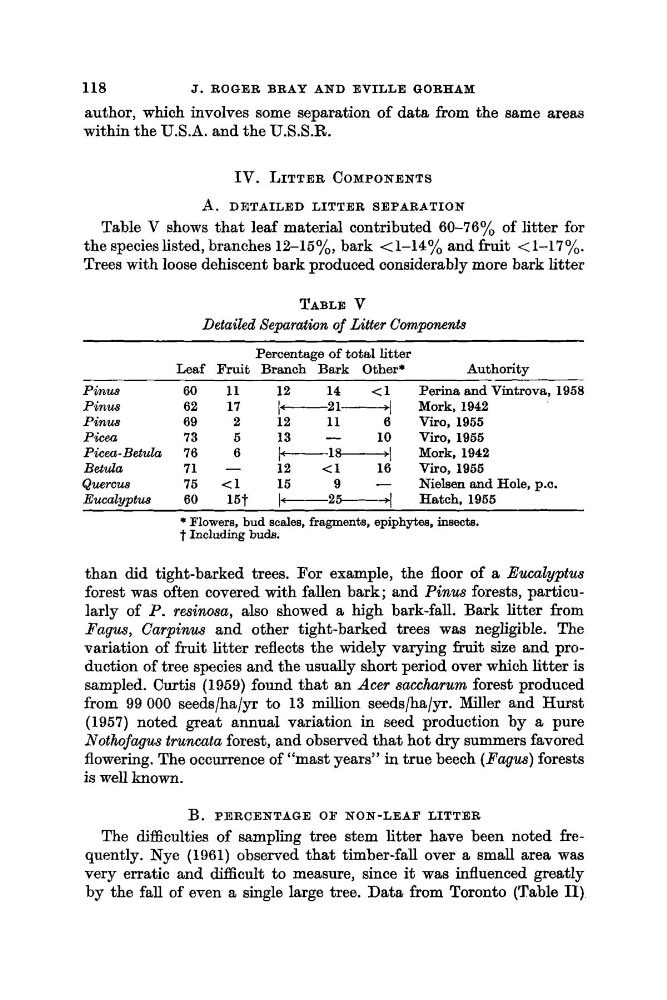
Table V shows that leaf material contributed 60-76y0 of litter for
the species listed, branches 12-15%, bark <1-14y0 and fruit <1-17%.
Trees with loose dehiscent bark produced considerably more bark litter
TABLE V
Detailed separation of Litter Cmponents
Percentage of total litter
Leaf Fruit Branch Bark Other*
Authority
Pinua
Pinua
Pinua
Picea
Picea- Betulu
Betula
Quercua
Eucalyptua
60
11
12
14
<1
Perina and Vintrova, 1958
62
17
1- 21- +]
Mork, 1942
69
2
12
11
6
Viro, 1955
73
5
13
- 10 Viro, 1955
76
6
k-,l8-----+I
Mork, 1942
71
-
12
< 1
16
Viro, 1955
75
t l
15
9
-
Nieleen and Hole, p.c.
60
15t
) - 2 b + ]
Hatch. 1955
* Flowers, bud scales, fragments, epiphytes, insects.
t Including buds.
than did tight-barked trees. For example, the floor of a Eucalyptus
forest was often covered with fallen bark; and Pinw forests, particularly of P. resinosa, also showed a high bark-fall. Bark litter from
Pagw, Carpinw and other tight-barked trees was negligible. The
variation of fruit litter reflects the widely varying fruit size and production of tree species and the usually short period over which litter is
sampled. Curtis (1959) found that an Acer saccharurn forest produced
from 99 000 seeds/ha/yr to 13 million seeds/ha/yr. Miller and Hurst
(1957) noted great annual variation in seed production by a pure
Nothofagus truncata forest, and observed that hot dry summers favored
flowering. The occurrence of “mast years” in true beech (B’agw) forests
is well known.
B. PERCENTAGE O F NON-LEAF LITTER
The difficulties of sampling tree stem litter have been noted frequently. Nye (1961) observed that timber-fall over a small area was
very erratic and difficult to measure, since it was influenced greatly
by the fall of even a single large tree. Data from Toronto (Table 11)
J. ROGER BRAY AND EVILLE GORHAM
author, which involves some separation of data from the same areas
within the U.S.A. and the U.S.S.R.
IV. LITTER COMPONENTS
A. DETAILED LITTER SEPARATION
Table V shows that leaf material contributed 60-76y0 of litter for
the species listed, branches 12-15%, bark <1-14y0 and fruit <1-17%.
Trees with loose dehiscent bark produced considerably more bark litter
TABLE V
Detailed separation of Litter Cmponents
Percentage of total litter
Leaf Fruit Branch Bark Other*
Authority
Pinua
Pinua
Pinua
Picea
Picea- Betulu
Betula
Quercua
Eucalyptua
60
11
12
14
<1
Perina and Vintrova, 1958
62
17
1- 21- +]
Mork, 1942
69
2
12
11
6
Viro, 1955
73
5
13
- 10 Viro, 1955
76
6
k-,l8-----+I
Mork, 1942
71
-
12
< 1
16
Viro, 1955
75
t l
15
9
-
Nieleen and Hole, p.c.
60
15t
) - 2 b + ]
Hatch. 1955
* Flowers, bud scales, fragments, epiphytes, insects.
t Including buds.
than did tight-barked trees. For example, the floor of a Eucalyptus
forest was often covered with fallen bark; and Pinw forests, particularly of P. resinosa, also showed a high bark-fall. Bark litter from
Pagw, Carpinw and other tight-barked trees was negligible. The
variation of fruit litter reflects the widely varying fruit size and production of tree species and the usually short period over which litter is
sampled. Curtis (1959) found that an Acer saccharurn forest produced
from 99 000 seeds/ha/yr to 13 million seeds/ha/yr. Miller and Hurst
(1957) noted great annual variation in seed production by a pure
Nothofagus truncata forest, and observed that hot dry summers favored
flowering. The occurrence of “mast years” in true beech (B’agw) forests
is well known.
B. PERCENTAGE O F NON-LEAF LITTER
The difficulties of sampling tree stem litter have been noted frequently. Nye (1961) observed that timber-fall over a small area was
very erratic and difficult to measure, since it was influenced greatly
by the fall of even a single large tree. Data from Toronto (Table 11)