

78
Ν. G. PON
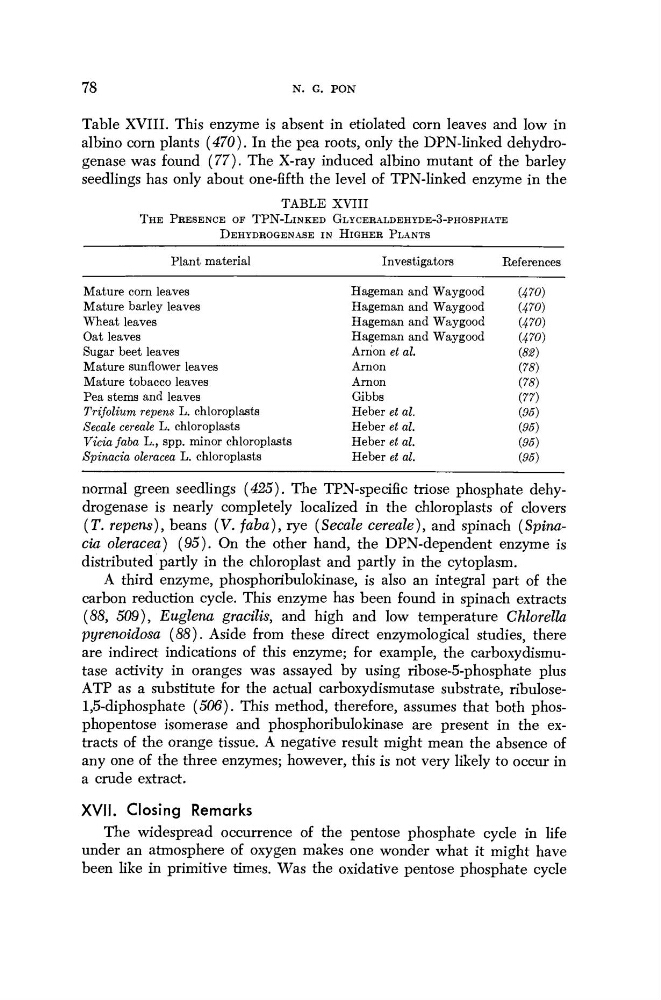
Table XVIII. This enzyme is absent in etiolated corn leaves and low in
albino corn plants (470). In the pea roots, only the DPN-linked dehydrogenase was found (77). The X-ray induced albino mutant of the barley
seedlings has only about one-fifth the level of TPN-linked enzyme in the
TABLE XVIII
THE PRESENCE OF TPN-LINKED GLYCERALDEHYDE-3-PHOSPHATE
DEHYDROGENASE IN HIGHER PLANTS
Plant material
Investigators
References
Mature corn leaves
Hageman and Waygood
Uro)
Mature barley leaves
Hageman and Waygood
(470)
Wheat leaves
Hageman and Waygood
(470)
Oat leaves
Hageman and Waygood
(470)
Sugar beet leaves
Arnon et al.
(82)
Mature sunflower leaves
Arnon
(78)
Mature tobacco leaves
Arnon
(78)
Pea stems and leaves
Gibbs
(77)
Trifolium repens L. chloroplasts
Heber et al.
(95)
Secale cereale L. chloroplasts
Heber et al.
(95)
Vicia faba L., spp. minor chloroplasts
Heber et al.
(95)
Spinacia oleracea L. chloroplasts
Heber et al.
(95)
normal green seedlings (425). The TPN-specific triose phosphate dehydrogenase is nearly completely localized in the chloroplasts of clovers
(T. repens), beans (V. faba), rye (Secale cereale), and spinach (Spinacia oleracea) (95). On the other hand, the DPN-dependent enzyme is
distributed partly in the chloroplast and partly in the cytoplasm.
A third enzyme, phosphoribulokinase, is also an integral part of the
carbon reduction cycle. This enzyme has been found in spinach extracts
(88, 509), Euglena gracilis, and high and low temperature Chlorella
pyrenoidosa (88). Aside from these direct enzymological studies, there
are indirect indications of this enzyme; for example, the carboxydismutase activity in oranges was assayed by using ribose-5-phosphate plus
ATP as a substitute for the actual carboxydismutase substrate, ribulose1,5-diphosphate (506). This method, therefore, assumes that both phosphopentose isomerase and phosphoribulokinase are present in the extracts of the orange tissue. A negative result might mean the absence of
any one of the three enzymes; however, this is not very likely to occur in
a crude extract.
XVII. Closing Remarks
The widespread occurrence of the pentose phosphate cycle in life
under an atmosphere of oxygen makes one wonder what it might have
been like in primitive times. Was the oxidative pentose phosphate cycle
Ν. G. PON
Table XVIII. This enzyme is absent in etiolated corn leaves and low in
albino corn plants (470). In the pea roots, only the DPN-linked dehydrogenase was found (77). The X-ray induced albino mutant of the barley
seedlings has only about one-fifth the level of TPN-linked enzyme in the
TABLE XVIII
THE PRESENCE OF TPN-LINKED GLYCERALDEHYDE-3-PHOSPHATE
DEHYDROGENASE IN HIGHER PLANTS
Plant material
Investigators
References
Mature corn leaves
Hageman and Waygood
Uro)
Mature barley leaves
Hageman and Waygood
(470)
Wheat leaves
Hageman and Waygood
(470)
Oat leaves
Hageman and Waygood
(470)
Sugar beet leaves
Arnon et al.
(82)
Mature sunflower leaves
Arnon
(78)
Mature tobacco leaves
Arnon
(78)
Pea stems and leaves
Gibbs
(77)
Trifolium repens L. chloroplasts
Heber et al.
(95)
Secale cereale L. chloroplasts
Heber et al.
(95)
Vicia faba L., spp. minor chloroplasts
Heber et al.
(95)
Spinacia oleracea L. chloroplasts
Heber et al.
(95)
normal green seedlings (425). The TPN-specific triose phosphate dehydrogenase is nearly completely localized in the chloroplasts of clovers
(T. repens), beans (V. faba), rye (Secale cereale), and spinach (Spinacia oleracea) (95). On the other hand, the DPN-dependent enzyme is
distributed partly in the chloroplast and partly in the cytoplasm.
A third enzyme, phosphoribulokinase, is also an integral part of the
carbon reduction cycle. This enzyme has been found in spinach extracts
(88, 509), Euglena gracilis, and high and low temperature Chlorella
pyrenoidosa (88). Aside from these direct enzymological studies, there
are indirect indications of this enzyme; for example, the carboxydismutase activity in oranges was assayed by using ribose-5-phosphate plus
ATP as a substitute for the actual carboxydismutase substrate, ribulose1,5-diphosphate (506). This method, therefore, assumes that both phosphopentose isomerase and phosphoribulokinase are present in the extracts of the orange tissue. A negative result might mean the absence of
any one of the three enzymes; however, this is not very likely to occur in
a crude extract.
XVII. Closing Remarks
The widespread occurrence of the pentose phosphate cycle in life
under an atmosphere of oxygen makes one wonder what it might have
been like in primitive times. Was the oxidative pentose phosphate cycle