

5. ANTIBIOSIS AND ANTIBIOTICS
289
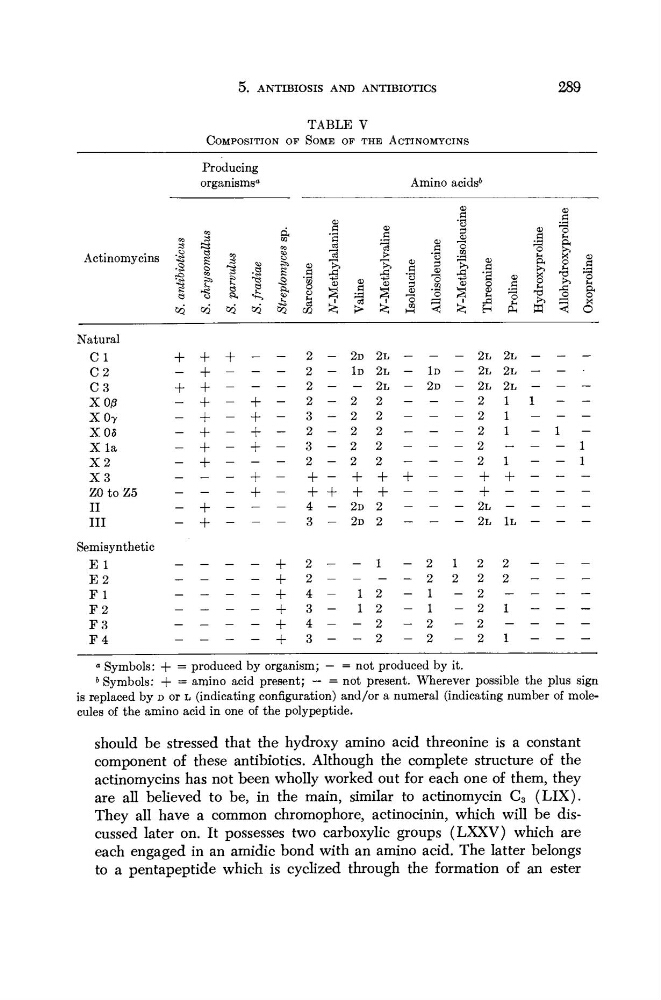
TABLE V
COMPOSITION OP SOME OF THE ACTINOMYCINS
Producing
organisms
0
Amino acids
6
Actinomycins
Natural
C 1
+ + + — —
2 - 2D 2L -
-
-
2L 2L
— -
-
C2
— + -
-
- 2 - ID 2L - ID - 2L 2L -
-
C3
+ + -
-
- 2 -
- 2L - 2D - 2L 2L
-
-
-
XO/3
-
+ -
+
-
2 - 2 2
-
-
-
2
1
1
-
-
XOy
-
+ -
+
- 3 - 2 2
-
-
-
2
1
-
-
-
ΧΟδ
— + -
+
- 2 - 2 2
-
— -
2
1
— 1
—
X la
-
+ -
+
- 3 - 2 2
-
-
-
2
-
-
- 1
X2
— + -
-
- 2 — 2 2
-
-
-
2
1
— — 1
X3
— -
-
+
-
+ -
+ + + -
-
+ + -
-
-
ZO to Z5
— -
-
+
-
+ + + + -
-
-
+
-
-
-
-
II
— + -
-
- 4 - 2D 2
—
—
-
2L -
— — -
III
— + -
-
- 3 - 2D 2
-
-
-
2L iL
-
-
-
Semisynthetic
Ε 1
- - - - + 2 - - 1 - 2 1 2 2 - -
-
E2
- - - - + 2 - - -
-
2
2
2
2
-
-
-
F 1
- - - - + 4 - 1 2 - 1 - 2 - - - —
F2
- - - - + 3 - 1 2 - 1 - 2 1 - -
-
F3
- - - - + 4 - - 2 - 2 - 2 — - — —
F4
- - - - + 3 - - 2 - 2 - 2 1 - -
-
° Symbols: + = produced by organism; — = not produced by it.
6 Symbols: + = amino acid present; — = not present. Wherever possible the plus sign
is replaced b y D or L (indicating configuration) and/or a numeral (indicating number of molecules of the amino acid in one of the polypeptide.
should be stressed that the hydroxy amino acid threonine is a constant
component of these antibiotics. Although the complete structure of the
actinomycins has not been wholly worked out for each one of them, they
are all believed to be, in the main, similar to actinomycin C 3 (LIX).
They all have a common chromophore, actinocinin, which will be discussed later on. It possesses two carboxylic groups (LXXV) which are
each engaged in an amidic bond with an amino acid. The latter belongs
to a pentapeptide which is cyclized through the formation of an ester
S. antibioticus
S. chrysomallus
S. parvulus
S. fradiae
Streptomyces sp.
Sarcosine
iV-Methylalanine
Valine
iV-Methylvaline
Isoleucine
Alloisoleucine
iV-Methylisoleucine
Threonine
Proline
Hydroxyproline
Allohydroxyproline
Oxoproline
289
TABLE V
COMPOSITION OP SOME OF THE ACTINOMYCINS
Producing
organisms
0
Amino acids
6
Actinomycins
Natural
C 1
+ + + — —
2 - 2D 2L -
-
-
2L 2L
— -
-
C2
— + -
-
- 2 - ID 2L - ID - 2L 2L -
-
C3
+ + -
-
- 2 -
- 2L - 2D - 2L 2L
-
-
-
XO/3
-
+ -
+
-
2 - 2 2
-
-
-
2
1
1
-
-
XOy
-
+ -
+
- 3 - 2 2
-
-
-
2
1
-
-
-
ΧΟδ
— + -
+
- 2 - 2 2
-
— -
2
1
— 1
—
X la
-
+ -
+
- 3 - 2 2
-
-
-
2
-
-
- 1
X2
— + -
-
- 2 — 2 2
-
-
-
2
1
— — 1
X3
— -
-
+
-
+ -
+ + + -
-
+ + -
-
-
ZO to Z5
— -
-
+
-
+ + + + -
-
-
+
-
-
-
-
II
— + -
-
- 4 - 2D 2
—
—
-
2L -
— — -
III
— + -
-
- 3 - 2D 2
-
-
-
2L iL
-
-
-
Semisynthetic
Ε 1
- - - - + 2 - - 1 - 2 1 2 2 - -
-
E2
- - - - + 2 - - -
-
2
2
2
2
-
-
-
F 1
- - - - + 4 - 1 2 - 1 - 2 - - - —
F2
- - - - + 3 - 1 2 - 1 - 2 1 - -
-
F3
- - - - + 4 - - 2 - 2 - 2 — - — —
F4
- - - - + 3 - - 2 - 2 - 2 1 - -
-
° Symbols: + = produced by organism; — = not produced by it.
6 Symbols: + = amino acid present; — = not present. Wherever possible the plus sign
is replaced b y D or L (indicating configuration) and/or a numeral (indicating number of molecules of the amino acid in one of the polypeptide.
should be stressed that the hydroxy amino acid threonine is a constant
component of these antibiotics. Although the complete structure of the
actinomycins has not been wholly worked out for each one of them, they
are all believed to be, in the main, similar to actinomycin C 3 (LIX).
They all have a common chromophore, actinocinin, which will be discussed later on. It possesses two carboxylic groups (LXXV) which are
each engaged in an amidic bond with an amino acid. The latter belongs
to a pentapeptide which is cyclized through the formation of an ester
S. antibioticus
S. chrysomallus
S. parvulus
S. fradiae
Streptomyces sp.
Sarcosine
iV-Methylalanine
Valine
iV-Methylvaline
Isoleucine
Alloisoleucine
iV-Methylisoleucine
Threonine
Proline
Hydroxyproline
Allohydroxyproline
Oxoproline