

2. CHITIN AND MUCOSUBSTANCES
127
(195). Despite the difference in monosaccharide constituents, these
sulfated substances have the same glycosidic linkages and are unbranched structures. There is now evidence, however, that in situ they
are present to a large extent chemically combined to protein possibly
through seryl linkages.
Although these sulfated substances can all be found simultaneously
in mammalian connective tissues, their proportions vary with age. Thus
in early fetal stages, bovine skin has a low collagen content (somewhat
higher in tendon and sclera). Embryonic pig skin contains 5-10% chonOH
NHAc
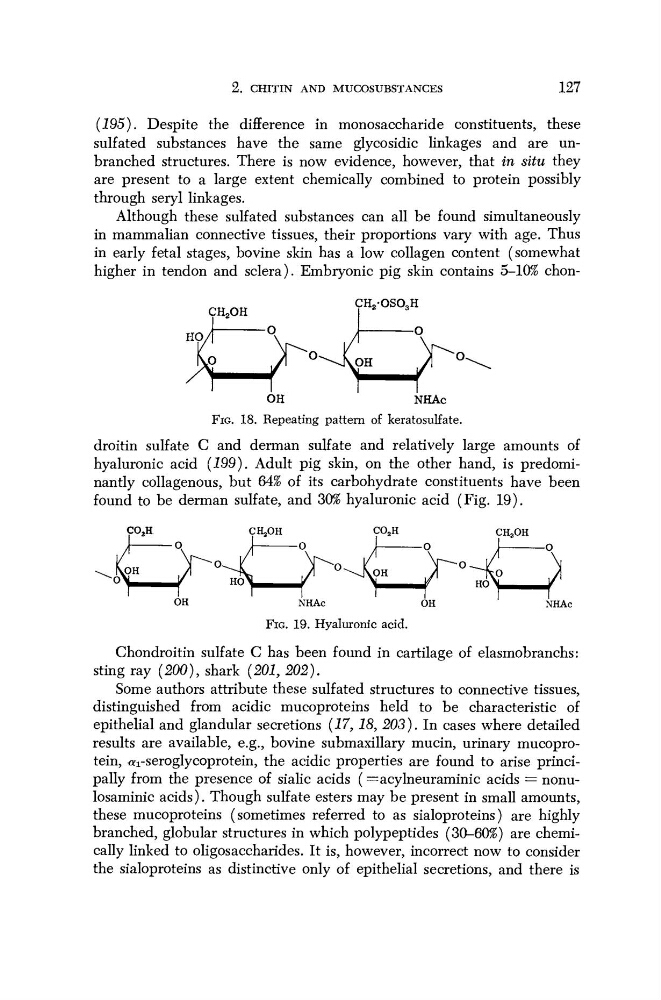
FIG. 18. Repeating pattern of keratosulfate.
droitin sulfate C and derman sulfate and relatively large amounts of
hyaluronic acid (199). Adult pig skin, on the other hand, is predominantly collagenous, but 64% of its carbohydrate constituents have been
found to be derman sulfate, and 30% hyaluronic acid (Fig. 19).
FIG. 19. Hyaluronic acid.
Chondroitin sulfate C has been found in cartilage of elasmobranchs:
sting ray (200), shark (201, 202).
Some authors attribute these sulfated structures to connective tissues,
distinguished from acidic mucoproteins held to be characteristic of
epithelial and glandular secretions (17,18, 203). In cases where detailed
results are available, e.g., bovine submaxillary mucin, urinary mucoprotein, ai-seroglycoprotein, the acidic properties are found to arise principally from the presence of sialic acids (=acylneuraminic acids = nonulosaminic acids). Though sulfate esters may be present in small amounts,
these mucoproteins (sometimes referred to as sialoproteins) are highly
branched, globular structures in which polypeptides (30-60%) are chemically linked to oligosaccharides. It is, however, incorrect now to consider
the sialoproteins as distinctive only of epithelial secretions, and there is
127
(195). Despite the difference in monosaccharide constituents, these
sulfated substances have the same glycosidic linkages and are unbranched structures. There is now evidence, however, that in situ they
are present to a large extent chemically combined to protein possibly
through seryl linkages.
Although these sulfated substances can all be found simultaneously
in mammalian connective tissues, their proportions vary with age. Thus
in early fetal stages, bovine skin has a low collagen content (somewhat
higher in tendon and sclera). Embryonic pig skin contains 5-10% chonOH
NHAc
FIG. 18. Repeating pattern of keratosulfate.
droitin sulfate C and derman sulfate and relatively large amounts of
hyaluronic acid (199). Adult pig skin, on the other hand, is predominantly collagenous, but 64% of its carbohydrate constituents have been
found to be derman sulfate, and 30% hyaluronic acid (Fig. 19).
FIG. 19. Hyaluronic acid.
Chondroitin sulfate C has been found in cartilage of elasmobranchs:
sting ray (200), shark (201, 202).
Some authors attribute these sulfated structures to connective tissues,
distinguished from acidic mucoproteins held to be characteristic of
epithelial and glandular secretions (17,18, 203). In cases where detailed
results are available, e.g., bovine submaxillary mucin, urinary mucoprotein, ai-seroglycoprotein, the acidic properties are found to arise principally from the presence of sialic acids (=acylneuraminic acids = nonulosaminic acids). Though sulfate esters may be present in small amounts,
these mucoproteins (sometimes referred to as sialoproteins) are highly
branched, globular structures in which polypeptides (30-60%) are chemically linked to oligosaccharides. It is, however, incorrect now to consider
the sialoproteins as distinctive only of epithelial secretions, and there is