

2. CHITIN AND MUCOSUBSTANCES
99
atmospheric oxygen (43) to its outer boundary results in the topographical sclerotization observed. In calcified chitin, as in Crustacea, the
exocuticle and outer part of the endocuticle are sites of mineralization.
Chitin is present in the procuticle, and it is with this layer (its substrata) and the epidermis from which it is derived, that the present
review is concerned. The procuticle, when more than a few microns
thick, shows internal laminations visible microscopically in cross sections,
particularly so in polarized light. The thickness of these layers varies not
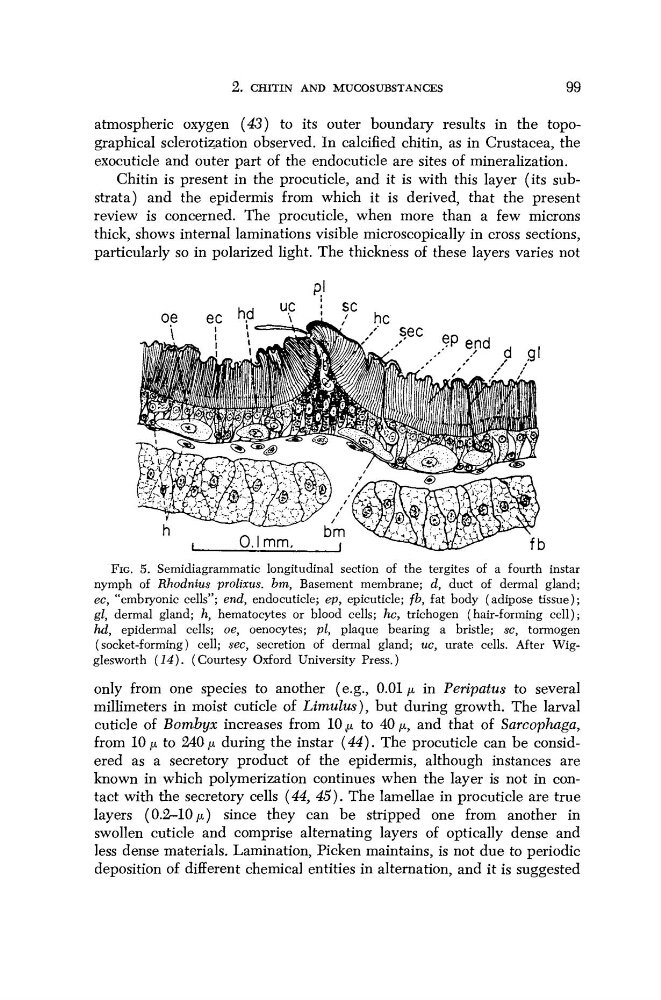
FIG. 5. Semidiagrammatic longitudinal section of the tergites of a fourth instar
nymph of Rhodnius prolixus. bm, Basement membrane; d, duct of dermal gland;
ec, "embryonic cells"; end, endocuticle; ep, epicuticle; fb, fat body (adipose tissue);
gl, dermal gland; h, hematocytes or blood cells; he, trichogen (hair-forming cell);
hd, epidermal cells; oe, oenocytes; pi, plaque bearing a bristle; sc, tormogen
(socket-forming) cell; sec, secretion of dermal gland; uc, urate cells. After Wigglesworth (14). (Courtesy Oxford University Press.)
only from one species to another (e.g., 0.01 μ in Peripatus to several
millimeters in moist cuticle of Limulus), but during growth. The larval
cuticle of Bombyx increases from 10 μ to 40 μ, and that of Sarcophaga,
from 10 μ to 240 μ during the instar (44). The procuticle can be considered as a secretory product of the epidermis, although instances are
known in which polymerization continues when the layer is not in contact with the secretory cells (44, 45). The lamellae in procuticle are true
layers (0.2-10μ) since they can be stripped one from another in
swollen cuticle and comprise alternating layers of optically dense and
less dense materials. Lamination, Picken maintains, is not due to periodic
deposition of different chemical entities in alternation, and it is suggested
99
atmospheric oxygen (43) to its outer boundary results in the topographical sclerotization observed. In calcified chitin, as in Crustacea, the
exocuticle and outer part of the endocuticle are sites of mineralization.
Chitin is present in the procuticle, and it is with this layer (its substrata) and the epidermis from which it is derived, that the present
review is concerned. The procuticle, when more than a few microns
thick, shows internal laminations visible microscopically in cross sections,
particularly so in polarized light. The thickness of these layers varies not
FIG. 5. Semidiagrammatic longitudinal section of the tergites of a fourth instar
nymph of Rhodnius prolixus. bm, Basement membrane; d, duct of dermal gland;
ec, "embryonic cells"; end, endocuticle; ep, epicuticle; fb, fat body (adipose tissue);
gl, dermal gland; h, hematocytes or blood cells; he, trichogen (hair-forming cell);
hd, epidermal cells; oe, oenocytes; pi, plaque bearing a bristle; sc, tormogen
(socket-forming) cell; sec, secretion of dermal gland; uc, urate cells. After Wigglesworth (14). (Courtesy Oxford University Press.)
only from one species to another (e.g., 0.01 μ in Peripatus to several
millimeters in moist cuticle of Limulus), but during growth. The larval
cuticle of Bombyx increases from 10 μ to 40 μ, and that of Sarcophaga,
from 10 μ to 240 μ during the instar (44). The procuticle can be considered as a secretory product of the epidermis, although instances are
known in which polymerization continues when the layer is not in contact with the secretory cells (44, 45). The lamellae in procuticle are true
layers (0.2-10μ) since they can be stripped one from another in
swollen cuticle and comprise alternating layers of optically dense and
less dense materials. Lamination, Picken maintains, is not due to periodic
deposition of different chemical entities in alternation, and it is suggested