

9. SACCHARIDES: ALTERNATE ROUTES OF METABOLISM
489
The second general class of polyol dehydrogenases proposed by
Edson is galactitol dehydrogenase (333, 338-340). This enzyme occurs
in several microorganisms and has been studied in considerable detail
in a fluorescent species of Pseudomonas. It catalyzes the oxidation of
dulcitol to D-tagatose and sorbitol to D-fructose. DPN is required as the
DPN.
D- Sorbitol
TPN
D-Fructose
-*> L-Sorbose
Soluble enzyme
optimum pH = 8
Soluble enzyme
optimum pH = 8
Flavin (?)
Cytochrome (?5^
, T 0 .
/ολ
Particulate enzyme
L-Sorbose(?)
,.
„ c
v ' optimum pH = 6
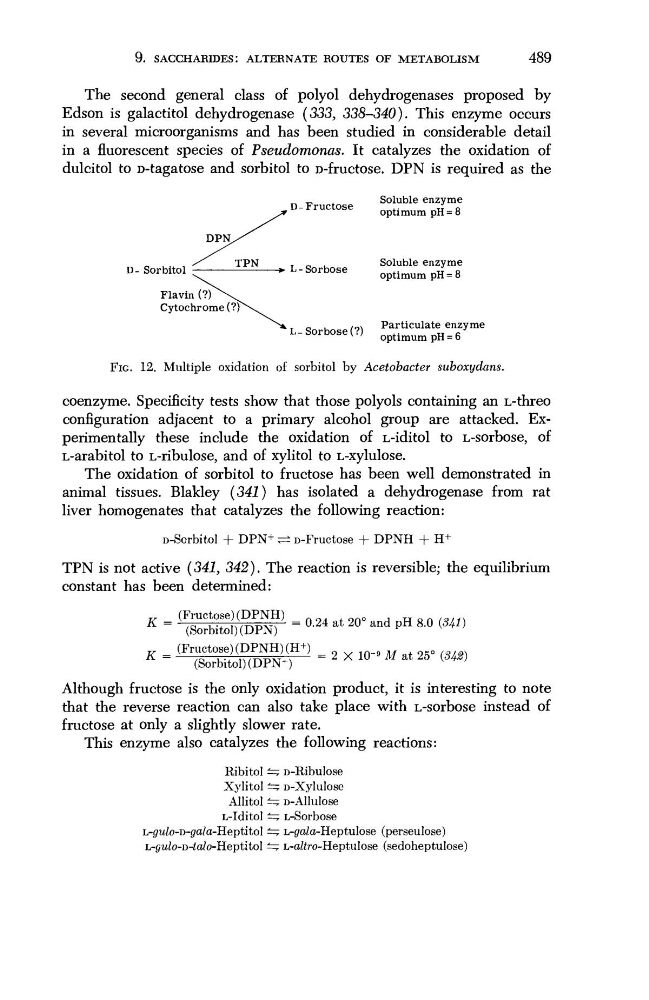
FIG. 12. Multiple oxidation of sorbitol by Acetobacter
suboxydans.
coenzyme. Specificity tests show that those polyols containing an L-threo
configuration adjacent to a primary alcohol group are attacked. Experimentally these include the oxidation of L-iditol to L-sorbose, of
L-arabitol to L-ribulose, and of xylitol to L-xylulose.
The oxidation of sorbitol to fructose has been well demonstrated in
animal tissues. Blakley (341) has isolated a dehydrogenase from rat
liver homogenates that catalyzes the following reaction:
D-Sorbitol + DPN+ ;=± D-Fructose + DPNH + H+
TPN is not active (341, 342). The reaction is reversible; the equilibrium
constant has been determined:
K =
K
(Fructose) (DPNH)
(Sorbitol) (DPN)
(Fructose) (DPNH) (H
= 0.24 at 20° and pH 8.0 (341)
(Sorbitol) (DPN+)
= 2 X 10"
9 M at 25°
Although fructose is the only oxidation product, it is interesting to note
that the reverse reaction can also take place with L-sorbose instead of
fructose at only a slightly slower rate.
This enzyme also catalyzes the following reactions:
Ribitol ±=; D-Ribulose
Xylitol ±=; D-Xylulose
Allitol ^ D-AUulose
L-Iditol ±^ L-Sorbose
L-gulo-O-gala-Heptitol ^ L-graZa-Heptulose (perseulose)
L-Qulo-O-talo-Heptitol ±=; L-a^ro-Heptulose (sedoheptulose)
489
The second general class of polyol dehydrogenases proposed by
Edson is galactitol dehydrogenase (333, 338-340). This enzyme occurs
in several microorganisms and has been studied in considerable detail
in a fluorescent species of Pseudomonas. It catalyzes the oxidation of
dulcitol to D-tagatose and sorbitol to D-fructose. DPN is required as the
DPN.
D- Sorbitol
TPN
D-Fructose
-*> L-Sorbose
Soluble enzyme
optimum pH = 8
Soluble enzyme
optimum pH = 8
Flavin (?)
Cytochrome (?5^
, T 0 .
/ολ
Particulate enzyme
L-Sorbose(?)
,.
„ c
v ' optimum pH = 6
FIG. 12. Multiple oxidation of sorbitol by Acetobacter
suboxydans.
coenzyme. Specificity tests show that those polyols containing an L-threo
configuration adjacent to a primary alcohol group are attacked. Experimentally these include the oxidation of L-iditol to L-sorbose, of
L-arabitol to L-ribulose, and of xylitol to L-xylulose.
The oxidation of sorbitol to fructose has been well demonstrated in
animal tissues. Blakley (341) has isolated a dehydrogenase from rat
liver homogenates that catalyzes the following reaction:
D-Sorbitol + DPN+ ;=± D-Fructose + DPNH + H+
TPN is not active (341, 342). The reaction is reversible; the equilibrium
constant has been determined:
K =
K
(Fructose) (DPNH)
(Sorbitol) (DPN)
(Fructose) (DPNH) (H
= 0.24 at 20° and pH 8.0 (341)
(Sorbitol) (DPN+)
= 2 X 10"
9 M at 25°
Although fructose is the only oxidation product, it is interesting to note
that the reverse reaction can also take place with L-sorbose instead of
fructose at only a slightly slower rate.
This enzyme also catalyzes the following reactions:
Ribitol ±=; D-Ribulose
Xylitol ±=; D-Xylulose
Allitol ^ D-AUulose
L-Iditol ±^ L-Sorbose
L-gulo-O-gala-Heptitol ^ L-graZa-Heptulose (perseulose)
L-Qulo-O-talo-Heptitol ±=; L-a^ro-Heptulose (sedoheptulose)