

452
VERNON H. CHELDELIN, CHIH H. WANG, AND TSOO E. KING
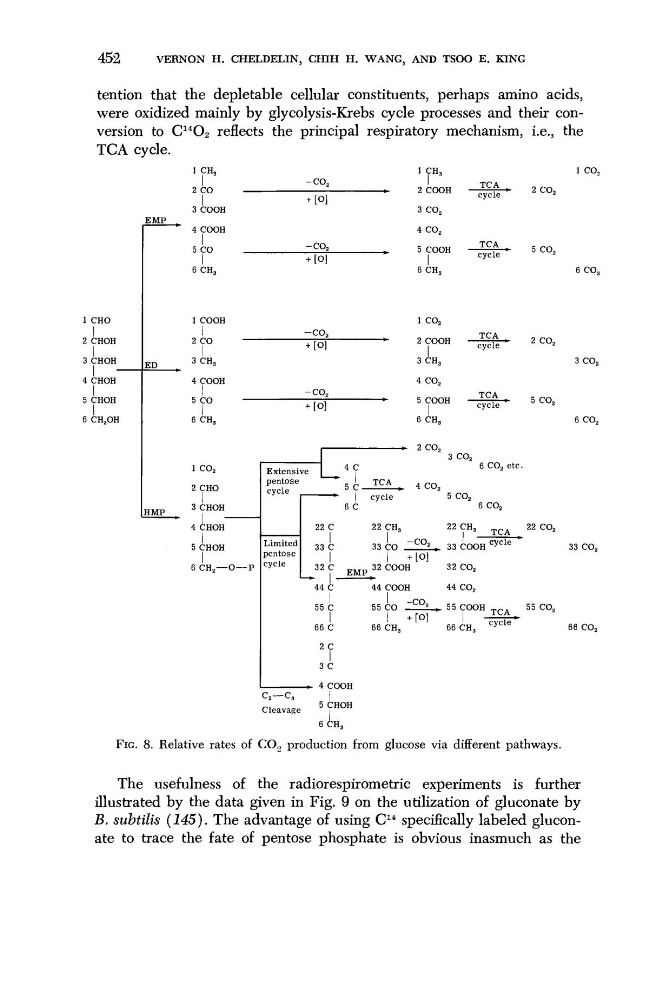
tention that the depletable cellular constituents, perhaps amino acids,
were oxidized mainly by glycolysis-Krebs cycle processes and their conversion to C
14 0 2 reflects the principal respiratory mechanism, i.e., the
TCA cycle.
1 CHO
I
2 CHOH
I
3 CHOH
I
-
4 CHOH
I
5 CHOH
I
6 CH,OH
1 CH3
2 CO
I
3 COOH
4 COOH
I
5 CO
I
6CH 3
I
2 CO
I
3CH 3
4 COOH
I
5 CO
I
6CH3
1 co 2
2 CHO
I
3 CHOH
4 CHOH
I
5 CHOH
I
6 CH 2 — O+ [o]
-co2
+ [0]
-co2
+ [o]
h[0]
1 CH3
I
2 COOH
3 C02
4 C02
5 COOH
I
6CH 3
1 C02
2 COOH
I
3CH 3
4 C02
5 COOH
I
6CH 3
cycle
cycle
cycle
cycle
Extensive
pentose
cycle
Limited
pentose
cycle
22 C
I
33 C
I
32 C
44 C
I
55 C
I
66 C
2 C
I
3 C
1
5 C
1
6 C
EMP
TCA
cycle
22 CH3
1 _
33 CO 1
♦
32 COOH
44 COOH
1 _
55 CO -
4 C02
co 2
[0]
co 2
6 C02
TCA
I
66 CH3
[O]
5 C02
22 CH;
33 COOH ^
016
32 C02
44 C02
55 COOH
6 C02
5 C02
I
iCH 3
TCA t
cycle
22 C02
55 C02
33 C02
C 2 —C 3
Cleavage
4 COOH
5 CHOH
5CH 3
FIG. 8. Relative rates of C0 2 production from glucose via different pathways.
The usefulness of the radiorespirometric experiments is further
illustrated by the data given in Fig. 9 on the utilization of gluconate by
B. subtilis (145). The advantage of using C
14 specifically labeled gluconate to trace the fate of pentose phosphate is obvious inasmuch as the
VERNON H. CHELDELIN, CHIH H. WANG, AND TSOO E. KING
tention that the depletable cellular constituents, perhaps amino acids,
were oxidized mainly by glycolysis-Krebs cycle processes and their conversion to C
14 0 2 reflects the principal respiratory mechanism, i.e., the
TCA cycle.
1 CHO
I
2 CHOH
I
3 CHOH
I
-
4 CHOH
I
5 CHOH
I
6 CH,OH
1 CH3
2 CO
I
3 COOH
4 COOH
I
5 CO
I
6CH 3
I
2 CO
I
3CH 3
4 COOH
I
5 CO
I
6CH3
1 co 2
2 CHO
I
3 CHOH
4 CHOH
I
5 CHOH
I
6 CH 2 — O+ [o]
-co2
+ [0]
-co2
+ [o]
h[0]
1 CH3
I
2 COOH
3 C02
4 C02
5 COOH
I
6CH 3
1 C02
2 COOH
I
3CH 3
4 C02
5 COOH
I
6CH 3
cycle
cycle
cycle
cycle
Extensive
pentose
cycle
Limited
pentose
cycle
22 C
I
33 C
I
32 C
44 C
I
55 C
I
66 C
2 C
I
3 C
1
5 C
1
6 C
EMP
TCA
cycle
22 CH3
1 _
33 CO 1
♦
32 COOH
44 COOH
1 _
55 CO -
4 C02
co 2
[0]
co 2
6 C02
TCA
I
66 CH3
[O]
5 C02
22 CH;
33 COOH ^
016
32 C02
44 C02
55 COOH
6 C02
5 C02
I
iCH 3
TCA t
cycle
22 C02
55 C02
33 C02
C 2 —C 3
Cleavage
4 COOH
5 CHOH
5CH 3
FIG. 8. Relative rates of C0 2 production from glucose via different pathways.
The usefulness of the radiorespirometric experiments is further
illustrated by the data given in Fig. 9 on the utilization of gluconate by
B. subtilis (145). The advantage of using C
14 specifically labeled gluconate to trace the fate of pentose phosphate is obvious inasmuch as the