

348
CLAUDE FROMAGEOT AND JACQUES C. SENEZ
phylogenetic scale to the other. Only among bacteria are there organisms which can utilize the oxidation of inorganic substrates as their
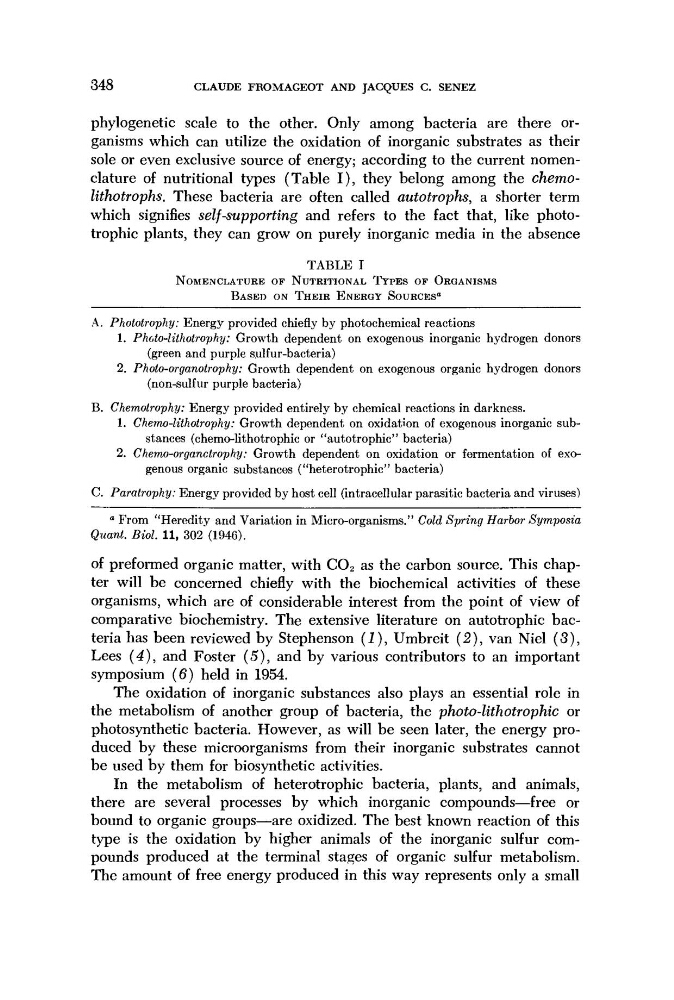
sole or even exclusive source of energy; according to the current nomenclature of nutritional types (Table I), they belong among the chemolithotrophs. These bacteria are often called autotrophs, a shorter term
which signifies self-supporting and refers to the fact that, like phototrophic plants, they can grow on purely inorganic media in the absence
TABLE I
NOMENCLATURE OF NUTRITIONAL TYPES OF ORGANISMS
BASED ON THEIR ENERGY SOURCES'
1
A. Phototrophy: Energy provided chiefly by photochemical reactions
1. Photo-lithotrophy: Growth dependent on exogenous inorganic hydrogen donors
(green and purple sulfur-bacteria)
2. Photo-organotrophy: Growth dependent on exogenous organic hydrogen donors
(non-sulfur purple bacteria)
B. Chemotrophy: Energy provided entirely by chemical reactions in darkness.
1. Chemo-lithotrophy: Growth dependent on oxidation of exogenous inorganic substances (chemo-lithotrophic or "autotrophic" bacteria)
2. Chemo-organctrophy: Growth dependent on oxidation or fermentation of exogenous organic substances ("heterotrophic" bacteria)
C. Paratrophy: Energy provided by host cell (intracellular parasitic bacteria and viruses)
° From "Heredity and Variation in Micro-organisms." Cold Spring Harbor Symposia
Quant. Biol. 11, 302 (1946).
of preformed organic matter, with C0 2 as the carbon source. This chapter will be concerned chiefly with the biochemical activities of these
organisms, which are of considerable interest from the point of view of
comparative biochemistry. The extensive literature on autotrophic bacteria has been reviewed by Stephenson (I), Umbreit (2), van Niel (3),
Lees (4), and Foster (5), and by various contributors to an important
symposium (6) held in 1954.
The oxidation of inorganic substances also plays an essential role in
the metabolism of another group of bacteria, the photo-lithotrophic or
photosynthetic bacteria. However, as will be seen later, the energy produced by these microorganisms from their inorganic substrates cannot
be used by them for biosynthetic activities.
In the metabolism of heterotrophic bacteria, plants, and animals,
there are several processes by which inorganic compounds—free or
bound to organic groups—are oxidized. The best known reaction of this
type is the oxidation by higher animals of the inorganic sulfur compounds produced at the terminal stages of organic sulfur metabolism.
The amount of free energy produced in this way represents only a small
CLAUDE FROMAGEOT AND JACQUES C. SENEZ
phylogenetic scale to the other. Only among bacteria are there organisms which can utilize the oxidation of inorganic substrates as their
sole or even exclusive source of energy; according to the current nomenclature of nutritional types (Table I), they belong among the chemolithotrophs. These bacteria are often called autotrophs, a shorter term
which signifies self-supporting and refers to the fact that, like phototrophic plants, they can grow on purely inorganic media in the absence
TABLE I
NOMENCLATURE OF NUTRITIONAL TYPES OF ORGANISMS
BASED ON THEIR ENERGY SOURCES'
1
A. Phototrophy: Energy provided chiefly by photochemical reactions
1. Photo-lithotrophy: Growth dependent on exogenous inorganic hydrogen donors
(green and purple sulfur-bacteria)
2. Photo-organotrophy: Growth dependent on exogenous organic hydrogen donors
(non-sulfur purple bacteria)
B. Chemotrophy: Energy provided entirely by chemical reactions in darkness.
1. Chemo-lithotrophy: Growth dependent on oxidation of exogenous inorganic substances (chemo-lithotrophic or "autotrophic" bacteria)
2. Chemo-organctrophy: Growth dependent on oxidation or fermentation of exogenous organic substances ("heterotrophic" bacteria)
C. Paratrophy: Energy provided by host cell (intracellular parasitic bacteria and viruses)
° From "Heredity and Variation in Micro-organisms." Cold Spring Harbor Symposia
Quant. Biol. 11, 302 (1946).
of preformed organic matter, with C0 2 as the carbon source. This chapter will be concerned chiefly with the biochemical activities of these
organisms, which are of considerable interest from the point of view of
comparative biochemistry. The extensive literature on autotrophic bacteria has been reviewed by Stephenson (I), Umbreit (2), van Niel (3),
Lees (4), and Foster (5), and by various contributors to an important
symposium (6) held in 1954.
The oxidation of inorganic substances also plays an essential role in
the metabolism of another group of bacteria, the photo-lithotrophic or
photosynthetic bacteria. However, as will be seen later, the energy produced by these microorganisms from their inorganic substrates cannot
be used by them for biosynthetic activities.
In the metabolism of heterotrophic bacteria, plants, and animals,
there are several processes by which inorganic compounds—free or
bound to organic groups—are oxidized. The best known reaction of this
type is the oxidation by higher animals of the inorganic sulfur compounds produced at the terminal stages of organic sulfur metabolism.
The amount of free energy produced in this way represents only a small