

208
G. L. CANTONI
( + )S-adenosyl-L-methionine was obtained, as indicated above, by allowing ( + )S-adenosyl-L-methionine to react as completely as possible
(or 50%) with guanidinoacetic acid in the presence of guanidinoacetic
acid methylpherase and reisolating the inactive sulfonium compound,
which was shown to be otherwise identical to enzymatically formed
adenosylmethionine. ( + )S-adenosyl-L-methionine is inactive as a substrate in a number of reactions utilizing S-adenosylmethionine (134).
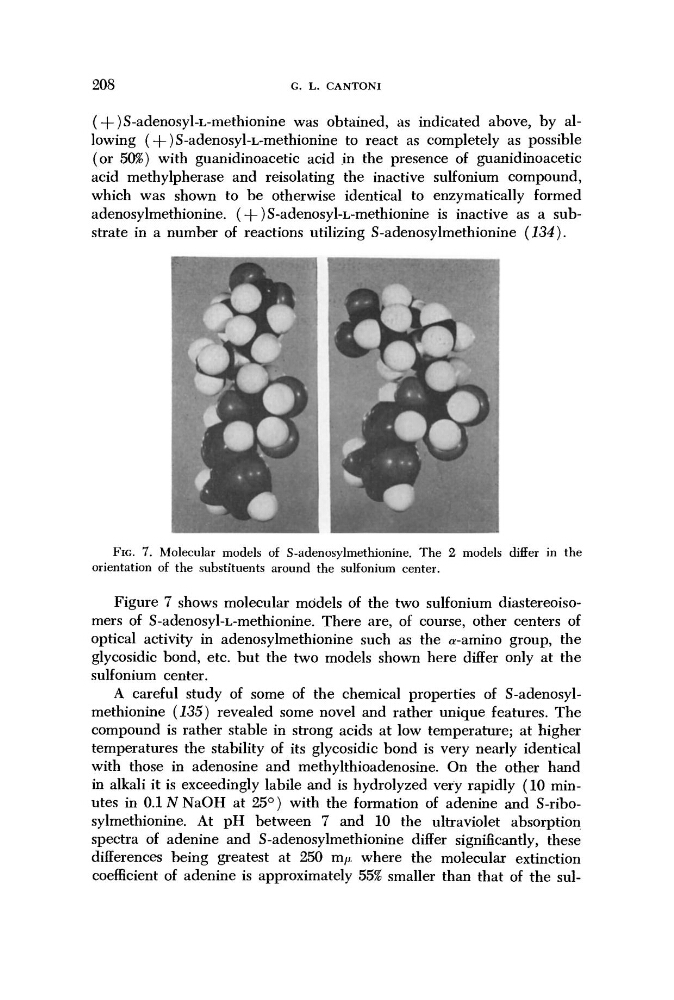
FIG. 7. Molecular models of S-adenosylmethionine. The 2 models differ in the
orientation of the substituents around the sulfonium center.
Figure 7 shows molecular models of the two sulfonium diastereoisomers of S-adenosyl-L-methionine. There are, of course, other centers of
optical activity in adenosylmethionine such as the α-amino group, the
glycosidic bond, etc. but the two models shown here differ only at the
sulfonium center.
A careful study of some of the chemical properties of S-adenosylmethionine (135) revealed some novel and rather unique features. The
compound is rather stable in strong acids at low temperature; at higher
temperatures the stability of its glycosidic bond is very nearly identical
with those in adenosine and methylthioadenosine. On the other hand
in alkali it is exceedingly labile and is hydrolyzed very rapidly (10 minutes in O.lIVNaOH at 25°) with the formation of adenine and S-ribosylmethionine. At pH between 7 and 10 the ultraviolet absorption
spectra of adenine and S-adenosylmethionine differ significantly, these
differences being greatest at 250 m/x where the molecular extinction
coefficient of adenine is approximately 55% smaller than that of the sul-
G. L. CANTONI
( + )S-adenosyl-L-methionine was obtained, as indicated above, by allowing ( + )S-adenosyl-L-methionine to react as completely as possible
(or 50%) with guanidinoacetic acid in the presence of guanidinoacetic
acid methylpherase and reisolating the inactive sulfonium compound,
which was shown to be otherwise identical to enzymatically formed
adenosylmethionine. ( + )S-adenosyl-L-methionine is inactive as a substrate in a number of reactions utilizing S-adenosylmethionine (134).
FIG. 7. Molecular models of S-adenosylmethionine. The 2 models differ in the
orientation of the substituents around the sulfonium center.
Figure 7 shows molecular models of the two sulfonium diastereoisomers of S-adenosyl-L-methionine. There are, of course, other centers of
optical activity in adenosylmethionine such as the α-amino group, the
glycosidic bond, etc. but the two models shown here differ only at the
sulfonium center.
A careful study of some of the chemical properties of S-adenosylmethionine (135) revealed some novel and rather unique features. The
compound is rather stable in strong acids at low temperature; at higher
temperatures the stability of its glycosidic bond is very nearly identical
with those in adenosine and methylthioadenosine. On the other hand
in alkali it is exceedingly labile and is hydrolyzed very rapidly (10 minutes in O.lIVNaOH at 25°) with the formation of adenine and S-ribosylmethionine. At pH between 7 and 10 the ultraviolet absorption
spectra of adenine and S-adenosylmethionine differ significantly, these
differences being greatest at 250 m/x where the molecular extinction
coefficient of adenine is approximately 55% smaller than that of the sul-