

4. ENERGY-RICH COMPOUNDS
111
II. Chemical and Thermodynamic Aspects of
"Energy-Rich
11 Bonds
A. CHEMICAL BASIS FOR "ENERGY-RICH" PHOSPHATE BONDS
Fundamental concepts of organic and physical chemistry have been
used to provide explanations for the "energy-rich" nature of certain
phosphate compounds. Lipmann (7) commented upon the fact that
three of the most prominent examples of this class of compounds (ATP,
acetyl phosphate, and PEP) were anhydrides of phosphoric acid and a
second acid (i.e., phosphoric acid, a carboxylic acid, and an enol, in
the above three cases). Contrary to this generalization, however, was
the obvious fact that the copartner of phosphoric acid in phosphocreatine contains a very basic nitrogen group.
0
0"
II
I
-C-0" «-*
-C = 0
0"
0
0"
I
II
I
o=p-cr «-*-o-p-cr *-*-o-p = c
I
I
I
OH
OH
OH
0
0
0
0"
0
0"
II
II
II
I
II
I
-C-O-P-0" <—* -C-0-P = 0««-* -C-O-P-0"
I
I
II
0"
0"
0
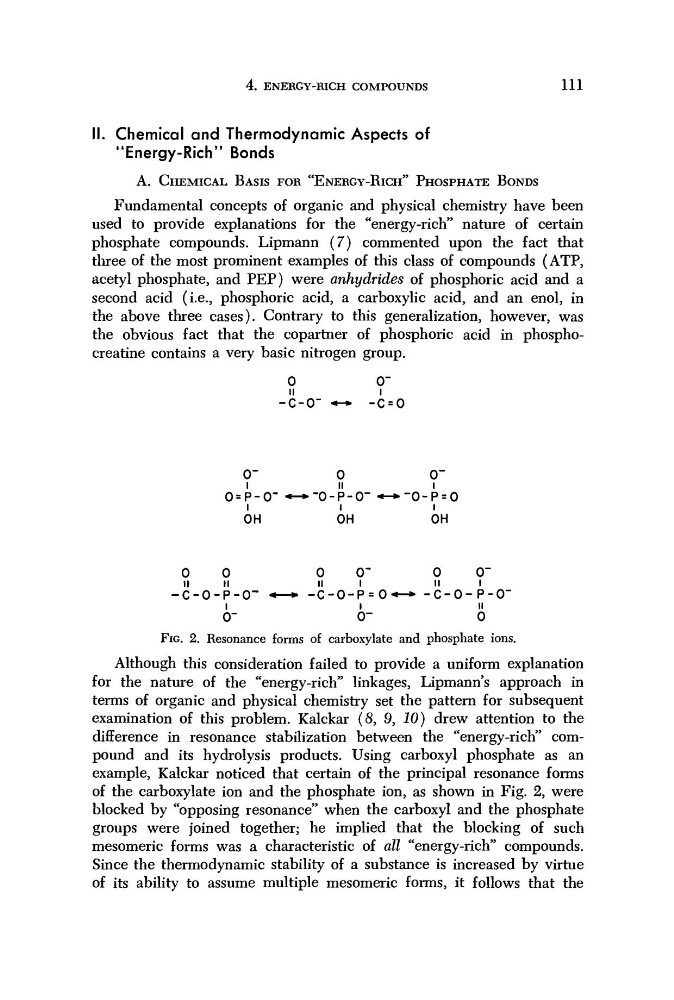
FIG. 2. Resonance forms of carboxylate and phosphate ions.
Although this consideration failed to provide a uniform explanation
for the nature of the "energy-rich" linkages, Lipmann's approach in
terms of organic and physical chemistry set the pattern for subsequent
examination of this problem. Kalckar (8, 9, 10) drew attention to the
difference in resonance stabilization between the "energy-rich" compound and its hydrolysis products. Using carboxyl phosphate as an
example, Kalckar noticed that certain of the principal resonance forms
of the carboxylate ion and the phosphate ion, as shown in Fig. 2, were
blocked by "opposing resonance" when the carboxyl and the phosphate
groups were joined together; he implied that the blocking of such
mesomeric forms was a characteristic of all "energy-rich" compounds.
Since the thermodynamic stability of a substance is increased by virtue
of its ability to assume multiple mesomeric forms, it follows that the
111
II. Chemical and Thermodynamic Aspects of
"Energy-Rich
11 Bonds
A. CHEMICAL BASIS FOR "ENERGY-RICH" PHOSPHATE BONDS
Fundamental concepts of organic and physical chemistry have been
used to provide explanations for the "energy-rich" nature of certain
phosphate compounds. Lipmann (7) commented upon the fact that
three of the most prominent examples of this class of compounds (ATP,
acetyl phosphate, and PEP) were anhydrides of phosphoric acid and a
second acid (i.e., phosphoric acid, a carboxylic acid, and an enol, in
the above three cases). Contrary to this generalization, however, was
the obvious fact that the copartner of phosphoric acid in phosphocreatine contains a very basic nitrogen group.
0
0"
II
I
-C-0" «-*
-C = 0
0"
0
0"
I
II
I
o=p-cr «-*-o-p-cr *-*-o-p = c
I
I
I
OH
OH
OH
0
0
0
0"
0
0"
II
II
II
I
II
I
-C-O-P-0" <—* -C-0-P = 0««-* -C-O-P-0"
I
I
II
0"
0"
0
FIG. 2. Resonance forms of carboxylate and phosphate ions.
Although this consideration failed to provide a uniform explanation
for the nature of the "energy-rich" linkages, Lipmann's approach in
terms of organic and physical chemistry set the pattern for subsequent
examination of this problem. Kalckar (8, 9, 10) drew attention to the
difference in resonance stabilization between the "energy-rich" compound and its hydrolysis products. Using carboxyl phosphate as an
example, Kalckar noticed that certain of the principal resonance forms
of the carboxylate ion and the phosphate ion, as shown in Fig. 2, were
blocked by "opposing resonance" when the carboxyl and the phosphate
groups were joined together; he implied that the blocking of such
mesomeric forms was a characteristic of all "energy-rich" compounds.
Since the thermodynamic stability of a substance is increased by virtue
of its ability to assume multiple mesomeric forms, it follows that the