

3. MECHANISMS FOR FATTY ACID OXIDATION
99
cofactors. Subsequent oxidation of the acetate units is by way of the
tricarboxylic acid cycle.
The enzyme phosphotransacetylase has not been found in any of the
aerobes studied so far. Presumably in this group acetate is activated by
ATP and CoA and passed through the tricarboxylic acid cycle as it is in
the tissue of animals and higher plants.
C. FUNGI
Fatty acid oxidation in the fungi has not been studied as extensively
as it has been in bacteria and animals. However, in those species of
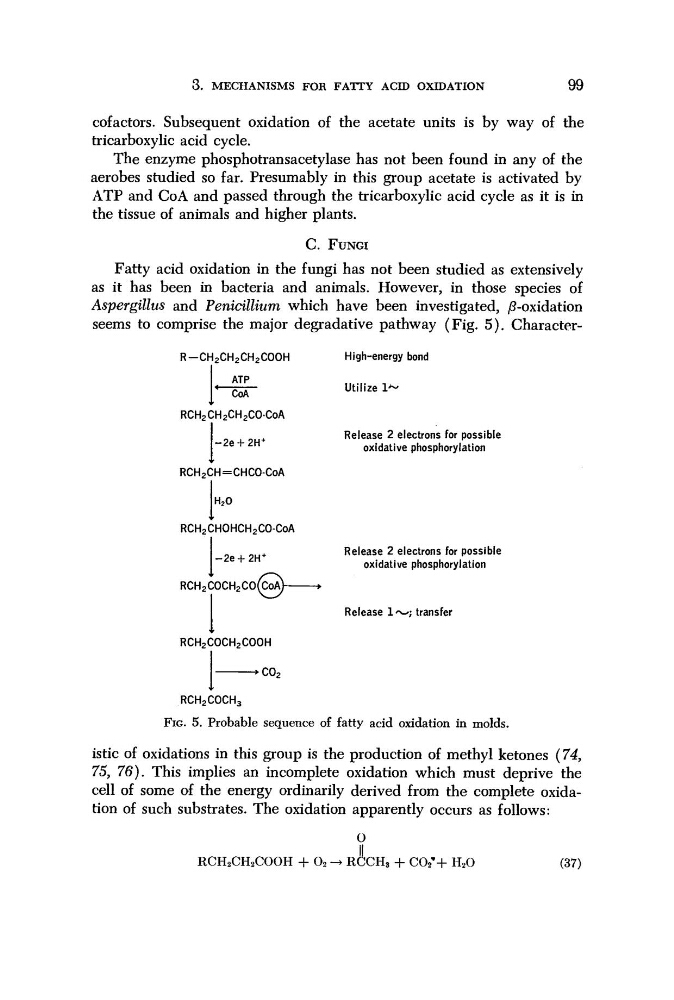
Aspergillus and Penicillium which have been investigated, ß-oxidation
seems to comprise the major degradative pathway (Fig. 5). CharacterR-CH 2 CH 2 CH 2 C00H
ATP
CoA
RCH 2 CH 2 CH 2 CO-CoA
-2e + 2H
+
RCH 2 CH=CHCO-CoA
H 2 0
RCH 2 CHOHCH 2 CO-CoA
-2e + 2H
+
RCH 2 COCH 2 CO(COA)—
RCH 2 C0CH 2 C00H
High-energy bond
Utilize 1^
Release 2 electrons for possible
oxidative phosphorylation
Release 2 electrons for possible
oxidative phosphorylation
Release 1^; transfer
->C0 2
RCH 2 C0CH 3
FIG. 5. Probable sequence of fatty acid oxidation in molds.
istic of oxidations in this group is the production of methyl ketones (74,
75, 76). This implies an incomplete oxidation which must deprive the
cell of some of the energy ordinarily derived from the complete oxidation of such substrates. The oxidation apparently occurs as follows:
RCH 2 CH 2 COOH + 0 2 -
O
CH, + C0 2 *+ H 2 0
(37)
99
cofactors. Subsequent oxidation of the acetate units is by way of the
tricarboxylic acid cycle.
The enzyme phosphotransacetylase has not been found in any of the
aerobes studied so far. Presumably in this group acetate is activated by
ATP and CoA and passed through the tricarboxylic acid cycle as it is in
the tissue of animals and higher plants.
C. FUNGI
Fatty acid oxidation in the fungi has not been studied as extensively
as it has been in bacteria and animals. However, in those species of
Aspergillus and Penicillium which have been investigated, ß-oxidation
seems to comprise the major degradative pathway (Fig. 5). CharacterR-CH 2 CH 2 CH 2 C00H
ATP
CoA
RCH 2 CH 2 CH 2 CO-CoA
-2e + 2H
+
RCH 2 CH=CHCO-CoA
H 2 0
RCH 2 CHOHCH 2 CO-CoA
-2e + 2H
+
RCH 2 COCH 2 CO(COA)—
RCH 2 C0CH 2 C00H
High-energy bond
Utilize 1^
Release 2 electrons for possible
oxidative phosphorylation
Release 2 electrons for possible
oxidative phosphorylation
Release 1^; transfer
->C0 2
RCH 2 C0CH 3
FIG. 5. Probable sequence of fatty acid oxidation in molds.
istic of oxidations in this group is the production of methyl ketones (74,
75, 76). This implies an incomplete oxidation which must deprive the
cell of some of the energy ordinarily derived from the complete oxidation of such substrates. The oxidation apparently occurs as follows:
RCH 2 CH 2 COOH + 0 2 -
O
CH, + C0 2 *+ H 2 0
(37)