

BLASTOGENESIS AND MORPHOGENESIS
197
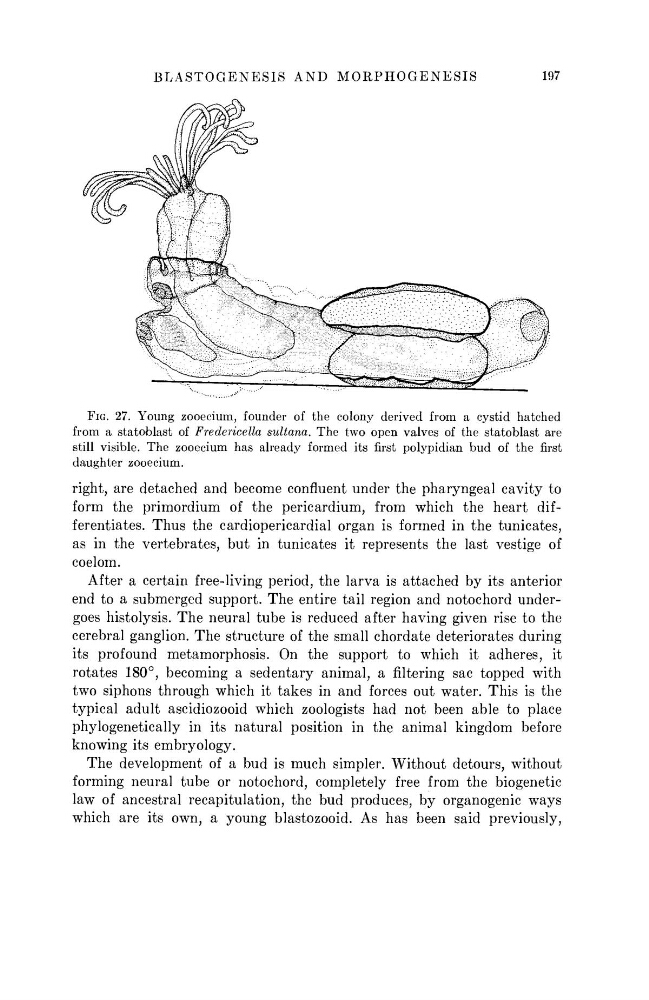
FIG. 27. Young zooecium, founder of the colony derived from a cystid hatched
from a statoblast of Fredericella sultana. The two open valves of the statoblast are
still visible. The zooecium has already formed its first polypidian bud of the first
daughter zooecium.
right, are detached and become confluent under the pharyngeal cavity to
form the primordium of the pericardium, from which the heart differentiates. Thus the cardiopericardial organ is formed in the tunicates,
as in the vertebrates, but in tunicates it represents the last vestige of
coelom.
After a certain free-living period, the larva is attached by its anterior
end to a submerged support. The entire tail region and notochord undergoes histolysis. The neural tube is reduced after having given rise to the
cerebral ganglion. The structure of the small chordate deteriorates during
its profound metamorphosis. On the support to which it adheres, it
rotates 180°, becoming a sedentary animal, a filtering sac topped with
two siphons through which it takes in and forces out water. This is the
typical adult ascidiozooid which zoologists had not been able to place
phylogenetically in its natural position in the animal kingdom before
knowing its embryology.
The development of a bud is much simpler. Without detours, without
forming neural tube or notochord, completely free from the biogenetic
law of ancestral recapitulation, the bud produces, by organogenic ways
which are its own, a young blastozooid. As has been said previously,
197
FIG. 27. Young zooecium, founder of the colony derived from a cystid hatched
from a statoblast of Fredericella sultana. The two open valves of the statoblast are
still visible. The zooecium has already formed its first polypidian bud of the first
daughter zooecium.
right, are detached and become confluent under the pharyngeal cavity to
form the primordium of the pericardium, from which the heart differentiates. Thus the cardiopericardial organ is formed in the tunicates,
as in the vertebrates, but in tunicates it represents the last vestige of
coelom.
After a certain free-living period, the larva is attached by its anterior
end to a submerged support. The entire tail region and notochord undergoes histolysis. The neural tube is reduced after having given rise to the
cerebral ganglion. The structure of the small chordate deteriorates during
its profound metamorphosis. On the support to which it adheres, it
rotates 180°, becoming a sedentary animal, a filtering sac topped with
two siphons through which it takes in and forces out water. This is the
typical adult ascidiozooid which zoologists had not been able to place
phylogenetically in its natural position in the animal kingdom before
knowing its embryology.
The development of a bud is much simpler. Without detours, without
forming neural tube or notochord, completely free from the biogenetic
law of ancestral recapitulation, the bud produces, by organogenic ways
which are its own, a young blastozooid. As has been said previously,