

172
PAUL BRIEN
A
B
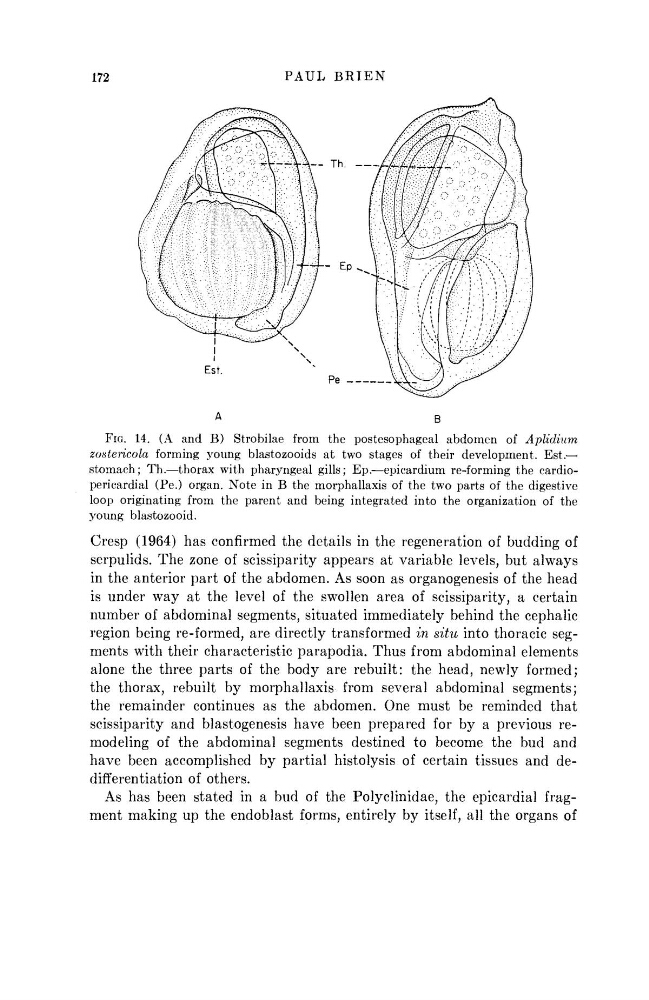
FIG. 14. (A and B) Strobilae from the postesophageal abdomen of Aplidium
zostericola forming young blastozooids at two stages of their development. Est.—
stomach; Th.—thorax with pharyngeal gills; Ep.—epicardium re-forming the cardiopericardial (Pe.) organ. Note in B the morphallaxis of the two parts of the digestive
loop originating from the parent and being integrated into the organization of the
young blastozooid.
Cresp (1964) has confirmed the details in the regeneration of budding of
serpulids. The zone of scissiparity appears at variable levels, but always
in the anterior part of the abdomen. As soon as organogenesis of the head
is under way at the level of the swollen area of scissiparity, a certain
number of abdominal segments, situated immediately behind the cephalic
region being re-formed, are directly transformed in situ into thoracic segments with their characteristic parapodia. Thus from abdominal elements
alone the three parts of the body are rebuilt: the head, newly formed;
the thorax, rebuilt by morphallaxis from several abdominal segments;
the remainder continues as the abdomen. One must be reminded that
scissiparity and blastogenesis have been prepared for by a previous remodeling of the abdominal segments destined to become the bud and
have been accomplished by partial histolysis of certain tissues and dedifferentiation of others.
As has been stated in a bud of the Polyclinidae, the epicardial fragment making up the endoblast forms, entirely by itself, all the organs of
PAUL BRIEN
A
B
FIG. 14. (A and B) Strobilae from the postesophageal abdomen of Aplidium
zostericola forming young blastozooids at two stages of their development. Est.—
stomach; Th.—thorax with pharyngeal gills; Ep.—epicardium re-forming the cardiopericardial (Pe.) organ. Note in B the morphallaxis of the two parts of the digestive
loop originating from the parent and being integrated into the organization of the
young blastozooid.
Cresp (1964) has confirmed the details in the regeneration of budding of
serpulids. The zone of scissiparity appears at variable levels, but always
in the anterior part of the abdomen. As soon as organogenesis of the head
is under way at the level of the swollen area of scissiparity, a certain
number of abdominal segments, situated immediately behind the cephalic
region being re-formed, are directly transformed in situ into thoracic segments with their characteristic parapodia. Thus from abdominal elements
alone the three parts of the body are rebuilt: the head, newly formed;
the thorax, rebuilt by morphallaxis from several abdominal segments;
the remainder continues as the abdomen. One must be reminded that
scissiparity and blastogenesis have been prepared for by a previous remodeling of the abdominal segments destined to become the bud and
have been accomplished by partial histolysis of certain tissues and dedifferentiation of others.
As has been stated in a bud of the Polyclinidae, the epicardial fragment making up the endoblast forms, entirely by itself, all the organs of