

ROLE OF mRNA IN EMBRYONIC DEVELOPMENT
127
~~i—r~
1(b) Stage 12 — 13 (gastrula)
~i
i
i
1
1
r
1(c) Stage 18 — 20 (neurula)
n
1
1
1
r
Ke) Stage 35 - 38 (sw. tadpole)
1.6 2.2 3.4 5.8 10.6 I
1. 6 2.2 3.4
10.6 20.2 I
(g)
1
1
1
'
i
i
10
-
-
8
— 7-9 -
6
—12-13:
^
18-20 -
4
26-28 "
^42
"
2
tit
i
i
i
1.6 2.2 3.4 5.8 10.6 20.2
Portions of RNA added
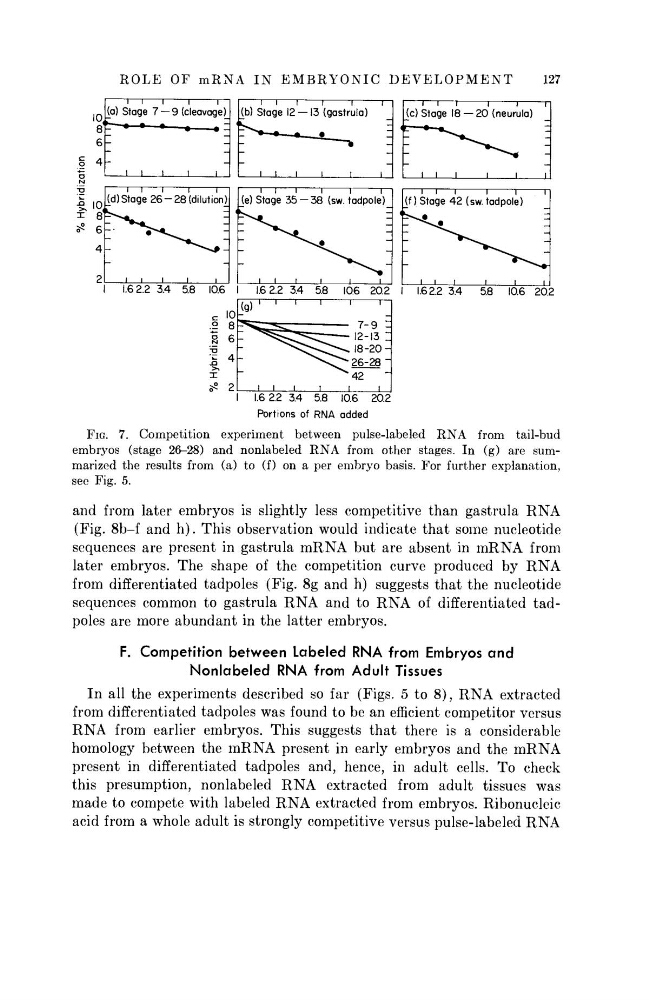
FIG. 7. Competition experiment between pulse-labeled RNA from tail-bud
emb^os (stage 26-28) and nonlabeled RNA from other stages. In (g) are summarized the results from (a) to (f) on a per embryo basis. For further explanation,
see Fig. 5.
and from later embryos is slightly less competitive than gastrula RNA
(Fig. 8b-f and h). This observation would indicate that some nucleotide
sequences are present in gastrula mRNA but are absent in mRNA from
later embryos. The shape of the competition curve produced by RNA
from differentiated tadpoles (Fig. 8g and h) suggests that the nucleotide
sequences common to gastrula RNA and to RNA of differentiated tadpoles are more abundant in the latter embryos.
F. Competition between Labeled RNA from Embryos and
Nonlabeled RNA from Adult Tissues
In all the experiments described so far (Figs. 5 to 8), RNA extracted
from differentiated tadpoles was found to be an efficient competitor versus
RNA from earlier embryos. This suggests that there is a considerable
homology between the mRNA present in early embryos and the mRNA
present in differentiated tadpoles and, hence, in adult cells. To check
this presumption, nonlabeled RNA extracted from adult tissues was
made to compete with labeled RNA extracted from embryos. Ribonucleic
acid from a whole adult is strongly competitive versus pulse-labeled RNA
% Hybridization
% Hybridization
127
~~i—r~
1(b) Stage 12 — 13 (gastrula)
~i
i
i
1
1
r
1(c) Stage 18 — 20 (neurula)
n
1
1
1
r
Ke) Stage 35 - 38 (sw. tadpole)
1.6 2.2 3.4 5.8 10.6 I
1. 6 2.2 3.4
10.6 20.2 I
(g)
1
1
1
'
i
i
10
-
-
8
— 7-9 -
6
—12-13:
^
18-20 -
4
26-28 "
^42
"
2
tit
i
i
i
1.6 2.2 3.4 5.8 10.6 20.2
Portions of RNA added
FIG. 7. Competition experiment between pulse-labeled RNA from tail-bud
emb^os (stage 26-28) and nonlabeled RNA from other stages. In (g) are summarized the results from (a) to (f) on a per embryo basis. For further explanation,
see Fig. 5.
and from later embryos is slightly less competitive than gastrula RNA
(Fig. 8b-f and h). This observation would indicate that some nucleotide
sequences are present in gastrula mRNA but are absent in mRNA from
later embryos. The shape of the competition curve produced by RNA
from differentiated tadpoles (Fig. 8g and h) suggests that the nucleotide
sequences common to gastrula RNA and to RNA of differentiated tadpoles are more abundant in the latter embryos.
F. Competition between Labeled RNA from Embryos and
Nonlabeled RNA from Adult Tissues
In all the experiments described so far (Figs. 5 to 8), RNA extracted
from differentiated tadpoles was found to be an efficient competitor versus
RNA from earlier embryos. This suggests that there is a considerable
homology between the mRNA present in early embryos and the mRNA
present in differentiated tadpoles and, hence, in adult cells. To check
this presumption, nonlabeled RNA extracted from adult tissues was
made to compete with labeled RNA extracted from embryos. Ribonucleic
acid from a whole adult is strongly competitive versus pulse-labeled RNA
% Hybridization
% Hybridization