

PATTERNS IN THE INTEGUMENT OF INSECTS
73
The experiments show that tracheae only increase normally in diameter
when they are connected with an organizing center—a node, an epidermal
wound, or trachéal terminations in the tissues. The integrity of the intervening tracheae is necessary for the transport of this stimulus. Some
further experiments show that the stimulus is not transported by simple
diffusion.
When the lateral trachea between abdominal spiracles 2 and 3 is cut
soon after feeding, the long anterior length lacks a node and fails to increase normally in diameter. The trachea itself is capable of growing
without a node since it does so when attached to a wound at its tip. It
is not obvious why it should fail, since it is attached at its other end to
the tergal trachea and tissue connections, which grow normally. If the
stimulus for growth in diameter moves from the trachea! endings to the
Fourth
Fifth
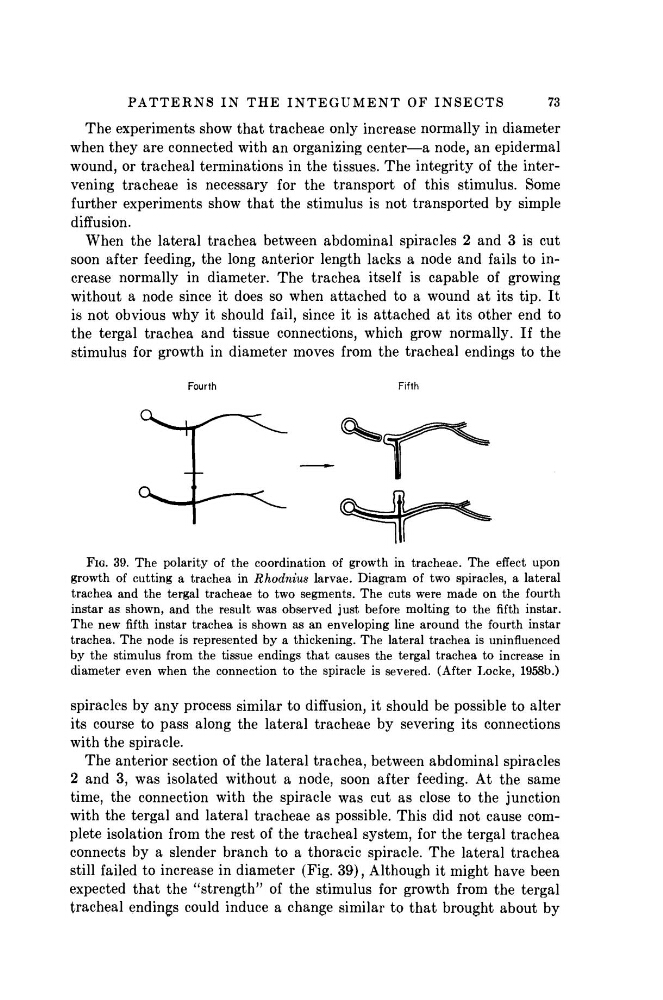
FIG. 39. The polarity of the coordination of growth in tracheae. The effect upon
growth of cutting a trachea in Rhodnius larvae. Diagram of two spiracles, a lateral
trachea and the tergal tracheae to two segments. The cuts were made on the fourth
instar as shown, and the result was observed just before molting to the fifth instar.
The new fifth instar trachea is shown as an enveloping line around the fourth instar
trachea. The node is represented by a thickening. The lateral trachea is uninfluenced
by the stimulus from the tissue endings that causes the tergal trachea to increase in
diameter even when the connection to the spiracle is severed. (After Locke, 1958b.)
spiracles by any process similar to diffusion, it should be possible to alter
its course to pass along the lateral tracheae by severing its connections
with the spiracle.
The anterior section of the lateral trachea, between abdominal spiracles
2 and 3, was isolated without a node, soon after feeding. At the same
time, the connection with the spiracle was cut as close to the junction
with the tergal and lateral tracheae as possible. This did not cause complete isolation from the rest of the trachéal system, for the tergal trachea
connects by a slender branch to a thoracic spiracle. The lateral trachea
still failed to increase in diameter (Fig. 39), Although it might have been
expected that the "strength" of the stimulus for growth from the tergal
trachea! endings could induce a change similar to that brought about by
73
The experiments show that tracheae only increase normally in diameter
when they are connected with an organizing center—a node, an epidermal
wound, or trachéal terminations in the tissues. The integrity of the intervening tracheae is necessary for the transport of this stimulus. Some
further experiments show that the stimulus is not transported by simple
diffusion.
When the lateral trachea between abdominal spiracles 2 and 3 is cut
soon after feeding, the long anterior length lacks a node and fails to increase normally in diameter. The trachea itself is capable of growing
without a node since it does so when attached to a wound at its tip. It
is not obvious why it should fail, since it is attached at its other end to
the tergal trachea and tissue connections, which grow normally. If the
stimulus for growth in diameter moves from the trachea! endings to the
Fourth
Fifth
FIG. 39. The polarity of the coordination of growth in tracheae. The effect upon
growth of cutting a trachea in Rhodnius larvae. Diagram of two spiracles, a lateral
trachea and the tergal tracheae to two segments. The cuts were made on the fourth
instar as shown, and the result was observed just before molting to the fifth instar.
The new fifth instar trachea is shown as an enveloping line around the fourth instar
trachea. The node is represented by a thickening. The lateral trachea is uninfluenced
by the stimulus from the tissue endings that causes the tergal trachea to increase in
diameter even when the connection to the spiracle is severed. (After Locke, 1958b.)
spiracles by any process similar to diffusion, it should be possible to alter
its course to pass along the lateral tracheae by severing its connections
with the spiracle.
The anterior section of the lateral trachea, between abdominal spiracles
2 and 3, was isolated without a node, soon after feeding. At the same
time, the connection with the spiracle was cut as close to the junction
with the tergal and lateral tracheae as possible. This did not cause complete isolation from the rest of the trachéal system, for the tergal trachea
connects by a slender branch to a thoracic spiracle. The lateral trachea
still failed to increase in diameter (Fig. 39), Although it might have been
expected that the "strength" of the stimulus for growth from the tergal
trachea! endings could induce a change similar to that brought about by