

PATTERNS IN THE INTEGUMENT OF INSECTS
65
Adult
S
4
3
1
1
?0
19
18
17
16
\
\
\
\
/
λ
/
/
\
\
\
\
/
/
/
/
16
15
14
13
12
11
10
9
8
7
6
5
h
/
/
/
/
\
\
\
\
5
Y
4
/ 3
/ ?
• 1
N 20
> 1*
\ 18
\ 17
16
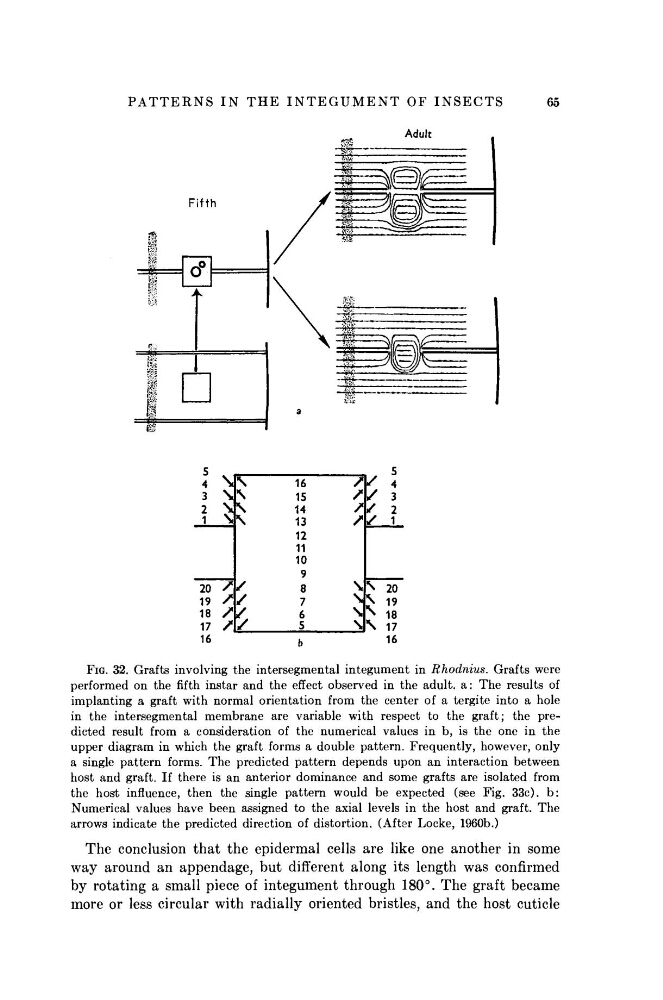
FIG. 32. Grafts involving the intersegmental integument in Rhodnius. Grafts were
performed on the fifth instar and the effect observed in the adult, a: The results of
implanting a graft with normal orientation from the center of a tergite into a hole
in the intersegmental membrane are variable with respect to the graft; the predicted result from a consideration of the numerical values in b, is the one in the
upper diagram in which the graft forms a double pattern. Frequently, however, only
a single pattern forms. The predicted pattern depends upon an interaction between
host and graft. If there is an anterior dominance and some grafts are isolated from
the host influence, then the single pattern would be expected (see Fig. 33c). b :
Numerical values have been assigned to the axial levels in the host and graft. The
arrows indicate the predicted direction of distortion. (After Locke, 1960b.)
The conclusion that the epidermal cells are like one another in some
way around an appendage, but different along its length was confirmed
by rotating a small piece of integument through 180°. The graft became
more or less circular with radially oriented bristles, and the host cuticle
65
Adult
S
4
3
1
1
?0
19
18
17
16
\
\
\
\
/
λ
/
/
\
\
\
\
/
/
/
/
16
15
14
13
12
11
10
9
8
7
6
5
h
/
/
/
/
\
\
\
\
5
Y
4
/ 3
/ ?
• 1
N 20
> 1*
\ 18
\ 17
16
FIG. 32. Grafts involving the intersegmental integument in Rhodnius. Grafts were
performed on the fifth instar and the effect observed in the adult, a: The results of
implanting a graft with normal orientation from the center of a tergite into a hole
in the intersegmental membrane are variable with respect to the graft; the predicted result from a consideration of the numerical values in b, is the one in the
upper diagram in which the graft forms a double pattern. Frequently, however, only
a single pattern forms. The predicted pattern depends upon an interaction between
host and graft. If there is an anterior dominance and some grafts are isolated from
the host influence, then the single pattern would be expected (see Fig. 33c). b :
Numerical values have been assigned to the axial levels in the host and graft. The
arrows indicate the predicted direction of distortion. (After Locke, 1960b.)
The conclusion that the epidermal cells are like one another in some
way around an appendage, but different along its length was confirmed
by rotating a small piece of integument through 180°. The graft became
more or less circular with radially oriented bristles, and the host cuticle