

62
M I C H A E L L O C K E
scribed as a gradient might be of more general occurrence. Similar grafting experiments were therefore tried upon other sorts of integument.
On the second abdominal tergite, the ripple pattern is replaced in the
midline by one of curved ridges. Transplants were made as in Fig. 34.
The grafts survived, and the host responded by restoring the continuity
Fifth
I
i:
D
=r
Adult
10
9
8
7
6
5
4
3
2
1
U
t + i
I1
I3
4
5
6
7
180°
4
5
6
7
„Î
4
-i
i
10
9
8
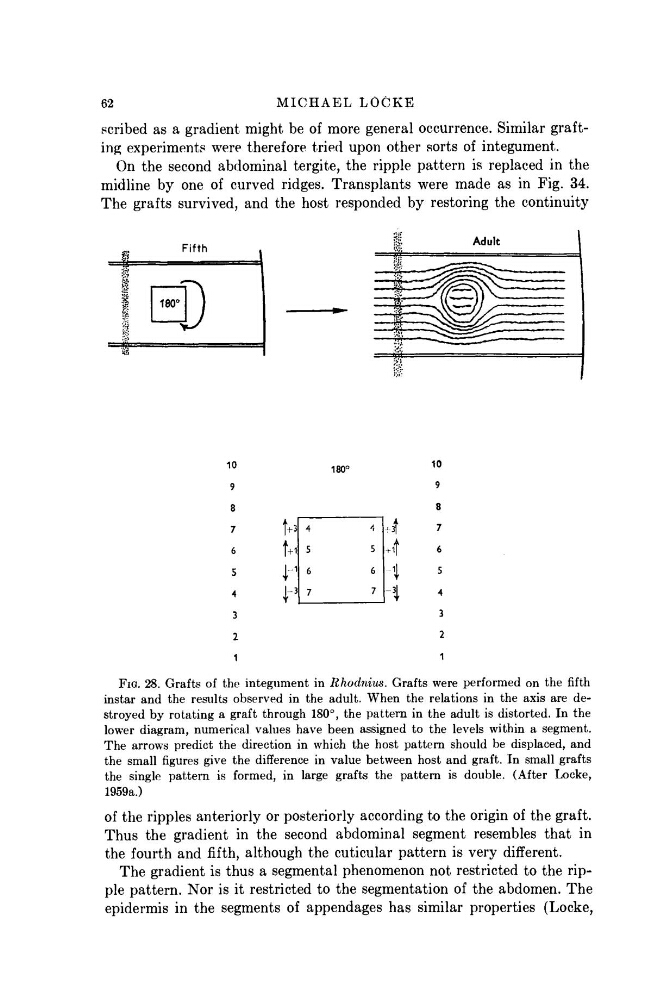
FIG. 28. Grafts of the integument in Rhodnius. Grafts were performed on the fifth
instar and the results observed in the adult. When the relations in the axis are destroyed by rotating a graft through 180°, the pattern in the adult is distorted. In the
lower diagram, numerical values have been assigned to the levels within a segment.
The arrows predict the direction in which the host pattern should be displaced, and
the small figures give the difference in value between host and graft. In small grafts
the single pattern is formed, in large grafts the pattern is double. (After Locke,
1959a.)
of the ripples anteriorly or posteriorly according to the origin of the graft.
Thus the gradient in the second abdominal segment resembles that in
the fourth and fifth, although the cuticular pattern is very different.
The gradient is thus a segmental phenomenon not restricted to the ripple pattern. Nor is it restricted to the segmentation of the abdomen. The
epidermis in the segments of appendages has similar properties (Locke,
M I C H A E L L O C K E
scribed as a gradient might be of more general occurrence. Similar grafting experiments were therefore tried upon other sorts of integument.
On the second abdominal tergite, the ripple pattern is replaced in the
midline by one of curved ridges. Transplants were made as in Fig. 34.
The grafts survived, and the host responded by restoring the continuity
Fifth
I
i:
D
=r
Adult
10
9
8
7
6
5
4
3
2
1
U
t + i
I1
I3
4
5
6
7
180°
4
5
6
7
„Î
4
-i
i
10
9
8
FIG. 28. Grafts of the integument in Rhodnius. Grafts were performed on the fifth
instar and the results observed in the adult. When the relations in the axis are destroyed by rotating a graft through 180°, the pattern in the adult is distorted. In the
lower diagram, numerical values have been assigned to the levels within a segment.
The arrows predict the direction in which the host pattern should be displaced, and
the small figures give the difference in value between host and graft. In small grafts
the single pattern is formed, in large grafts the pattern is double. (After Locke,
1959a.)
of the ripples anteriorly or posteriorly according to the origin of the graft.
Thus the gradient in the second abdominal segment resembles that in
the fourth and fifth, although the cuticular pattern is very different.
The gradient is thus a segmental phenomenon not restricted to the ripple pattern. Nor is it restricted to the segmentation of the abdomen. The
epidermis in the segments of appendages has similar properties (Locke,