

D E V E L O P M E N T S I N SEXUAL O R G A N O G E N E S I S
281
This method provides the opportunity to analyze the hormonal effects in
a heterosexual, homospecific combination in which one of the partners is
heteroploid.
a. Diploid-Haploid Combinations. In amphibians, especially urodeles,
haploidy is almost always lethal, and individuals die after hatching. In a
few rare instances haploids have reached, at the most, the stage of metamorphosis. Haploids demonstrate the syndrome of haploidy, characterized
by reduced size, twisting of the body, microcephaly, microophthalmia,
ascites, and edema. Placing a diploid individual in parabiosis with a haploid
makes it possible for the latter to attain adulthood and undergo gametogenesis (Gallien and Beetschen, 1960). The reciprocal effects of the hormones in heterosexual combinations may be observed. In passing, it should
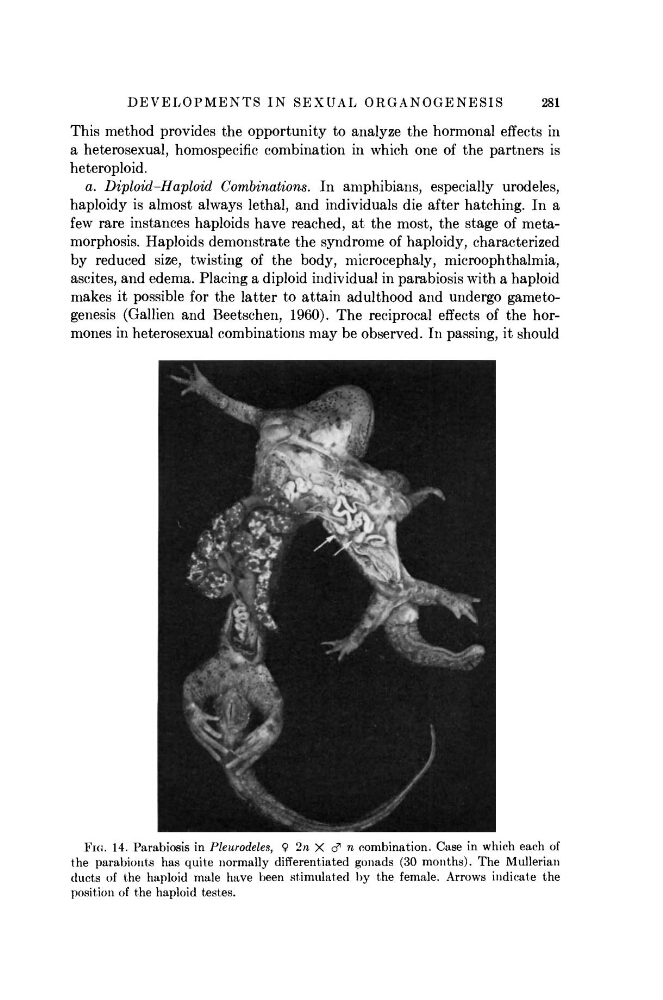
FIG. 14. Parabiosis in Pleurodeles, 9 2n X cf n combination. Case in which each of
the parabionts has quite normally differentiated gonads (30 months). The Mullerian
ducts of the haploid male have been stimulated by the female. Arrows indicate the
position of the haploid testes.
281
This method provides the opportunity to analyze the hormonal effects in
a heterosexual, homospecific combination in which one of the partners is
heteroploid.
a. Diploid-Haploid Combinations. In amphibians, especially urodeles,
haploidy is almost always lethal, and individuals die after hatching. In a
few rare instances haploids have reached, at the most, the stage of metamorphosis. Haploids demonstrate the syndrome of haploidy, characterized
by reduced size, twisting of the body, microcephaly, microophthalmia,
ascites, and edema. Placing a diploid individual in parabiosis with a haploid
makes it possible for the latter to attain adulthood and undergo gametogenesis (Gallien and Beetschen, 1960). The reciprocal effects of the hormones in heterosexual combinations may be observed. In passing, it should
FIG. 14. Parabiosis in Pleurodeles, 9 2n X cf n combination. Case in which each of
the parabionts has quite normally differentiated gonads (30 months). The Mullerian
ducts of the haploid male have been stimulated by the female. Arrows indicate the
position of the haploid testes.